
 Products
 For Distributors
 For Grow Shops
 About Miabis
 Contact
Labor vs automation in cannabis production is no longer just an operational choice – it is a cost decision that directly impacts profitability. Cannabis production is becoming increasingly competitive, with tightening margins, rising labor costs and constant pressure to scale efficiently. As a result, growers must evaluate where labor adds value and where it silently drains resources. Should they rely on manual labor or invest in automation?
This article breaks down the labor vs automation in cannabis production cost comparison, showing where costs accumulate, where automation delivers real ROI, and how to structure a more efficient, scalable workflow to stay profitable in long term.
Why This Decision Matters More Than Ever
Choosing between labor and automation in cannabis production directly affects cost structure, scalability and long-term profitability. In earlier stages of the industry, labor-heavy operations were common because lower wages and smaller production volumes made manual work manageable.
Today, the situation is different:
- Labor is one of the largest operational costs
- Skilled workers are harder to retain
- Production volumes are increasing
- Consistency requirements are stricter
As a result, inefficiencies that once went unnoticed now directly impact profitability, making cost structure and workflow decisions far more critical than before.
Where Labor Costs Accumulate in Cannabis Operations
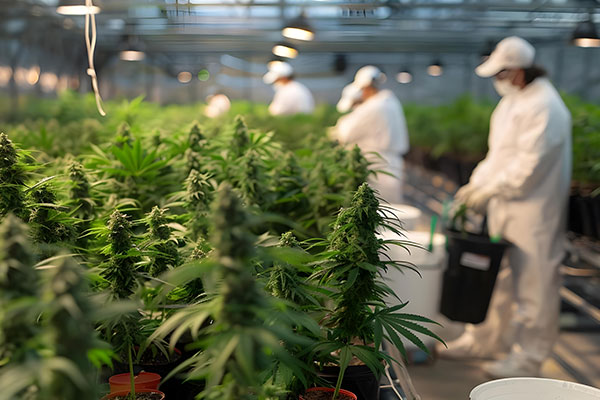
Labor costs in cannabis production do not come from a single task – they build up across multiple small, repetitive activities throughout the entire workflow. Understanding where these costs accumulate is the first step toward improving efficiency and reducing unnecessary expenses.
Cultivation Stage
During cultivation, labor is primarily tied to plant handling, root management and day-to-day maintenance tasks. These activities are repeated across every plant and every growth cycle, which makes even small inefficiencies scale into significant costs.
Key labor-intensive tasks include:
- Initial planting and potting
- Transplanting between containers
- Moving plants between stages
- Monitoring root development and growth
- Adjusting irrigation and substrates
Each of these tasks may seem minor individually. However, across hundreds or thousands of plants, they scale into a major cost driver that directly impacts overall production efficiency. This is why improving cultivation workflows and reducing unnecessary labor inputs is one of the most effective ways to optimize performance at scale.
Post-Harvest Stage
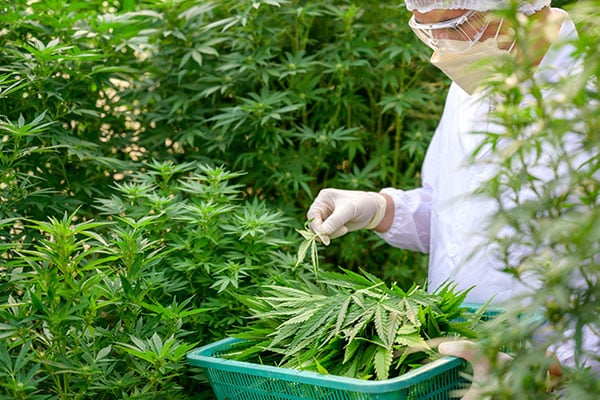
Post-harvest is one of the most labor-intensive phases in cannabis production, where large volumes of plant material must be processed in a limited time. Because of its time sensitivity and manual workload, this stage often becomes a major operational bottleneck.
Post-harvest includes labor-intensive operations such as:
- Trimming
- Sorting and handling
- Cleaning equipment
- Preparing product for packaging
This stage frequently becomes a bottleneck, especially during peak harvest periods, limiting how quickly product can move to market.
What Automation Actually Changes
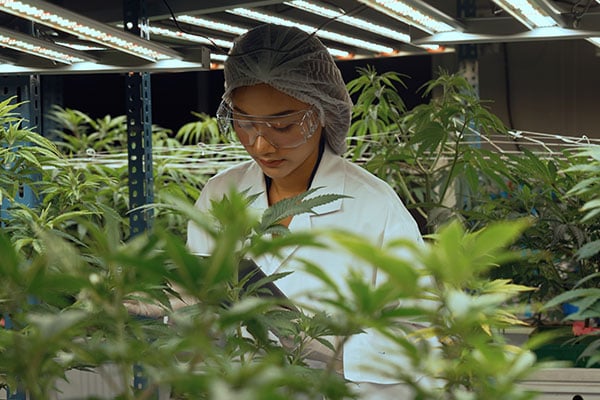
Automation in cannabis production is often misunderstood as simply “replacing workers”. In reality, it restructures how work is performed across the operation. Instead of relying on manual repetition, automation introduces systems that improve speed, consistency, and overall workflow efficiency.
Speed and Throughput
One of the primary advantages of automation is the ability to increase processing speed without proportionally increasing labor. This allows growers to handle larger volumes within the same time frame. In other words, automated systems can process significantly more material in less time, reducing delays and increasing overall capacity. However, processing speed must be carefully balanced with product quality.
Consistency and Standardization
Consistency is critical in cannabis production, especially at commercial scale where uniform quality directly impacts market value. Automated systems help standardize processes that would otherwise vary between workers. As a result, machines deliver repeatable results and improve consistency across batches. This level of consistency is difficult to achieve manually at scale, making automation a key factor in maintaining reliable product quality.
Labor Reduction + Labor Shift
Automation does not eliminate labor – it reduces it and, more importantly, changes the type of work required within the operation. Instead of repetitive manual tasks, workers focus more on supervision, quality control and system management – roles that add more value to the overall operation.
The Real Trade-Off: Upfront Cost vs Long-Term Savings
The decision between labor and automation is fundamentally a financial trade-off between upfront investment and ongoing operational costs. Growers must evaluate whether higher initial spending can lead to lower long-term expenses and improved efficiency.
The core of the decision comes down to CapEx vs OpEx – capital expenditures (one-time investments) versus operational expenses (ongoing running costs).
Upfront Investment (CapEx)
CapEx (capital expenditures) refers to the initial investment required to purchase equipment, infrastructure and set up systems. Automation typically requires higher upfront spending before benefits are realized. This initial cost is often the main barrier for smaller operations.
Ongoing Costs (OpEx)
OpEx (operational expenses) includes the day-to-day costs required to run an operation. In cannabis production, manual labor is one of the largest components of OpEx.
These costs accumulate over time and include:
- wages
- training
- turnover
- errors and inefficiencies
Because they are spread across daily activities, these costs are often underestimated, but they have a significant impact on long-term profitability.
Payback Period
The payback period measures how quickly an automation investment recovers its cost through operational savings. In cannabis production, this is typically driven by:
- reduced labor hours
- increased throughput
- lower error rates
The larger the operation, the faster this payback typically occurs, making automation particularly attractive for scaling businesses.
Where Automation Delivers the Highest ROI
Not all stages of cannabis production benefit equally from automation – some areas deliver significantly higher returns than others. ROI (return on investment) refers to how quickly an investment pays for itself through cost savings or increased efficiency. Identifying these high-impact zones is key to making smart investment decisions that deliver measurable financial returns.
Post-Harvest: Trimming and Processing
Trimming and post-harvest processing are among the most labor-intensive and time-sensitive tasks in cannabis production. Because of this, they are often the first areas where automation delivers measurable ROI.
Trimming is:
- Highly repetitive
- Time-consuming
- Labor-intensive
Automated trimming systems can significantly increase throughput while maintaining consistent quality, directly reducing one of the most labor-intensive costs in production. For a detailed comparison of approaches, also see our guide: Manual vs Machine Trimming Cannabis: Which Is Better?.
Solutions like Ganatik are designed specifically for this stage. With high-capacity workflow, dual-tumbler processing and integrated kief collection, they reduce dependency on large trimming teams while improving operational speed.
Cultivation Workflow Optimization
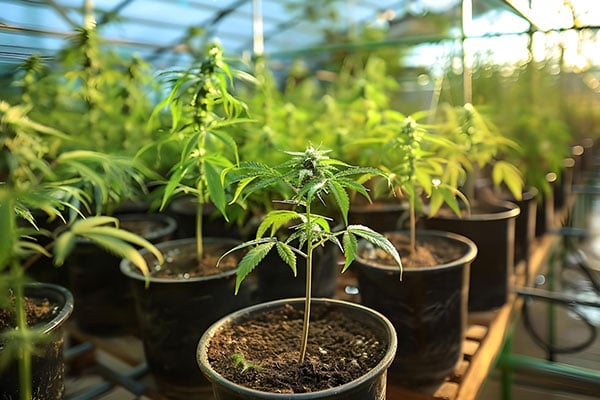
In cultivation, efficiency is often determined by how smoothly plants move through different growth stages. Reducing unnecessary handling and simplifying workflows can significantly lower labor requirements.
One overlooked source of labor cost is transplanting. Traditional workflows require:
- multiple container sizes
- repeated handling of plants
- precise timing to avoid stress
Innovations like the Re-Plant remove this step entirely by allowing container volume to expand with the plant. This eliminates transplanting, reduces labor and minimizes risk, while improving root development efficiency, simplifying the entire cultivation workflow.
Where Manual Labor Still Makes Sense
Despite the advantages of automation, manual labor remains valuable in specific parts of cannabis production. In some cases, flexibility and precision outweigh the benefits of speed and scale.
Manual labor is often preferred in:
- premium, hand-trimmed flower production
- small-scale or craft grows
- early-stage businesses with limited capital
In these cases, the flexibility of manual work can outweigh the benefits of automation, particularly where product differentiation depends on precision.
The Hidden Cost of “Cheap Labor”
Labor may appear less expensive on the surface, but hidden inefficiencies can significantly increase its true cost over time. These hidden factors often go unnoticed until they impact overall profitability and include:
- inconsistent results between workers
- human error and product loss
- training time and turnover
- workflow bottlenecks during peak periods
These factors reduce efficiency and can quietly erode margins over time, often without being immediately visible.
Hybrid Approach: The Most Profitable Model
For most cannabis operations, the most effective strategy is not choosing between labor and automation, but combining both. A hybrid approach allows growers to optimize efficiency while maintaining flexibility.
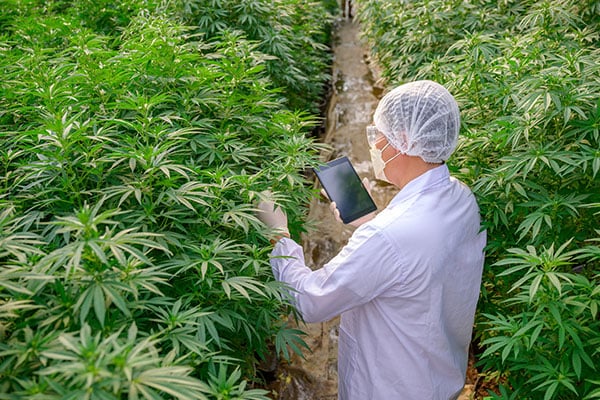
The hybrid approach:
- Automates bottlenecks (e.g. trimming, repetitive handling)
- Keeps manual work where precision adds value
- Focuses on optimizing the entire workflow
This approach balances cost, quality and flexibility, creating a more resilient and scalable production model.
It’s Not Labor vs Automation – It’s Efficiency vs Inefficiency
The real comparison in cannabis production is not labor vs automation, but rather between efficient and inefficient systems. Growers who focus on optimizing workflows – rather than choosing sides – are better positioned to scale and remain profitable.
You need to ask: “Where does your operation lose time, consistency, and money?” to identify the inefficient systems that would benefit from automation.
Automation is most valuable when it solves real operational problems:
- removing unnecessary steps
- reducing labor intensity
- increasing throughput
This aligns with the broader shift in the industry toward smarter, more efficient systems – a direction driven by innovation and practical problem-solving across modern cannabis operations.
Growers who understand this will not just reduce costs. They will build efficient systems that scale.
FAQ: Labor vs Automation in Cannabis Production
Is automation worth it in cannabis production?
In most medium to large operations, yes. Automation reduces labor costs, increases consistency and improves throughput, often resulting in a clear return on investment (ROI) over time.
What part of cannabis production benefits most from automation?
Post-harvest, especially trimming, typically delivers the highest ROI due to its labor intensity, time sensitivity and direct impact on processing speed.
Does automation replace workers completely?
No. Automation reduces manual labor but does not eliminate it. Instead, it shifts work toward supervision, quality control and process management.
How can growers reduce labor costs without full automation?
By optimizing workflows, reducing unnecessary steps (like transplanting) and introducing targeted automation in bottleneck areas.
When should a cannabis grower invest in automation?
Growers should consider automation when labor costs start to limit scalability, create bottlenecks or reduce consistency. It becomes especially relevant in mid to large-scale operations.
What is the biggest hidden cost in cannabis production?
One of the biggest hidden costs is inefficient labor, including time lost in repetitive tasks, errors, inconsistent performance and workflow bottlenecks.

 Ganatik
 Re-Plant
 Marketing Support
 Cannabis World
 Terms & Conditions