
 Products
 For Distributors
 For Grow Shops
 About Miabis
 Contact
Understanding the Cost of Transplanting Cannabis Plants at Scale:
Time, Labor and Risk
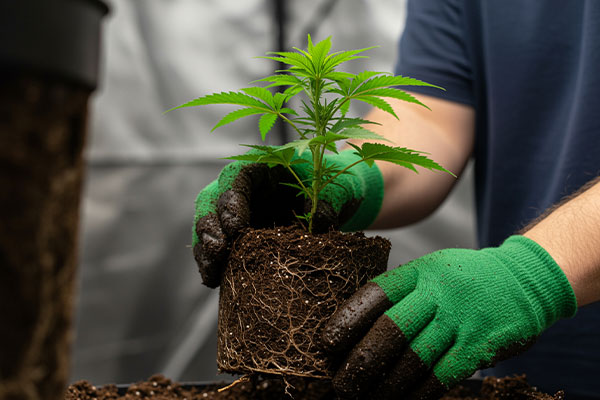
Transplanting cannabis plants is a standard cultivation practice used to give roots more space as plants grow. In most setups, this means moving each plant through multiple containers during its lifecycle.
At small scale, this process is manageable and often seen as routine. At scale, however, transplanting becomes something else entirely: a repeatable operational task that affects time, labor, risk, and infrastructure across the entire grow.
What appears to be a simple step in cultivation turns into a system-level cost. Every transplant requires handling, timing, coordination, and introduces potential stress to the plant.
Understanding the real cost of transplanting cannabis plants at scale is essential for growers who want to improve efficiency, reduce variability, and build more predictable production systems.
Why Transplanting Is Standard Practice
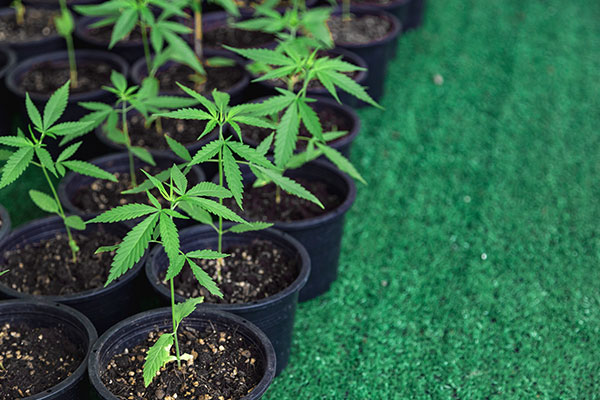
Cannabis plants require increasing root space as they grow. Traditional cultivation systems rely on multiple container sizes to support this progression.
A typical workflow looks like this:
- Start in a small pot (seedling stage)
- Move to a medium container (vegetative stage)
- Transplant again into a final container (flowering stage)
This staged approach helps prevent overwatering and encourages root development. However, it also introduces repeated disruption to both plant and workflow.
Standard does not always mean optimal.
The Time Cost: More Than Just a Simple Task
The time cost of transplanting is not just the act itself, but everything required to prepare, execute, and recover from the process.
At first glance, transplanting seems quick. But in practice, it is a multi-step process:
- Preparing new containers and substrate
- Removing the plant from the existing pot
- Handling the root ball carefully
- Replanting and stabilizing the plant
- Cleaning up and resetting the workspace
For a single plant, this may take only a few minutes. But in larger grows, this quickly compounds.
In a facility with hundreds or thousands of plants, transplanting becomes:
- A scheduled operation
- A bottleneck in workflow
- A disruption to other tasks
Timing is also critical. Transplant too early or too late, and plant performance suffers. This adds pressure and reduces flexibility in daily operations.
The Labor Cost: Hidden Operational Load
At scale, transplanting is primarily a labor problem. Every plant must be handled individually, which makes the process inherently difficult to optimize.
Each transplant cycle requires:
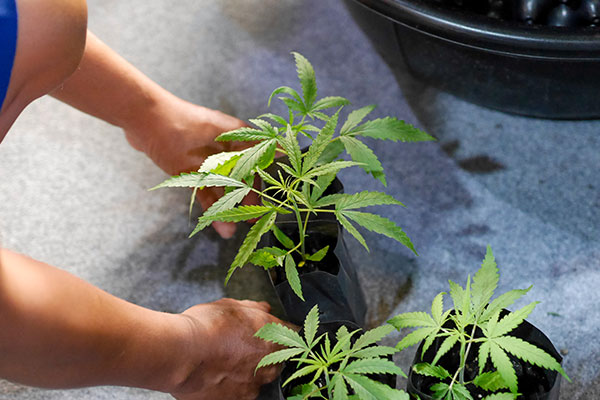
- Manual handling of every plant
- Trained workers to avoid root damage
- Coordination across teams
As operations scale, labor demand increases linearly with plant count. There is no efficiency gain, only more work.
Additional hidden labor factors include:
- Transporting containers
- Managing substrate logistics
- Cleaning and resetting work areas
In commercial environments, this translates into measurable costs that directly affect margins.
In practice, this also raises a broader question of how much of the cultivation workflow should remain manual, and where automation can improve efficiency without compromising plant quality.
The Risk Factor: Where Costs Become Losses
Transplanting introduces biological risk. The risk of transplanting comes from one core issue: root disturbance.
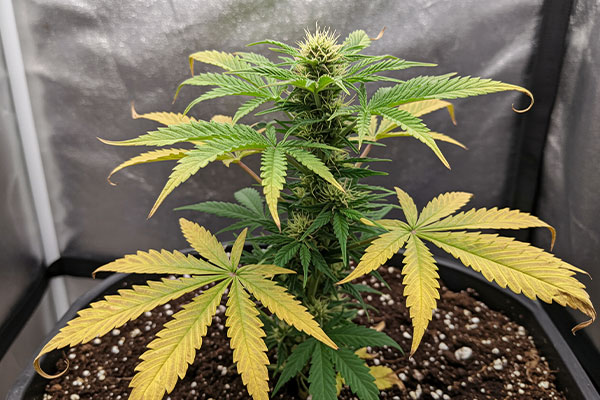
Even when done correctly, it disrupts the root system. This can lead to:
- Transplant shock → temporary growth slowdown
- Root damage → reduced nutrient and water uptake
- Stress response → delayed development
If timing is off or handling is rough, the impact becomes more severe:
- Stunted growth
- Uneven plant size
- Reduced yield potential
These are not just theoretical risks. They directly affect crop consistency and final output.
In this sense, the cost of transplanting is not just operational, it is biological.
The Infrastructure Cost: Containers, Storage, and Logistics
At scale, transplanting does not only affect plants and labor – it creates an entire layer of infrastructure that must be managed alongside the grow.
This aspect is often underestimated because it is spread across multiple small tasks and resources. But when viewed as a system, it represents a significant part of the overall cost.
The Hidden Cost of Multiple Containers
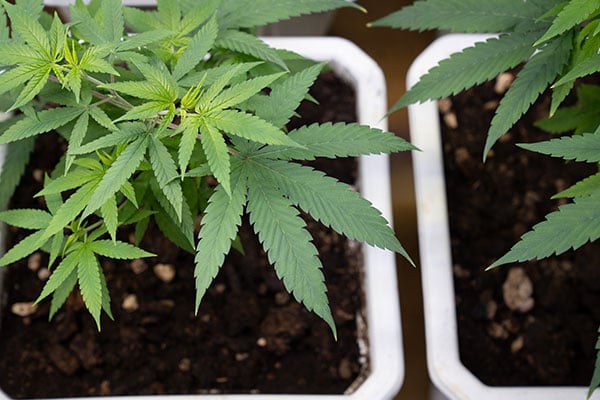
In a traditional setup, a single cannabis plant is not grown in one container, but in several stages:
- a smaller container for early growth
- a medium container for the vegetative phase
- a larger container for flowering
While this approach supports root development, it also means that each plant is tied to multiple containers over time, even though only one is actively used at any given moment. From an operational perspective, this creates inefficiency.
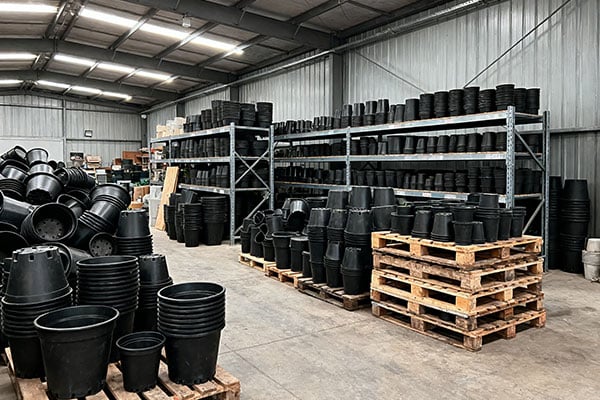
Growers are not just managing plants, they are managing a rotating inventory of containers that must be stored, tracked, and prepared throughout the cycle.
Storage, Handling, and Operational Complexity
Using multiple container sizes introduces additional logistical requirements:
- storage space for unused containers
- organization of different sizes across growth stages
- cleaning and preparation between cycles
- movement of containers within the grow environment
These tasks may seem minor individually, but together they create a continuous operational load.
Instead of a streamlined workflow, growers are dealing with constant handling and coordination, which increases complexity and reduces efficiency.
Temporary Use, Permanent Overhead
Another key issue is utilization. Smaller and medium containers are only used during specific phases of growth. Once a plant is transplanted, those containers are no longer needed, but they still occupy space, require cleaning, and remain part of the operational system.
This leads to a situation where resources are consistently tied up in equipment that is not actively contributing to production.
As highlighted in MIABIS product development, traditional cultivation often requires multiple container sizes per plant, increasing both logistical complexity and overall cost.
Why This Becomes a Problem at Scale
At small scale, these inefficiencies can go unnoticed. At larger scale, they become structural.
As plant count increases:
- the number of containers multiplies
- storage requirements expand
- handling and coordination grow more demanding
What begins as a standard cultivation method turns into a system that requires significant effort to maintain.
When viewed together, container requirements, storage, and handling are not just minor inconveniences – they form a substantial part of the overall cost of transplanting cannabis plants.
The Compounding Effect in Commercial Cultivation
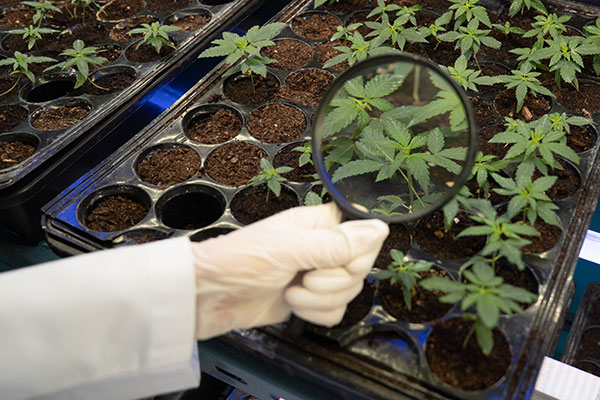
The real impact of transplanting becomes visible when all costs are viewed together. At small scale, transplanting may feel manageable. At commercial scale, it becomes a structural inefficiency.
Every factor compounds:
- Time × number of plants
- Labor × number of cycles
- Risk × entire crop
This results in:
- Labor bottlenecks
- Increased operational complexity
- Reduced predictability in production
What works for a hobby grower does not scale efficiently in a professional environment.
Is Transplanting Still Worth It?
Transplanting does have benefits:
- Encourages controlled root development
- Helps manage watering in early stages
- Familiar and widely used method
For small-scale growers, transplanting can still be practical. At scale, however, it increasingly becomes a limiting factor rather than a useful tool. The cumulative cost – especially in labor and risk – often outweighs its advantages.
Rethinking the Process: Can Transplanting Be Eliminated?
Modern cultivation is increasingly focused on efficiency, consistency, and scalability. This raises a fundamental question: what if transplanting is not necessary at all?
Instead of adapting plants to containers, the process can be reversed – adapt the container to the plant. If the core issue is repeated handling, timing constraints, and container changes, the logical solution is to remove those steps entirely. This is where systems like Re-Plant come into play.
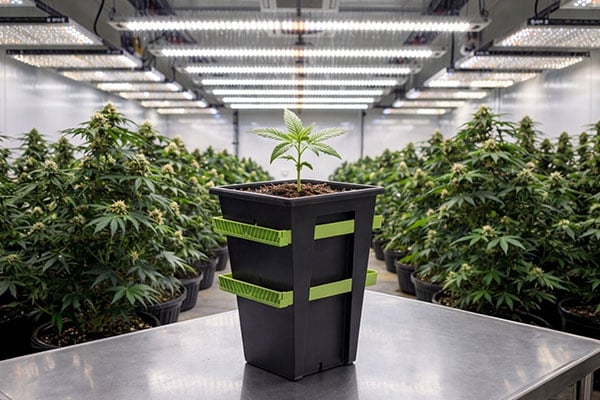
Rather than using multiple containers, Re-Plant allows growers to start, develop, and finish the plant in a single system. Instead of physically moving the plant, the root zone expands within the container as the plant grows.
The container is structured in stages, enabling gradual root expansion without transplanting. As roots develop, additional space is unlocked, allowing continuous growth without disruption.
This approach directly addresses the core limitations of traditional transplanting at scale:
- it reduces manual handling
- removes timing sensitivity
- eliminates the need for multiple containers
- improves root structure and oxygen availability
This method replaces transplanting with controlled root zone expansion inside a single container, reducing time, operational complexity, and plant stress.
At scale, this is not just a convenience – it is a structural shift in how cultivation systems are designed and managed.
Cost Is Not Just Money – It’s Efficiency
At scale, the cost of transplanting cannabis plants goes far beyond the act itself.
It includes:
- Labor intensity
- Workflow disruption
- Biological risk
- Infrastructure complexity
When these factors are viewed together, transplanting is no longer just a routine task, it is a recurring inefficiency.
For growers aiming to scale, optimize, or improve consistency, questioning standard practices is essential.
The question is no longer how to transplant more efficiently, but whether transplanting should be part of the system at all.
FAQ: Cost of Transplanting Cannabis Plants at Scale
What is the cost of transplanting cannabis plants at scale?
The cost of transplanting cannabis plants at scale includes time, labor, plant stress, and infrastructure requirements. While the act itself is simple, the repeated handling, coordination, and risk across many plants make transplanting a significant operational cost.
Why is transplanting cannabis plants necessary?
Transplanting is used to gradually increase root space as plants grow. It helps manage watering and root development, but is mainly required due to the limitations of fixed-size containers.
Does transplanting cannabis plants cause stress?
Yes. Transplanting disturbs the root system, which can lead to transplant shock. This slows growth temporarily and can reduce overall plant performance, especially if timing or handling is not optimal.
How much time does transplanting cannabis take at scale?
Transplanting a single plant takes only a few minutes, but at scale it becomes a time-intensive operation. Preparation, handling, and cleanup must be repeated for every plant, turning transplanting into a significant workflow task.
Does transplanting affect cannabis yield?
Yes. Root disturbance, stress, or poor timing can slow plant development and lead to uneven growth. At scale, this can reduce overall yield consistency and production efficiency.
How can you avoid transplanting cannabis plants?
Transplanting can be avoided by using systems that allow root expansion within a single container, such as Re-Plant. These systems remove the need for repotting by adapting the container to the plant’s growth instead of moving the plant between containers.

 Ganatik
 Re-Plant
 Marketing Support
 Cannabis World
 Terms & Conditions