
 Products
 For Distributors
 For Grow Shops
 About Miabis
 Contact
Why Transplanting Stresses Cannabis Plants – and What You Can Do About It
Transplanting is a common step in cannabis cultivation. From seedling to veg, and veg to bloom, growers are taught to “pot up” as plants outgrow their containers.
But here’s the reality most guides don’t explain clearly: Transplanting is always a stress event.
Even when done “correctly,” it disrupts the plant’s root system, slows growth, and introduces risk at a critical stage of development. For hobby growers, this often shows up as temporary stalling. For commercial growers, it translates into lost time, inconsistency, and reduced efficiency.
This article explains why transplanting stresses cannabis plants, what happens biologically, and how modern cultivation is starting to move beyond this traditional practice.
Why Transplant Cannabis Plants at All?
Transplanting is a standard practice in cannabis cultivation because it helps control how the root system develops over time.
Young cannabis plants start with relatively small root systems. If they are placed directly into a large container, the surrounding growing medium often retains excess moisture, which:
- reduces oxygen availability in the root zone
- increases the risk of overwatering
- slows early root development
At the same time, roots may expand unevenly, leaving parts of the container unused.
To manage this, growers typically transplant in stages – gradually increasing container size as the plant grows.
In most indoor setups, cannabis plants are transplanted 2-3 times:
- Seedling stage → small container
- Early vegetative stage → medium container
- Late vegetative stage → final container
At each stage, the goal is to let roots fully occupy the available space before expanding further. This encourages a dense, efficient root system and supports healthy above-ground growth.
However, this approach introduces a trade-off: each transplant disturbs the plant and introduces stress.
What Happens During Cannabis Transplanting
When you transplant a cannabis plant, you are doing three things at once:
- physically moving the plant
- disturbing or exposing the root system
- changing the root environment (container, substrate, moisture, oxygen)
Even with careful handling, roots experience mechanical stress. Fine root hairs, responsible for most water and nutrient uptake, are extremely delicate and often damaged during the process.
At the same time, the plant must rapidly adapt to:
- a new moisture balance
- different oxygen availability
- a new microbial environment
This creates a short-term imbalance between what the plant needs and what the roots can supply. To understand how this affects overall plant performance, it’s important to look at the key factors that influence cannabis growth.
In practice, this means the plant cannot immediately function at full capacity and this is where stress begins to appear.
What Is Cannabis Transplant Shock?
Cannabis transplant shock refers to the temporary physiological stress a cannabis plant experiences after being moved from one container to another. It is a direct consequence of root disturbance and sudden environmental change.
During transplanting, roots are exposed to:
- physical disturbance
- changes in moisture levels
- shifts in oxygen availability
- a new microbial ecosystem
According to research in plant physiology, root disturbance directly impacts water and nutrient uptake, which are critical for growth and metabolic processes.
As a result, the plant temporarily shifts energy away from growth and into recovery, slowing development until the root system stabilizes.
When Is Transplant Shock Most Likely?
The severity of transplant shock depends on timing and conditions. Higher risk situations include:
- repotting during rapid vegetative growth
- moving plants too late into flowering
- transplanting in high temperatures or low humidity
- handling roots too aggressively
Under these conditions, plants are less able to recover quickly, leading to longer growth delays.
The Science Behind Transplant Shock
Transplant shock is not just a visible reaction – it is a root-level biological response that affects the entire plant.
How Transplanting Disrupts Root Development
A healthy root system is a dense network of fine roots that maximizes surface area for nutrient and water absorption. When this system is disrupted, the plant must redirect energy away from growth and toward repair.
The root system is the most sensitive part of a cannabis plant. It is responsible for:
- nutrient absorption
- water uptake
- oxygen exchange
- structural stability
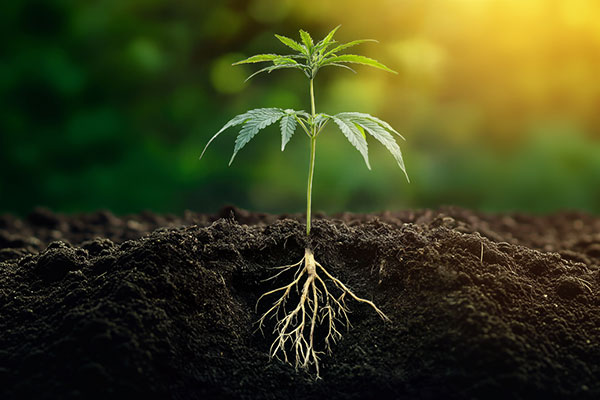
During transplanting:
- Fine root hairs are often damaged or broken
- Soil structure around the roots is disturbed
- Air pockets can form, reducing root-to-substrate contact
As a result, the plant’s ability to absorb nutrients and water becomes less efficient. Research shows that even partial root loss can directly limit water uptake, forcing the plant into a stress response and slowing overall development.
How Transplant Shock Slows Plant Growth
One of the most visible effects of transplanting is slowed or stalled growth. When a plant experiences transplant shock, it enters a recovery phase where:
- energy is redirected toward repairing damaged roots
- nutrient and water uptake are reduced
- photosynthesis efficiency temporarily declines
As a result, plants often show stunted growth, delayed vegetative development, and less uniform canopy structure.
In simple terms, cannabis transplant shock is not just a temporary setback – it disrupts the plant’s entire growth process. Recovery can take several days, or even weeks, before normal growth resumes.
The Long-Term Impact on Yield and Consistency
While transplant shock is often seen as a short-term issue, its effects can extend throughout the entire growth cycle.
Early stress during vegetative growth can result in:
- smaller final plant size
- less efficient canopy formation
- reduced ability to fully utilize light and nutrients
In larger grow setups, transplant stress can also lead to uneven plant development. Some plants recover faster than others, creating inconsistencies in height, structure, and maturation timing. This makes crop management more complex and can affect overall harvest uniformity.
Over time, these factors can translate into measurable differences in yield, product quality, and operational efficiency. This is especially critical in controlled or commercial environments, where consistency is critical.
Signs of Transplant Stress in Cannabis Plants
Recognizing transplant stress early allows growers to react quickly and minimize damage.
Common signs of transplant stress include:
- Drooping or wilted leaves shortly after transplant
- Slowed or paused growth for several days
- Yellowing or pale leaves (nutrient uptake issues)
- Weak or unstable stems
- Delayed recovery after watering
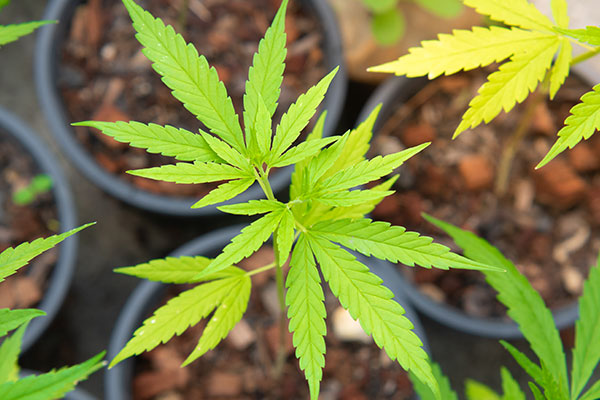
Not all plants show the same symptoms, but any sudden slowdown after repotting is a strong indicator of stress.
In many cases, plants recover. But recovery time = lost growth time.
Why Cannabis Is Especially Sensitive to Transplanting
Cannabis is not fragile, but it is highly performance-sensitive.
Fast Growth Cycle
Cannabis grows quickly, especially in vegetative stages. Any interruption slows canopy development and delays training schedules.
Sensitive Root Structure
Cannabis roots rely heavily on fine root hairs, which are easily damaged and slow to regenerate under stress.
Indoor Precision Timing
Indoor cultivation depends on tight control:
- Lighting schedules
- Nutrient cycles
- Training windows
A poorly timed transplant can disrupt the entire grow cycle.
How to Reduce Transplant Shock
Transplanting always introduces a certain level of stress, this cannot be completely avoided. Even under ideal conditions, the plant must adapt to root disturbance and a new growing environment.
However, some common mistakes can significantly amplify this stress and make recovery slower or more difficult. Even experienced growers run into issues such as:
- transplanting too early → roots are not developed enough
- transplanting too late → plants become root-bound with circling roots
- overwatering after transplant → suffocates recovering roots
- poor substrate transition → inconsistent water retention and aeration
- rough handling → direct root damage
Each of these increases recovery time and reduces plant momentum. Because of this, there are some techniques that reduce the impact of transplanting.
While stress cannot be completely eliminated, it can be minimized with proper handling and timing:
- minimize root disturbance – keep the root ball intact when moving the plant
- transplant at the right stage – avoid repotting during peak stress periods (e.g. heat, late flowering)
- maintain consistent moisture – sudden changes in watering conditions increase stress
- use a well-aerated substrate – aerated soil supports faster root adaptation
- handle plants gently – mechanical stress can damage delicate root structures
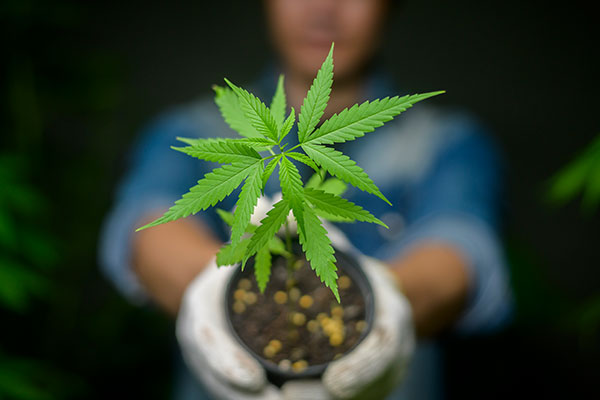
Despite these precautions, the fundamental issue remains:
→ transplanting always interrupts the plant’s natural development cycle.
Is It Possible to Grow Cannabis Without Transplanting?
Yes – modern cultivation methods increasingly focus on reducing or eliminating transplanting cannabis plants altogether.
Instead of asking “How do I transplant better?”, modern cultivation is starting to ask: “What if we didn’t need to transplant at all?”.
This approach offers several advantages:
- uninterrupted root development
- consistent nutrient uptake
- reduced stress cycles
- more predictable growth patterns
However, this cannot be achieved by simply skipping transplanting and planting directly into a large container. This is especially important for autoflower growers, where both transplant shock and oversized final pots can negatively affect early plant development.
In oversized containers, small plants cannot efficiently regulate moisture and oxygen levels in the root zone. The growing medium tends to stay too wet for too long, increasing the risk of overwatering, while roots often develop unevenly.
To eliminate transplanting effectively, the system must allow root space to expand gradually, without physically moving the plant.
A Different Approach: Expanding Root Space Without Transplanting
A new approach to cultivation introduces the Re-Plant container, designed to expand root space progressively within a single system. Instead of transferring the plant between pots, the container adapts to the plant’s development, allowing continuous root growth without disturbance.
By maintaining a stable root zone while gradually increasing available volume, this method reduces transplant-related stress and supports more consistent plant performance throughout the entire growth cycle.
This reflects a broader shift in modern cultivation:
→ optimizing plant health by reducing unnecessary stress at the root level.
Traditional Transplanting vs No-Transplant System
| Factor | Traditional Transplanting | No-Transplant System (Re-Plant) |
|---|---|---|
| Root disturbance | Inevitable | Minimal |
| Plant stress | Moderate to high | Low |
| Labor | Multiple steps | Reduced |
| Timing sensitivity | High | Lower |
| Growth interruptions | Common | Reduced |
| Consistency | Variable | More uniform |
Why Reducing Transplant Stress Matters
In modern cannabis cultivation – especially in professional environments – efficiency and consistency are critical.
Reducing transplant shock leads to:
- faster growth cycles
- more uniform plants
- better resource utilization
- improved final yield quality
For growers, distributors, and commercial operations, even small improvements in plant health can translate into significant operational gains.
At scale, these gains go beyond plant health. Small inefficiencies in transplanting can quickly translate into higher labor costs, workflow disruptions, and inconsistencies across batches. Understanding how these factors impact overall profitability becomes increasingly important as cultivation operations grow.
Transplanting cannabis plants may seem like a routine step, but it introduces a level of stress that directly impacts growth and performance.
By understanding what transplant shock is, how it affects root systems, and how it slows development, growers can make more informed decisions about their cultivation methods.
The key takeaway is simple:
→ The less you disturb the roots, the better the plant performs.
Modern cultivation is increasingly built around this idea – reducing unnecessary stress and optimizing plant development from the root up.
FAQ: Transplanting Stress in Cannabis Plants
Why does transplanting stress cannabis plants?
Transplanting stresses cannabis plants because it disturbs the root system. Even minor root damage can reduce water and nutrient uptake, forcing the plant into a recovery phase instead of active growth.
Can transplant shock kill cannabis plants?
In most cases, transplant shock will not kill a healthy cannabis plant, but severe root damage or poor growing conditions can lead to long-term health issues or plant loss. The risk increases when multiple stress factors occur at the same time.
Does transplant shock affect final yield?
Yes. Slower growth early in the plant’s life cycle can reduce overall plant size and development, which may impact final yield and consistency.
Why do you have to transplant the cannabis plant?
Transplanting allows growers to gradually increase root space. This encourages roots to fully colonize each container before moving to the next, supporting more balanced growth and better nutrient absorption, but this comes at the cost of repeated stress.
How many times should cannabis plants be transplanted?
Cannabis plants are typically transplanted 2-3 times during the vegetative stage, depending on growth speed and container size.
Why not plant cannabis seeds directly in a large pot?
Planting directly into a large container can lead to poor root development. Small plants cannot efficiently use all the available soil, which often stays too wet and limits oxygen in the root zone. In large containers, roots may also grow unevenly, concentrating near the edges and bottom instead of spreading throughout the soil. By contrast, in smaller containers, roots fill the available space more efficiently, creating a denser and healthier root system.
Can cannabis be grown without transplanting?
Yes, but only if the growing system allows roots to expand gradually without being disturbed. Some modern cultivation systems, such as the Re-Plant, are designed to support this approach by allowing root space to expand over time within a single system. Simply using a large container from the start is not the same and often leads to suboptimal results.
What is the best way to avoid transplant shock?
The most effective approach is to either:
- minimize root disturbance during transplanting or
- use systems that allow root expansion without physically moving the plant
Systems such as Re-Plant are designed specifically to reduce transplant-related stress by enabling plants to grow through multiple stages without being removed from their environment.

 Ganatik
 Re-Plant
 Marketing Support
 Cannabis World
 Terms & Conditions