
 Products
 For Distributors
 For Grow Shops
 About Miabis
 Contact
How to identify stress in cannabis plants is one of the most important skills for maintaining consistent yield and plant quality. Plant stress is a common yet often underestimated issue that develops gradually – long before obvious damage appears.
While growers tend to focus on visible inputs like lighting, nutrients, and genetics, the real challenge lies in maintaining a stable and balanced growing system. By the time clear symptoms appear, plant performance is already affected, and recovery becomes slower and less effective.
Successful cultivation is not about reacting to problems, but about recognizing early signals and preventing stress before it accumulates. This shift – from reactive growing to system-based control – is what separates consistent results from unpredictable outcomes.
What Is Cannabis Plant Stress?
Cannabis plant stress is a physiological response that occurs when growing conditions – environmental, nutritional, or root zone factors – fall outside the plant’s optimal range. This response affects how the plant grows, absorbs nutrients, and develops structure over time.
Importantly, stress is rarely caused by a single factor. Instead, it is usually cumulative – small imbalances that build up gradually and begin to affect plant performance.
There are two main types of stress:
- Short-term stress, which may temporarily slow growth but is often reversible
- Chronic stress, which leads to long-term structural issues, reduced vigor, and lower yields
One of the key challenges in cultivation is that cannabis plants do not immediately display clear warning signs. Early stress signals are subtle, and without careful observation, they are easy to miss. By the time symptoms become obvious, the underlying issue has often been present for some time.
Early Signs of Cannabis Plant Stress
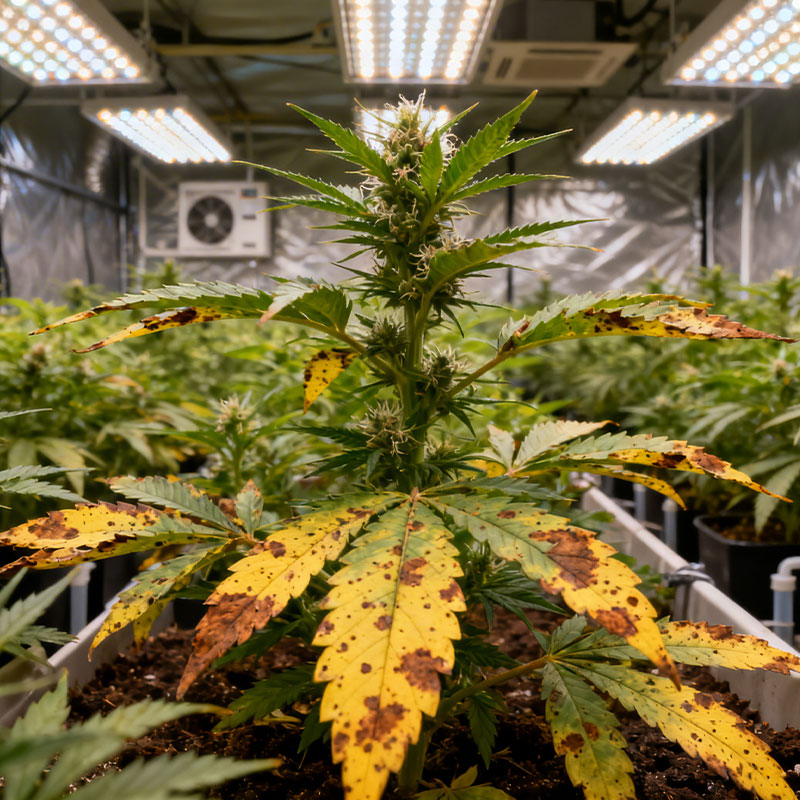
Cannabis plant stress can be identified early through changes in leaf structure, color, growth patterns, and water behavior.
Early detection is the most effective way to prevent yield loss. Cannabis plants communicate stress through small but measurable changes in appearance and behavior.
Recognizing these signals requires looking at patterns – not isolated symptoms – and understanding how different indicators relate to each other.
Leaf Structure Changes
Leaf shape is often the first visible indicator that something is off in the growing environment.
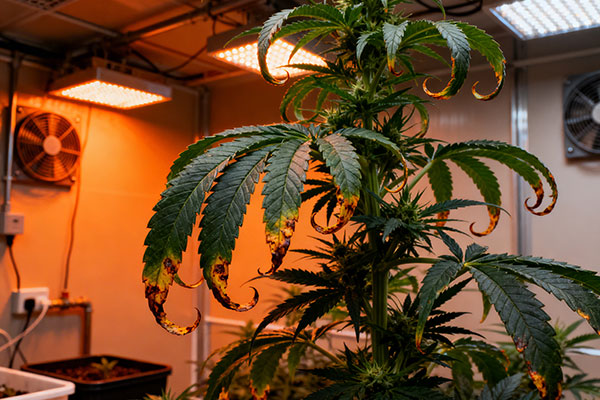
When cannabis plants experience stress, leaf structure begins to change in response to internal imbalance. This can include:
- curling upward or downward
- “clawing”, where leaf tips bend sharply
- twisting or irregular leaf formation
These structural changes are not random. They are a direct response to environmental pressure, nutrient imbalance, or root dysfunction. Because leaves react quickly, they often provide the earliest warning signs before other symptoms appear.
Color Irregularities
Changes in leaf color are another early signal of plant stress, but they require careful interpretation. Common signs include:
- yellowing (chlorosis)
- dark green or overly glossy leaves
- spots, patches, or uneven discoloration
However, color changes alone are not enough to diagnose the problem. The same symptom can have multiple causes. For example, yellowing may indicate nutrient deficiency, root issues, or environmental stress.
Accurate diagnosis depends on context – growth stage, feeding schedule, and environmental conditions must all be considered together.
Growth Pattern Changes
Healthy cannabis plants grow in a consistent and predictable way. When stress is present, this consistency breaks down. Typical signs include:
- slower growth rates
- uneven canopy development
- smaller, weaker, or deformed new growth
These changes indicate that the plant is reallocating energy to cope with stress instead of focusing on development. In many cases, growth abnormalities are linked to root zone or environmental instability rather than surface-level issues.
Water Uptake and Turgor Issues
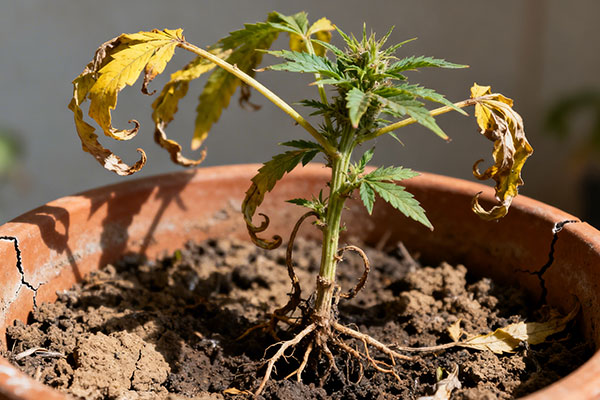
Water behavior is one of the most misunderstood indicators of plant stress. Changes in turgor pressure (the firmness of leaves) often appear as:
- drooping leaves
- loss of rigidity
- irregular water consumption
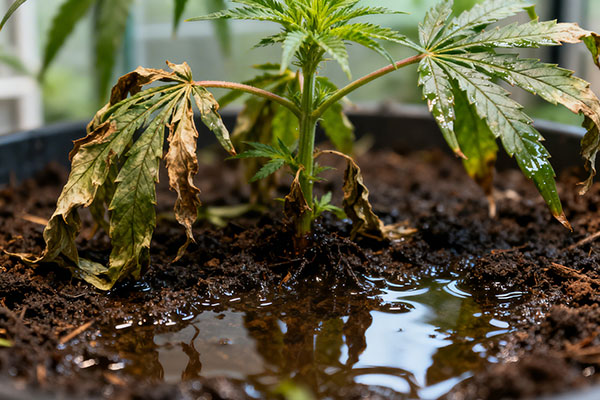
Importantly, similar symptoms can have opposite causes. For example, drooping may result from both overwatering and underwatering.
This is why single observations are not reliable. Instead, growers need to monitor patterns over time – how quickly the medium dries, how the plant responds after watering, and whether the issue persists.
Early symptoms are only one part of the picture. To fully understand plant stress, it is essential to identify its underlying causes.
Main Causes of Stress in Cannabis Plants
To accurately identify stress, it is essential to understand what causes it. In most cases, stress is not the result of one major mistake, but a combination of smaller inefficiencies within the system – many of which fall under common cannabis growing mistakes that often go unnoticed until they begin to affect plant performance.
Environmental Stress
Environmental conditions directly influence how the plant functions on a physiological level. Even small deviations can create measurable stress.
The most common environmental stress factors include:
- excessive or insufficient light intensity
- temperature fluctuations
- improper humidity levels
However, the key issue is not just individual values – it is stability between them. A grow room can have “correct” parameters on paper, but still cause stress if those parameters fluctuate too frequently or are not balanced with each other.
This is where the difference between indoor and outdoor cultivation becomes critical. In indoor environments, growers have direct control over key variables such as light, temperature, and humidity. In outdoor cultivation, these factors are largely influenced by weather and seasonal variation, making stress more difficult to predict and prevent.
Nutrient Stress
Nutrient stress occurs when cannabis plants are unable to absorb or utilize nutrients efficiently. It can result from both excess and deficiency, depending on how nutrients are supplied and how the plant responds.
Common causes include:
- Overfeeding can cause toxicity and nutrient lockout
- Underfeeding limits plant development
- Imbalanced nutrient ratios disrupt metabolic processes
In many cases, nutrient stress is not caused by the feeding schedule itself, but by root conditions. If the root system is compromised, nutrient uptake becomes inconsistent, regardless of what is provided.
Root Zone Stress
Root zone conditions are one of the most critical – and most overlooked – factors in cannabis cultivation.
Stress in this area can result from:
- limited oxygen availability
- poor drainage or overwatering
- root circling in traditional containers
- physical disturbance during transplanting
Unlike leaf symptoms, root problems develop out of sight. By the time they become visible above the surface, the plant has already been under stress for an extended period.
One of the most significant stress triggers is transplanting. When a plant is moved between containers, the root system is disturbed, which can slow growth and disrupt development at critical stages.
Systems that eliminate transplanting and allow roots to expand gradually without disturbance can significantly reduce this type of stress and improve overall plant stability.
Stress Across Growth Stages
Cannabis plants do not respond to stress in the same way throughout their lifecycle. The timing of stress plays a major role in determining its impact.
Vegetative Stage
During the vegetative phase, plants are focused on rapid structural development. This makes them highly sensitive to:
- nutrient imbalance
- root restriction
- environmental instability
Because this phase determines plant size and structure, early stress often limits the plant’s full potential later in the cycle.
Flowering Stage
During flowering, the plant shifts energy toward bud development and secondary metabolite production. Stress at this stage can lead to:
- reduced bud size and density
- lower terpene and cannabinoid production
- increased risk of hermaphroditism
Since recovery capacity is limited, even short-term stress can have a direct impact on final yield and quality.
Transition Phases
Transition periods – such as switching from vegetative to flowering – are inherently unstable because multiple variables change at the same time.
During these moments, plants are adjusting to new conditions. Sudden changes in light cycles, environment, or root space can trigger stress responses that affect the remainder of the grow cycle.
How to Prevent Cannabis Plant Stress
Preventing stress is more efficient than correcting it. The goal is not to eliminate all variation, but to maintain a stable and predictable system.
Stabilize the Environment
Cannabis plants respond best to stable and consistent conditions. Even small but frequent fluctuations can create cumulative stress that affects growth and yield over time.
In practice, this means:
- avoiding rapid fluctuations in environmental conditions
- maintaining stable temperature and humidity ranges
- ensuring balanced and appropriate light intensity
- making sure environmental parameters work together as a system, not independently
Monitor Instead of React
Reactive cultivation often leads to overcorrection. When growers respond too quickly to individual symptoms, they can unintentionally introduce new imbalances that increase overall plant stress.
A more effective approach is to monitor plant behavior over time and respond gradually. This allows growers to distinguish between temporary fluctuations and real underlying issues.
In practice, this means:
- observing plant behavior daily
- identifying patterns over time, rather than reacting to single symptoms
- making gradual, controlled adjustments instead of sudden changes
In many cases, overreaction creates more stress than the original issue. This approach reduces unnecessary interventions and helps maintain a more stable growing environment.
Optimize Root Conditions
Root health is one of the most critical factors in preventing plant stress. Because roots control water uptake, nutrient absorption, and overall plant stability, even small issues in the root zone can affect the entire plant.
To reduce stress and support consistent growth:
- ensure proper aeration in the growing medium
- avoid overwatering and poor drainage
- provide sufficient space for root expansion
When roots have access to oxygen, space, and stable moisture levels, the plant is able to function more efficiently and respond better to environmental conditions.
Cultivation containers that support continuous oxygen supply and prevent root restriction create a more stable foundation for plant development and reduce long-term stress risk.
Avoid High-Risk Interventions
Certain cultivation practices introduce sudden changes that disrupt plant stability. These high-risk interventions often create more stress than the problems they are intended to solve.
Common examples include:
- transplanting at the wrong time
- sudden environmental changes
- aggressive feeding adjustments
Each of these actions forces the plant to rapidly adapt, which increases the likelihood of stress responses.
Reducing these interventions – and replacing them with more stable, predictable processes – helps maintain consistency and minimizes the risk of stress accumulation over time.
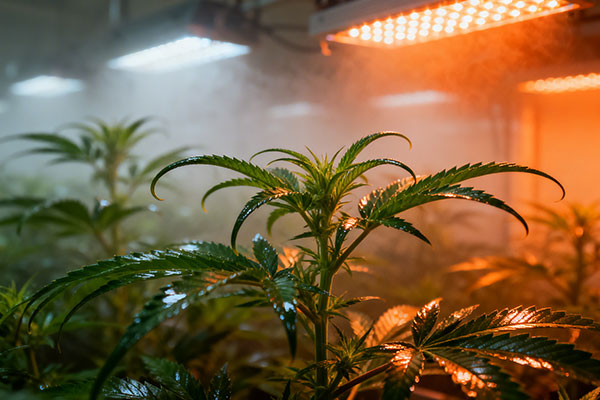
Control the System, Not the Symptoms
Cannabis plant stress is rarely caused by a single issue. It is the result of interconnected variables working together – or against each other:
- Light influences water uptake.
- Root health determines how nutrients are absorbed.
- Environmental conditions regulate overall plant metabolism.
Because of this, focusing on one variable in isolation often leads to misdiagnosis and ineffective corrections.
This is why professional cultivation relies on system-level thinking. Instead of reacting to individual symptoms, the goal is to stabilize the entire growing environment and eliminate the root causes of stress before they escalate.
Learning how to identify stress in cannabis plants is not about spotting dramatic damage. It is about recognizing subtle changes early and understanding what they reveal about the system as a whole.
Healthy plants behave predictably. Stressed plants become reactive.
By maintaining stable conditions, optimizing root environments, and detecting early warning signs, growers can protect yield, improve consistency, and reduce the need for corrective interventions.
FAQ: How to Identify Stress in Cannabis Plants
How do you identify stress in cannabis plants early?
Early stress in cannabis plants is identified by observing subtle but consistent changes in leaf structure, color, growth patterns, and water uptake. Common early signs include leaf curling or clawing, discoloration, slowed growth, and irregular drooping. Because these symptoms develop gradually, accurate identification depends on tracking patterns over time rather than reacting to isolated changes.
What is the most common cause of cannabis plant stress?
The most common cause of cannabis plant stress is environmental instability, particularly fluctuations in temperature, humidity, and light. However, root zone issues, such as poor aeration, overwatering, or root restriction, are often the underlying cause, as they directly affect nutrient uptake and plant stability.
Can cannabis plants recover from stress?
Cannabis plants can recover from mild or short-term stress if conditions are corrected early. However, prolonged or repeated stress can lead to permanent effects, including reduced growth, lower yields, and decreased quality. The earlier the issue is identified and stabilized, the better the recovery outcome.
Does transplanting cause stress in cannabis plants?
Yes, transplanting is a common source of stress because it disturbs the root system and interrupts plant development. This disruption can slow growth and reduce overall plant performance, especially when transplanting is done incorrectly or during sensitive growth stages.
How can you prevent stress in cannabis plants?
Stress in cannabis plants can be prevented by maintaining stable environmental conditions, optimizing root health, and avoiding sudden changes in the growing system. Regular monitoring and gradual adjustments are key, as they allow growers to detect early signs of stress and respond before problems escalate.

 Ganatik
 Re-Plant
 Marketing Support
 Cannabis World
 Terms & Conditions