
 Products
 For Distributors
 For Grow Shops
 About Miabis
 Contact
What Causes Root Circling in Cannabis Plants, Why It’s a Problem and How to Prevent It
Healthy roots are not just part of the plant – they determine how efficiently a cannabis plant can grow, feed and perform. Every input above ground, from nutrients to light, depends on how well the root system functions below the surface.
One of the most common root problems in cannabis cultivation develops out of sight and often goes unnoticed until growth starts to slow: root circling in cannabis plants.
Because it develops gradually and invisibly, many growers misdiagnose the symptoms – adjusting nutrients or environmental conditions – while the real limitation remains in the root zone.
Understanding root circling is essential if you want consistent growth and optimal yields. This means knowing what it is, why it happens, how it affects plant performance, and how to prevent it.
What Is Root Circling in Cannabis Plants
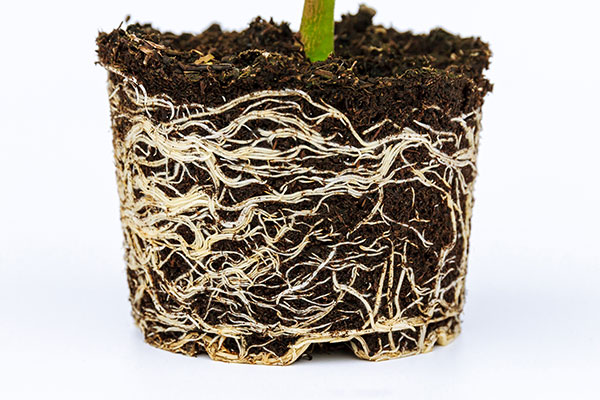
Root circling in cannabis plants is a structural root issue that occurs when roots reach the boundary of a container and continue growing along its walls instead of branching outward into the substrate.
In a natural environment, roots expand freely in all directions, forming a dense network of fine, fibrous roots that maximize contact with water, oxygen and nutrients. Inside a container, however, this natural growth pattern is disrupted.
When roots encounter a solid barrier – such as the smooth wall of a plastic pot – they are redirected sideways. Instead of stopping or branching, they continue growing along the edge, eventually forming circular or spiral patterns around the container.
Over time, this creates:
- a dense outer root layer
- limited root development in the center
- reduced efficiency of the entire root system
This is why root circling is not just a visual issue – it is a structural limitation that directly affects how the plant functions.
Why Root Circling Happens
Root circling is not caused by a single mistake, but by a combination of environmental and structural factors inherent to container growing. At its core, root circling happens when roots are confined, redirected and unable to self-regulate their growth.
1. Smooth Container Walls
Traditional plastic pots with smooth surfaces do not interrupt root growth. When roots hit the wall, they are deflected and continue growing laterally, forming circular patterns instead of branching.
2. Limited Root Space
As the plant grows, the root system expands until it fills the available volume. Without additional space, roots continue growing within the same boundary, eventually wrapping around themselves.
3. Lack of Oxygen at the Root Edge
In closed containers, the outer root zone has limited exposure to air. Without oxygen, roots do not naturally stop growing (air pruning) and instead continue elongating along the container walls.
4. Delayed Transplanting
When plants remain too long in undersized pots, root systems become overcrowded. By the time transplanting occurs, circling has often already developed.
5. Natural Root Behavior in Confinement
Roots follow the path of least resistance. In an unrestricted environment, that path leads outward. In a confined container, it leads around the edges and becomes circular.
Why Root Circling Is a Problem
Root circling is often misunderstood because it can create the illusion of a large and well-developed root system. In reality, the issue is not the size of the root mass, but its structure and functionality. A circling root system is inefficient. Instead of supporting the plant, it limits its ability to grow and respond to inputs.
When roots are concentrated along the container edge, several problems occur:
- Reduced nutrient uptake – The plant cannot fully utilize the substrate, which reduces nutrient absorption efficiency.
- Poor root structure – Instead of producing fine, highly absorptive branching roots, the plant develops thicker structural roots with less functional surface area.
- Oxygen limitation – A dense outer root mass restricts airflow within the medium, negatively affecting root respiration.
- Slower growth – Even under optimal feeding conditions, plants grow slower because the root system cannot support increased demand.
- Lower yield potential – Since root performance directly affects canopy development, inefficient roots ultimately limit yield and consistency.
Signs of Root Circling
Root circling is difficult to detect early because it develops below the surface. However, as the problem progresses, plants begin to show indirect symptoms.
In practical terms, root circling should be suspected when a plant:
- grows slower than expected despite proper conditions
- requires more frequent watering but retains less moisture
- shows signs of nutrient inefficiency without clear deficiencies
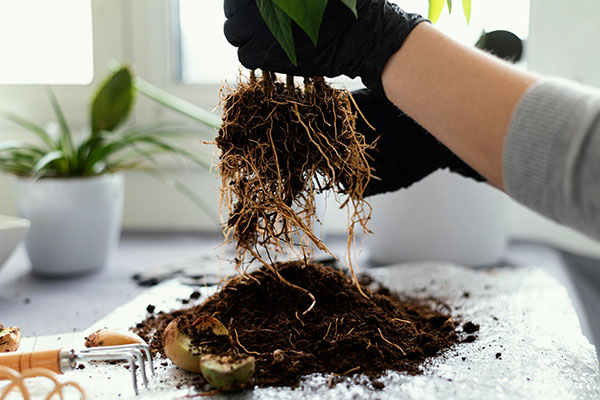
The most reliable confirmation comes when the plant is removed from the container. At that point, circling roots typically appear as a dense network wrapping around the outer edge, with limited penetration toward the center.
Recognizing these signs early is important, because once root structure is established, it is difficult to fully correct.
These symptoms often appear gradually, which makes root circling easy to overlook until it begins to significantly impact plant performance.
Root Circling vs Healthy Root Development
To understand the impact of root circling, it is important to compare it with how a healthy root system should develop.
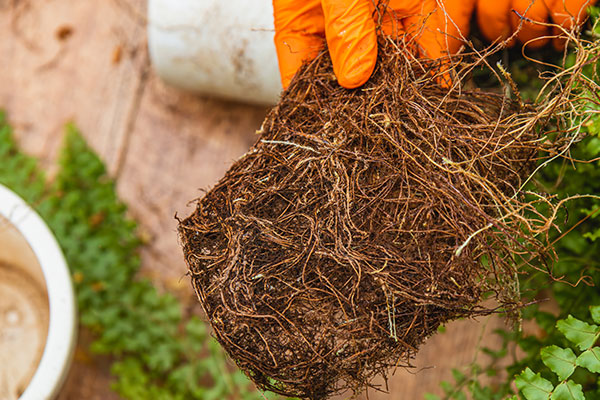
A healthy cannabis root system is:
- composed of fine, branching roots
- evenly distributed throughout the growing medium
- optimized for maximum surface area and absorption
In contrast, a circling root system is:
- concentrated along container boundaries
- dominated by thick, spiraling roots
- limited in its ability to absorb water and nutrients efficiently
The key difference is not volume, but structure. A well-structured root system can outperform a larger but poorly organized one.
How to Prevent Root Circling in Cannabis
Preventing root circling is not about correcting the problem after it appears, but about creating conditions where it cannot develop in the first place. The goal is to guide root growth in a way that promotes branching, oxygen access and efficient use of the entire substrate.
This can be achieved through several key strategies:
- Use aerated containers – Containers that allow airflow interrupt root growth at the edges and encourage branching instead of circling.
- Improve oxygen availability – Oxygen availability directly affects root behavior. Better aeration leads to healthier and more efficient root systems.
- Avoid delayed transplanting – In traditional systems, timely transplanting prevents roots from becoming confined and starting to circle.
- Match container size to growth stage – Providing appropriate space at each stage helps maintain balanced root development.
- Encourage lateral root growth – Environmental conditions and container design should support branching rather than continuous elongation.
Preventing root circling is ultimately about creating a root environment where growth is guided, not restricted. When roots are given both space and oxygen, they naturally develop a more efficient structure.
The Role of Air Pruning in Preventing Root Circling
Air pruning is a natural mechanism that directly prevents root circling by stopping root tip growth when it is exposed to air.
When a root tip reaches an aerated boundary, it dries out and stops elongating. This signals the plant to produce new lateral roots behind the tip, resulting in a dense and highly branched root system.
Unlike traditional containers, where roots are redirected, air pruning systems:
- interrupt root growth at the edge
- prevent spiraling
- stimulate continuous branching
This leads to a more efficient root structure that improves nutrient uptake, oxygen access and overall plant performance.
This is why air pruning is considered one of the most effective strategies for maintaining healthy root architecture in container-grown cannabis.
A Smarter Approach: Growing Without Root Circling
Most root circling problems originate from limitations in traditional growing systems – specifically fixed container sizes and reliance on transplanting. These methods require precise timing and introduce unnecessary variables, including root disturbance and stress.
A more advanced approach is to eliminate these limitations altogether by allowing the root system to expand naturally without confinement. Innovative systems like Re-Plant are designed with this principle in mind. By enabling progressive root zone expansion within a single container, they:
- prevent root confinement
- maintain continuous oxygen supply
- support the development of fibrous, non-spiraling roots
At the same time, they remove the need for transplanting, reducing both plant stress and operational complexity.
This approach shifts root management from reactive to controlled, resulting in more consistent plant performance.
Root circling in cannabis plants is not just a minor root issue – it is a structural limitation that can quietly reduce plant performance throughout the entire growth cycle.
Because it develops below the surface, it is often overlooked or misdiagnosed, leading growers to focus on symptoms rather than the root cause.
The key to preventing root circling is not correction, but proper design:
- creating the right root environment
- ensuring consistent oxygen availability
- using systems that guide root development instead of restricting it
When root structure is optimized, everything above ground becomes more efficient – from nutrient uptake to final yield.
FAQ: Root Circling in Cannabis Plants
What is root circling in cannabis plants?
Root circling in cannabis plants occurs when roots reach the edge of a container and begin growing along its walls instead of spreading through the growing medium. This creates a circular or spiral root pattern that limits proper root development.
Is root circling bad for cannabis plants?
Yes, root circling negatively affects cannabis plant growth. It reduces nutrient uptake, limits oxygen availability and creates an inefficient root structure, which can slow development and reduce yield potential.
How do I fix root circling in cannabis plants?
Root circling can be partially corrected by transplanting into a larger container before the roots become tightly bound. However, once the structure is established, it cannot be fully reversed. The most effective solution is prevention through better container design and root zone management.
Can root circling kill a cannabis plant?
Root circling rarely kills a cannabis plant directly, but it can significantly weaken growth, reduce resilience and lead to long-term performance issues if not addressed.
What causes root circling in cannabis plants?
Root circling is caused by confined growing conditions, especially smooth container walls, limited root space, lack of oxygen at the root edge and delayed transplanting.
What prevents root circling in cannabis plants?
Root circling can be prevented by using aerated containers, improving oxygen availability, avoiding delayed transplanting and promoting lateral root growth through proper root zone design.

 Ganatik
 Re-Plant
 Marketing Support
 Cannabis World
 Terms & Conditions