
 Products
 For Distributors
 For Grow Shops
 About Miabis
 Contact
Terpenes Under Pressure: How Processing Defines Final Quality and Affects Cannabis Aroma and Potency
In modern cannabis production, quality is no longer defined only by how well a plant is grown. Increasingly, it is defined by how well that quality is preserved after harvest.
Aroma plays a central role in this shift. It is often the first attribute evaluated by buyers, distributors and consumers, and it strongly influences perceived potency, freshness and overall product value. However, while cultivation sets the potential, post-harvest handling and processing determine whether growers retain that potential – or lose it.
In practice, a significant portion of terpene degradation happens not in the grow room, but during trimming, drying, handling and storage. These losses are rarely a consequence of a single mistake. Instead, they result from a series of small process decisions that gradually reduce aromatic intensity.
Understanding how processing affects cannabis terpenes and aroma is therefore essential. It allows growers and processors to move from reactive problem-solving to controlled, repeatable quality outcomes. This is especially relevant in operations where consistency, scalability and product differentiation are key performance drivers.
Why Terpenes Matter
Terpenes are volatile organic compounds responsible for the distinct aroma and flavor of cannabis. Yet their role extends far beyond scent alone.
They directly influence how the product is perceived at multiple levels:
- Product differentiation in crowded markets
- Consumer perception of potency and freshness
- Overall user experience
- Brand positioning (premium vs standard product)
In retail environments, aroma often becomes the first point of evaluation. If terpene integrity declines, even high-quality flower can appear average. In competitive markets, these factors are not secondary – they are decisive.
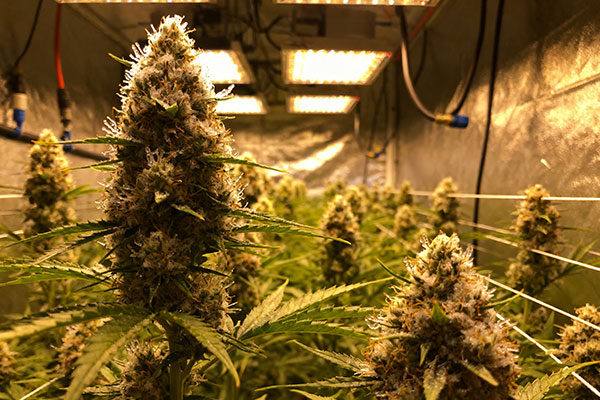
What Makes Terpenes So Vulnerable
Terpenes are inherently unstable. Unlike more chemically stable compounds such as cannabinoids, they begin to degrade as soon as plant material is exposed to external conditions. Their volatility means that even small deviations in temperature, airflow or handling intensity can lead to measurable losses.
Key vulnerabilities include:
- Heat → accelerates evaporation
- Oxygen exposure → leads to oxidation
- Light → degrades terpene compounds
- Mechanical stress → damages trichomes where terpenes are stored
Because of this, terpene preservation depends heavily on how gently and efficiently the product is processed.
Where Terpene Loss Happens in the Workflow
To fully understand how processing affects cannabis terpenes, it is necessary to examine each stage of the workflow where losses occur.
In practice, terpene degradation rarely results from a single factor. Instead, it accumulates across multiple stages of post-harvest handling.
Harvest Handling
The first risks appear immediately after cutting. At this stage, the plant material is still highly sensitive, and the terpene profile is fully intact, but also highly exposed.
Rough handling, compression or unnecessary delays can:
- Rupture trichomes
- Release volatile compounds prematurely
- Reduce overall aromatic intensity
Even seemingly minor actions, such as dropping material or stacking it improperly, can create irreversible losses. The impact of handling on cannabis terpenes is therefore greater than it may seem at first.
These early losses are particularly critical because they cannot be reversed later. In effect, poor handling at harvest sets a lower ceiling for final product quality, regardless of how good subsequent steps are.
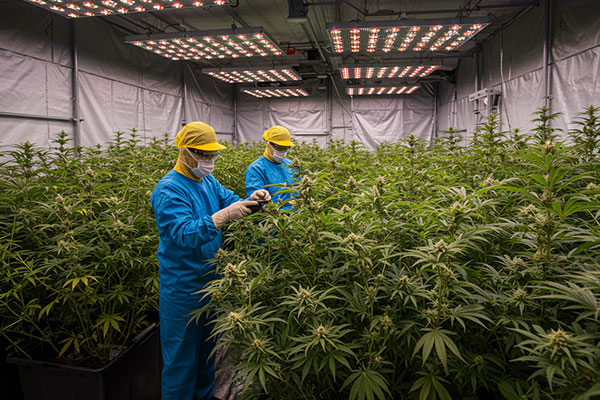
Trimming (Critical Stage)
Trimming is one of the most influential stages in terpene preservation, clearly demonstrating how processing affects cannabis terpenes, as mechanical movement and environmental exposure directly influence trichome integrity.
The balance between speed and control is essential. At this point, it is also worth asking whether manual or machine trimming offers a gentler approach to preserving terpene-rich material. The choice between wet and dry processing further adds complexity, as each approach affects terpene retention differently. Both decisions directly influence how much mechanical stress the material is exposed to and how terpenes behave during subsequent stages.
In many operations, the pressure to increase throughput leads to more aggressive processing settings. While this may improve short-term efficiency, it often increases friction, impact and exposure, resulting in terpene loss during processing and reduced product quality.
The imbalance has negative effects:
- Excessive speed can damage trichomes
- Extended processing increases oxidation risk
- Over-processing can strip delicate resin structures altogether
- Insufficient trimming compromises visual consistency and market readiness.
This is where equipment design becomes critical. Systems such as Ganatik trimmer allow operators to adjust processing speed, airflow and intensity, enabling a more controlled approach that reduces unnecessary mechanical stress while maintaining efficiency. This level of precision is particularly important when working with terpene-rich material.
In addition, integrated kief collection ensures that trichome material removed during processing is not lost but recovered as an additional value stream.
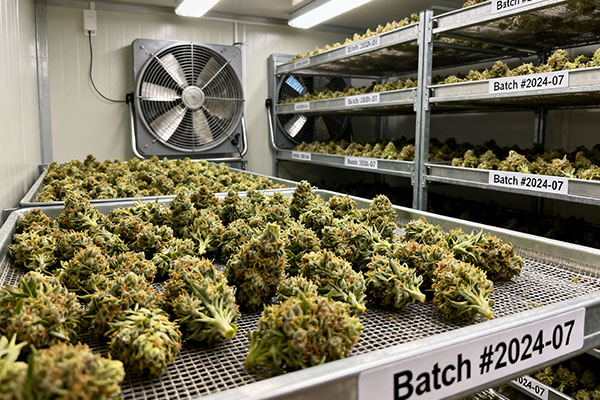
Drying and Curing
Drying and curing are often discussed as cultivation topics, but in reality they represent a continuation of the processing phase.
Terpene loss during drying is influenced not only by environmental conditions, but also by timing. Drying too quickly can drive off volatile compounds before internal moisture equalizes, while overly slow drying increases exposure to oxygen and potential degradation.
Temperature, humidity and airflow must therefore be carefully balanced. Key risks include:
- Excessive temperature → rapid terpene evaporation
- Low humidity → brittle material, higher trichome loss
- Poor airflow control → uneven drying
Even when cultivation and trimming are optimized, improper drying can significantly reduce terpene retention. This makes drying one of the most sensitive stages in preserving the plant’s aromatic profile.
Transport and Storage
After processing, terpene degradation does not stop. It continues during:
- packaging
- transport
- storage
Each handling step introduces additional mechanical stress and air exchange. Repeated movement, repackaging or fluctuating environmental conditions gradually reduce terpene concentration over time. This is particularly noticeable in longer supply chains where multiple handling steps are involved.
As a result, consistent handling protocols are just as important after processing as they are during it.
The Link Between Processing Decisions and Final Product Value
Processing is not just an operational step – it is a defining factor in product value. The full impact of these decisions across the workflow is explored in How Processing Affects Cannabis Quality: From Harvest to Shelf.
Terpene retention directly affects how a product performs in the market:
- Shelf appeal (strong aroma = higher perceived quality)
- Pricing potential (premium positioning)
- Customer retention (consistent sensory experience)
In contrast, terpene loss results in:
- Flat or muted aroma
- Reduced perceived potency
- Lower differentiation in retail environments
These effects are not abstract. In competitive environments, they influence purchasing decisions, pricing potential and customer retention.
How to Preserve Terpenes in Practice
Maintaining terpene integrity requires more than isolated adjustments. It depends on how consistently the entire process is managed.
Gentle Material Handling
Gentle material handling reduces the risk of trichome damage. Even small drops or repeated transfers can disrupt the resin layer where terpenes are concentrated, leading to gradual losses. In practice, this means:
- Minimize unnecessary contact and compression
- Reduce drop heights and transfer steps
- Train staff on careful handling protocols
Controlled Processing Speeds
Controlled processing speeds allow operators to balance efficiency with preservation. Running equipment at maximum capacity may increase throughput, but it also increases mechanical stress and exposure, especially with more delicate material. To achieve this:
- Avoid maximum throughput when working with sensitive material
- Adjust speed based on strain characteristics
- Balance efficiency with preservation
Environmental Control
Environmental control is essential across all stages. Stable temperature and humidity conditions prevent unnecessary evaporation and ensure more predictable outcomes between batches. This requires:
- Maintain stable temperature and humidity
- Avoid excessive airflow during sensitive stages
- Monitor conditions consistently
Workflow Consistency
Workflow consistency reduces variability. When each batch is handled differently, terpene retention becomes inconsistent, regardless of equipment quality. Standardized procedures create repeatable results. This can be achieved by:
- Standardize processes across batches
- Reduce variability between operators
- Implement repeatable handling procedures
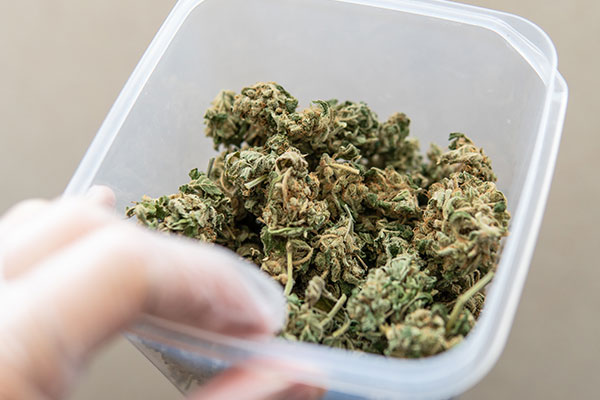
Equipment Matters More Than Most Growers Think
Processing equipment has a direct and measurable impact on terpene preservation.
In many cases, quality loss is not caused by a lack of advanced technology, but by insufficient control within existing systems. Equipment that does not allow precise adjustments forces operators to choose between speed and quality, rather than optimizing both. This often results in inconsistent outcomes between batches, even when using the same material.
When evaluating processing equipment, several factors directly influence terpene retention:
- Level of mechanical stress applied to buds
- Ability to fine-tune processing parameters
- Ease of cleaning and maintenance
- Integration of value recovery (e.g. kief collection)
Advanced solutions such as Ganatik trimmer are designed to support high-capacity workflows while maintaining control over key processing variables. This enables a more consistent balance between efficiency and product integrity.
Ultimately, equipment should not only increase throughput, but also protect the most valuable components of the plant. When processing systems are designed for control rather than just speed, terpene retention becomes a predictable outcome instead of a variable result.
Terpenes Are Won or Lost After Harvest
Terpenes are among the most valuable – and most fragile – components of cannabis. While genetics and cultivation define potential, it is processing that determines the final result. From handling and trimming to drying and storage, each step either preserves or contributes to cannabis aroma loss during processing, ultimately shaping the final product.
As the cannabis market continues to mature, the difference between average and premium products will increasingly depend on how well terpenes are preserved after harvest – not just how well the plant was grown.
For growers, processors and distributors, this represents a clear strategic opportunity. Those who treat processing as a controlled, optimized system – rather than a routine task – will consistently deliver higher-quality products that stand out on the shelf.
In this context, terpene preservation becomes not just a quality metric, but a competitive advantage. Understanding how processing affects cannabis terpenes is therefore essential for any operation aiming to deliver consistent, high-quality products at scale.
FAQ: Cannabis Terpenes and Processing
What stage causes the most terpene loss in cannabis processing?
Terpene loss typically occurs across multiple stages, but trimming and drying are the most critical. These steps combine mechanical stress and environmental exposure, making them the highest-risk phases for aroma degradation.
Why do cannabis terpenes degrade during processing?
Terpenes are volatile compounds that degrade when exposed to heat, oxygen, light and mechanical stress. During processing, factors such as trimming intensity, drying conditions and repeated handling accelerate evaporation and oxidation, leading to a gradual loss of aroma.
Does trimming affect cannabis aroma?
Yes. Trimming has a direct impact on terpene retention. High-speed or aggressive trimming can damage trichomes and increase terpene loss, while controlled trimming with optimized settings helps preserve the plant’s aromatic profile.
What temperature is best for preserving terpenes?
Lower, stable temperatures are ideal for preserving terpenes. Elevated temperatures accelerate evaporation, especially during drying and processing, while stable conditions help maintain a more consistent terpene profile.
Can cannabis lose aroma after processing?
Yes. Terpene degradation can continue after processing if the product is exposed to air, heat, light or mechanical movement during packaging, transport or storage. Proper post-processing handling is essential to maintain aroma over time.
How can growers preserve terpene profiles?
Growers can preserve terpene profiles by minimizing mechanical stress, controlling processing speeds, maintaining stable environmental conditions and using equipment that allows precise, gentle handling throughout the workflow.
Does processing speed affect terpene retention?
Yes. Higher processing speeds increase mechanical impact and exposure to air, which can accelerate terpene loss. Adjusting speed based on material sensitivity is key to balancing efficiency and quality.

 Ganatik
 Re-Plant
 Marketing Support
 Cannabis World
 Terms & Conditions