
 Products
 For Distributors
 For Grow Shops
 About Miabis
 Contact
How trimming speed affects cannabis quality is one of the most important – and often misunderstood – questions in post-harvest processing.
Trimming is usually treated as the final step before packaging. However, in reality, it is a critical control point within the broader post-harvest process that directly shapes how the product looks, smells, and performs on the market. Even when cultivation is done perfectly, poor trimming decisions can reduce quality, consistency, and final value.
One of the key variables in this process is trimming speed.
If trimming is too aggressive, valuable trichomes can be lost and flower structure can degrade. On the other hand, if trimming is too slow, operations become inefficient, labor costs increase, and processing delays can introduce new risks. Because of this, trimming speed is not just an operational detail – it is a strategic lever that affects both quality and profitability.
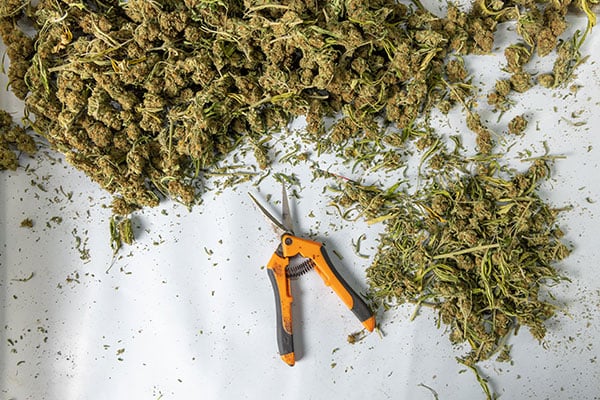
What “Trimming Speed” Actually Means
Trimming speed is often misunderstood as a single number. In practice, it is a combination of multiple interacting factors that together define how the flower is processed.
These include:
- feed rate (how quickly material enters the machine)
- tumbler rotation speed (how fast the tumbler rotates)
- blade speed and cutting intensity (how aggressively blades cut)
- airflow or vacuum strength (how they pull away plant material)
- operator handling and workflow
Because of this, trimming speed should be understood as processing intensity over time, not just speed alone.
In manual trimming, this intensity is controlled by the worker’s pace and skill. However, in machine trimming, these variables can be adjusted independently. This changes the nature of trimming completely. Instead of being limited by human speed, growers can actively tune the process to match their desired outcome.
In simple terms: trimming speed is not just “how fast you go” – it is how aggressively the flower is processed.

How High Trimming Speed Impacts Quality
Higher trimming speed directly changes how cannabis flowers are handled during processing. As speed increases, the intensity of movement, contact, and friction inside the system also increases. Because of this, the flower is exposed to more mechanical stress in a shorter amount of time.
This has several important effects on quality, especially when it comes to structure, trichome preservation, and consistency.
Mechanical Impact on Bud Structure
When trimming speed is high, flowers move more aggressively inside the system. Because of this, the natural structure of the bud can change. Instead of maintaining its shape, the flower may become compressed or overworked. This is especially important for premium products, where visual appeal directly affects perceived value.
In practical terms, faster trimming often leads to a cleaner but less natural look. While this may increase throughput, excessive speed and mechanical stress can mean that trimming damages cannabis buds, reducing the product’s market positioning.
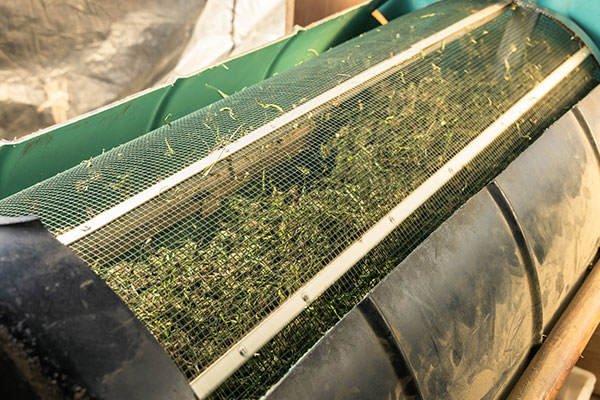
Trichome Preservation
Trichomes are the most valuable part of the cannabis flower. They contain cannabinoids and terpenes, which define potency, aroma, and overall experience.
However, trichomes are also fragile. When trimming speed increases, friction and mechanical impact inside the system also increase. This raises the likelihood of trichomes breaking off or being separated from the flower.
This aligns with cannabis research showing that more aggressive trimming can significantly affect the final cannabinoid and terpene profile. In practical terms, this means that trimming removes trichomes when the process is too aggressive or not properly controlled.
Over time, this leads to measurable terpene and aroma loss during processing. Even small losses can compound across batches, especially in large-scale operations.
Therefore, trimming speed directly affects not just appearance, but also the chemical quality of the final product.
Consistency and Control
Another important effect of higher trimming speed is reduced control. When flowers move quickly through the system, there is less time for precise processing. This makes it harder to achieve a consistent result across all batches. Some flowers may be under-trimmed, while others may be over-processed.
Consistency is critical in commercial production. Buyers expect uniform appearance and quality, especially in branded products.
As speed increases, variability often increases as well – unless the system is carefully controlled.
How Slower Trimming Affects Output
Slower trimming changes the process in the opposite direction. Instead of increasing intensity, it reduces mechanical stress and allows more controlled handling of each flower. Because of this, the focus shifts from speed and throughput to precision and quality.
However, this improvement does not come without trade-offs. While slower trimming can improve the final appearance and preserve delicate structures, it also affects labor, efficiency, and overall workflow capacity.
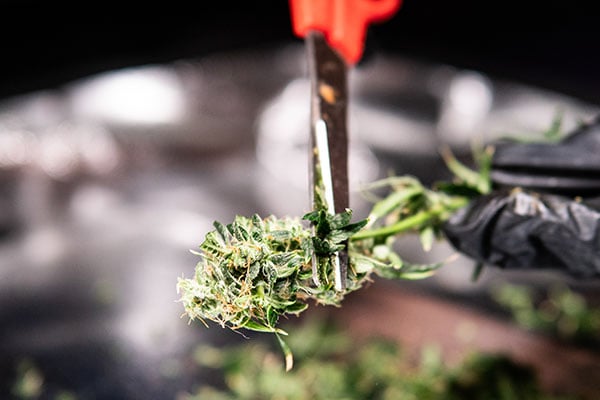
Higher Precision and Detail
When trimming is done more slowly, each flower receives more attention. As a result, leaves can be removed more carefully, and the natural shape of the bud is better preserved. This is especially true in manual trimming, which is often associated with premium-quality cannabis.
With more time per bud:
- leaves are removed more precisely
- buds keep their natural shape and trichomes
- the finish looks cleaner and more refined
Because of this, slower trimming is commonly used when the goal is maximum quality rather than maximum output. In this context, time becomes a tool for precision.
Increased Labor Costs
However, slower trimming comes with clear downsides.
Slower trimming requires more time, more labor, and often more skilled workers. As production scales, these costs increase rapidly. In many operations, trimming becomes one of the most expensive parts of the entire process. This is why many growers start evaluating the trade-off between manual labor and automation in post-harvest workflows.
This creates a clear limitation. While slower trimming improves quality, it can reduce overall profitability if not managed properly. In other words, the quality gains must justify the additional cost.

Workflow Bottlenecks
In addition to cost, slow trimming can create delays across the entire post-harvest workflow.
If trimming cannot keep up with harvest volume, material begins to accumulate. This can lead to longer storage times, scheduling challenges, and in some cases, quality degradation.
For large-scale operations, this is a critical risk. Efficiency is not only about speed – it is about maintaining a smooth and predictable workflow. Therefore, trimming speed must also be aligned with overall production capacity.
The Profitability Equation
At this point, it becomes clear that trimming speed is not just a technical setting – it is a business decision.
On one side, increasing speed improves throughput and reduces labor costs. On the other side, it can reduce quality and lower the final product value. Slower trimming does the opposite: it improves quality but increases cost and slows down operations.
Because of this, profitability depends on finding the right balance.
→ The most important insight is simple:
The goal is not maximum speed or maximum quality – but the best combination of both.
Growers who understand this can position their product correctly while maintaining efficient operations.
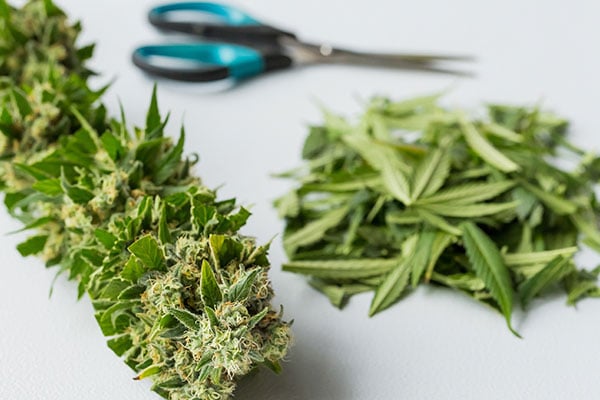
Finding the Optimal Balance
There is no single “perfect” trimming speed that works for every operation. Instead, the optimal setting always depends on the specific context of the grow, the material, and the desired outcome.
To find the right balance, growers need to consider several key factors:
- Plant structure and sensitivity – Different strains respond differently to mechanical stress. Some flowers are more resilient, while others require gentler handling to maintain structure and trichomes.
- Wet or dry trimming – Each method behaves differently during processing, which means speed settings must be adjusted accordingly.
- Target market (premium vs volume) – Premium products demand higher precision and better preservation, while bulk production often prioritizes speed and throughput.
- Desired consistency – The more uniform the final product needs to be, the more controlled and stable the trimming process must be.
Because of this, trimming speed should always be adjusted based on the goal. Instead of focusing on maximum output, growers should define a quality standard first. Then, they should adjust speed to meet that standard as efficiently as possible.
The right question is not:
“How fast can we trim?”
But rather:
“How fast can we trim without reducing quality?”
This shift turns trimming from a simple task into a controlled, repeatable process, where speed supports both quality and efficiency, not the other way around.
The Role of Modern Trimming Technology
In the past, growers had to choose between manual precision and machine efficiency:
- manual trimming → high quality but slow
- machine trimming → fast but less precise
Today, this trade-off is no longer absolute.
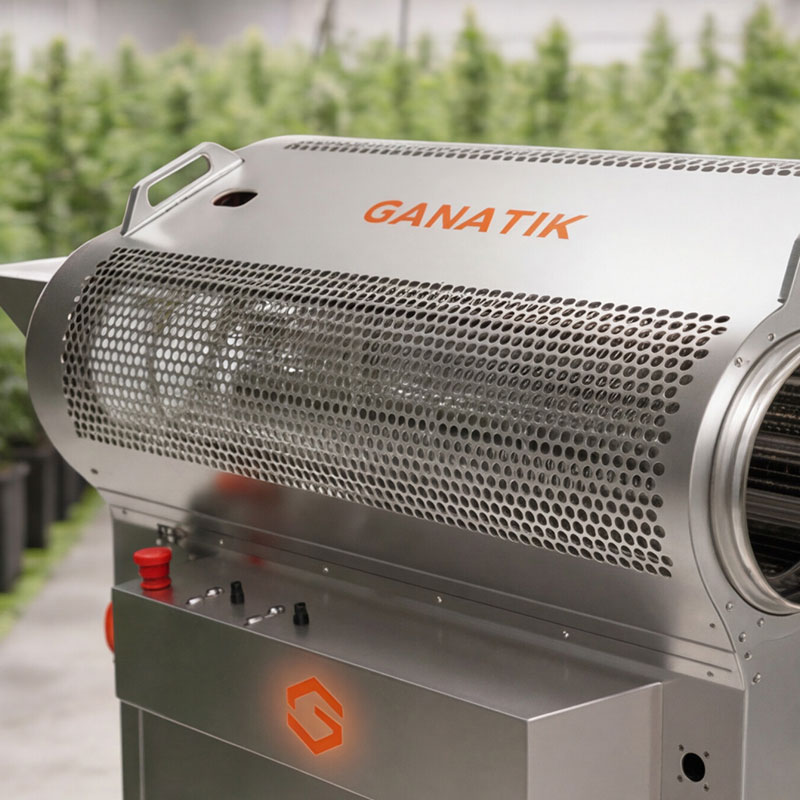
Modern trimming systems allow for fine control over key parameters such as rotation speed, cutting intensity, airflow, and feed rate. This makes it possible to adjust how gentle or aggressive the process is.
For example, solutions like Ganatik trimmer are designed to give growers this level of control. By adjusting multiple variables, operators can match trimming intensity to specific strains, moisture levels, and quality targets.
This flexibility allows for a more strategic approach:
- slower, gentler settings for high-value batches
- faster settings for large-scale processing
At the same time, high-capacity systems and improved workflow design help maintain efficiency and reduce downtime, supporting consistent results across production cycles.
→ The key shift is clear:
Speed is no longer fixed – it can be adjusted based on goals.
Trimming speed is one of the most important factors in cannabis production, yet it is often overlooked.
It directly affects:
- product quality
- processing efficiency
- overall profitability
Because of this, trimming should not be treated as a simple finishing step. Instead, it should be approached as a precision-controlled process that defines the final outcome.
Ultimately, the most successful growers are those who understand how trimming speed affects cannabis quality – and who can adjust it to match their production goals, market position, and business strategy.
FAQ: How Trimming Speed Affects Cannabis Quality
Does faster trimming reduce cannabis quality?
Yes, if trimming speed is too high or not properly controlled. Faster processing increases mechanical stress and friction, which can damage bud structure and knock off trichomes. As a result, both visual quality and potency may decrease.
What is the best trimming speed for cannabis?
There is no single best trimming speed. The optimal setting depends on the strain, moisture level (wet or dry), and the target product quality. In practice, the best speed is the one that maintains quality while still meeting production requirements.
Does trimming speed affect terpene preservation?
Yes. Higher trimming speeds can increase friction and exposure, which may lead to terpene loss. Slower, more controlled trimming helps preserve aroma and overall product quality.
Is machine trimming worse than hand trimming?
No, not inherently. While manual trimming offers high precision, modern trimming machines can achieve comparable results when properly adjusted. The key difference is control – machines allow growers to fine-tune speed and intensity for consistent outcomes.
Why is trimming speed important for profitability?
Trimming speed directly impacts profitability because it affects both cost and product value. Faster trimming reduces labor and processing time, while slower trimming can improve quality and price per gram. The balance between these factors determines overall margins.
How can growers balance speed and quality?
Growers can balance speed and quality by defining a clear quality standard first and then adjusting trimming parameters to match it. This includes controlling speed, feed rate, and processing intensity, as well as optimizing the overall workflow.

 Ganatik
 Re-Plant
 Marketing Support
 Cannabis World
 Terms & Conditions