
 Products
 For Distributors
 For Grow Shops
 About Miabis
 Contact
Understanding how to improve cannabis cultivation efficiency has become essential for growers operating in an increasingly competitive and cost-sensitive environment.
Cannabis cultivation is no longer just about growing healthy plants. As margins tighten and competition increases, producers are under pressure to deliver consistent, high-quality output while using fewer resources and scaling operations efficiently. This shift is changing how cultivation is approached at every level.
Efficiency and quality are no longer separate goals – they are directly connected outcomes of how well the entire cultivation workflow is designed and executed.
Improving cannabis cultivation efficiency and quality requires more than incremental adjustments. It requires rethinking workflows, eliminating bottlenecks, and building integrated systems that support both plant performance and operational scalability.
Why Efficiency and Quality Are Now the Same Problem
Historically, growers could afford inefficiencies. Labor was cheaper, production volumes were smaller, and inconsistencies had less financial impact. That is no longer the case.
Today’s cultivation environment is defined by:
- rising labor costs
- increased production scale
- higher consistency expectations
- competitive market pressure
Under these conditions, inefficiencies translate directly into reduced profitability. At the same time, any compromise in quality affects market value.
This creates a convergence: improving efficiency becomes one of the most effective ways to protect and enhance quality.
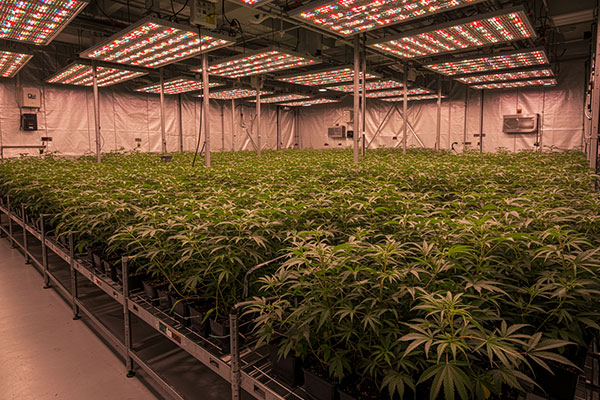
Key Cannabis Cultivation Trends Driving Optimization
Cannabis cultivation is evolving as growers respond to increasing cost pressure, scaling demands, and stricter quality expectations. These shifts are driving a new generation of cultivation strategies focused on efficiency, consistency, and workflow integration.
1. Reducing Labor Dependency
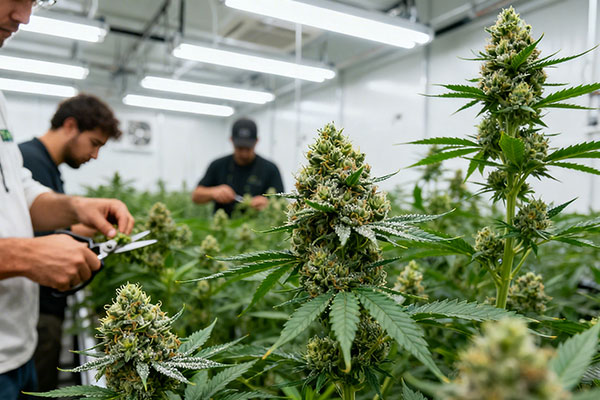
Labor remains one of the largest cost drivers in cannabis production. Tasks such as transplanting, plant handling, and trimming require time, coordination, and skilled workers. As operations scale, these tasks become increasingly difficult to manage efficiently.
Modern cultivation strategies focus on:
- reducing repetitive manual work
- streamlining workflows
- introducing automation where it delivers measurable ROI (return on investment)
The goal is not to eliminate labor entirely, but to allocate it where it adds the most value. Rather than choosing between labor and automation, growers achieve the best results by integrating both into a balanced, hybrid workflow, where automation handles repetitive tasks and labor focuses on quality-critical decisions.
2. Eliminating Bottlenecks in Grow Workflows
Many inefficiencies in cannabis cultivation are not obvious. They are embedded in routine processes.
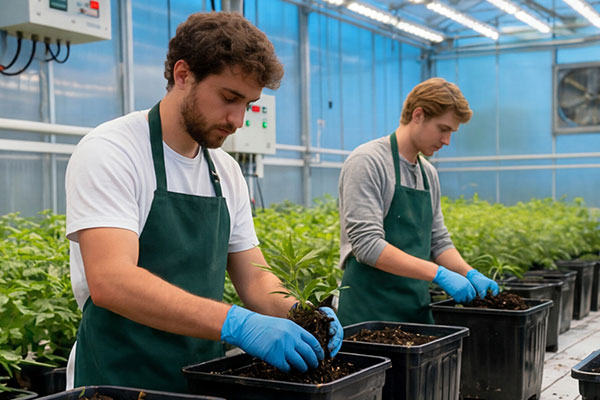
One of the most common examples is transplanting. While standard practice, transplanting introduces:
- additional labor
- timing dependency
- risk of plant stress
- workflow interruptions
At scale, these transplanting-related factors compound into significant operational costs.
Modern systems aim to remove unnecessary steps entirely, rather than optimizing them incrementally. By simplifying workflows, growers reduce variability and improve predictability.
3. Optimizing Root Zone Performance
The root system defines the plant’s ability to absorb nutrients, water, and oxygen. It ultimately sets the ceiling for growth and yield.
However, traditional containers impose limitations:
- restricted root expansion
- poor oxygen availability
- root circling and structural inefficiencies
Optimizing the root zone has become a key focus area for growers looking to improve both efficiency and plant performance.
This includes:
- improving aeration
- encouraging fibrous root development
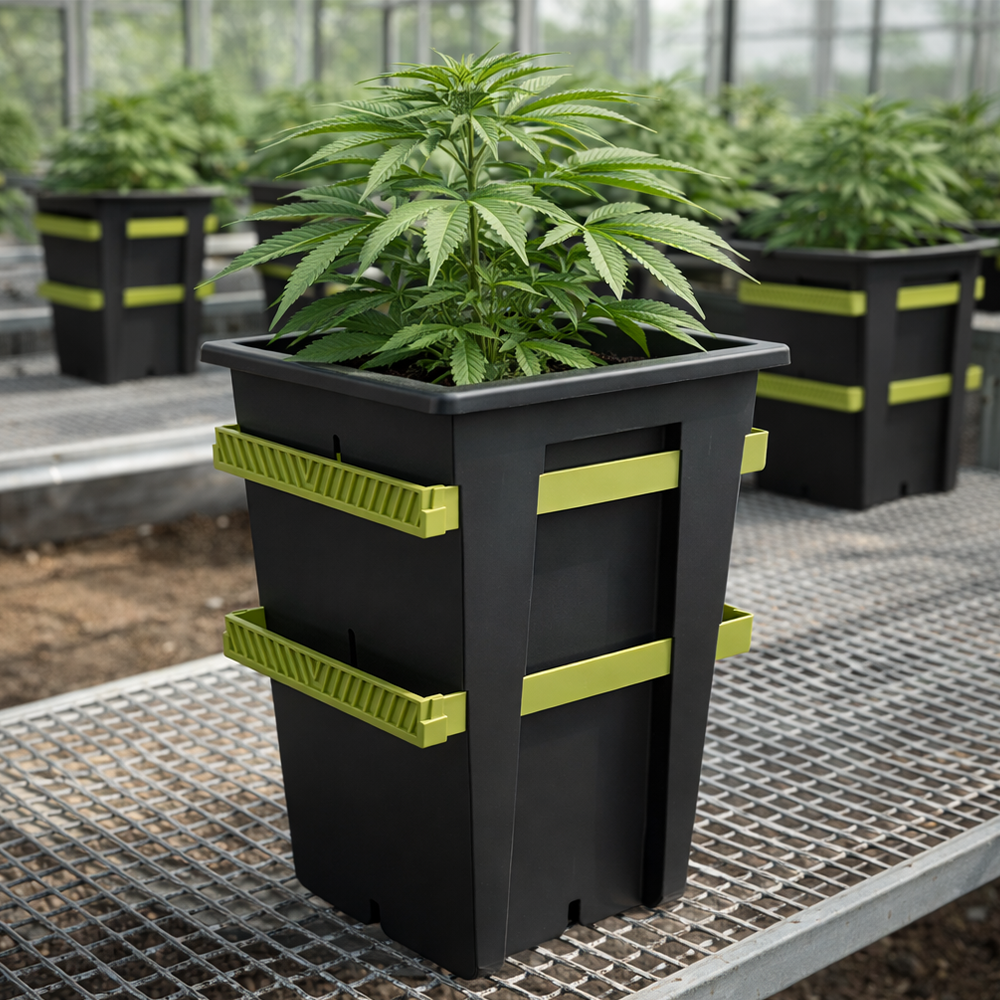
- using container systems that adapt to plant growth
Instead of forcing the plant to adapt to the container, modern approaches allow the container to adapt to the plant. This shift improves both root structure and overall plant stability.
4. Integrating Post-Harvest Efficiency
Efficiency does not stop at harvest. Post-harvest processes such as trimming have a direct impact on both cost and final product quality.
Key variables include:
- processing speed
- trichome preservation
- consistency of output
- material handling
If trimming is too aggressive, quality is lost. If it is too slow, costs increase and throughput becomes a bottleneck.
Modern processing systems are designed to balance speed and precision, ensuring that efficiency gains do not come at the expense of product quality.
Where Growers Still Lose Efficiency (Hidden Costs)
Even well-run operations often contain hidden inefficiencies that erode performance and profitability over time, such as:
- Transplanting Costs – Each transplant introduces labor, handling, and risk. At scale, this becomes a recurring operational burden.
- Workflow Fragmentation – Disconnected processes create delays, inconsistencies, and coordination challenges.
- Quality Loss During Processing – Improper drying, trimming, or handling can reduce value even after a successful cultivation cycle.
These inefficiencies are often overlooked because they are considered “standard practice.” However, standard does not mean optimal.
How Modern Systems Improve Both Efficiency and Quality
The most effective growers are shifting from task-level optimization to system-level thinking. Instead of asking, “How can we do this step better?” they ask, “Do we need this step at all?”
This shift fundamentally changes how cultivation workflows are designed. By eliminating unnecessary steps rather than optimizing them, growers:
- reduce handling
- lower labor dependency
- achieve more consistent outcomes
This approach becomes clearer when applied to both cultivation and post-harvest workflows.
Example 1: Cultivation Workflow Optimization
In cultivation, this modern approach is especially visible in how root development and plant handling are managed. Systems that eliminate transplanting allow plants to develop continuously without interruption, removing a major source of labor and plant stress. By enabling roots to expand within a single container and maintaining continuous oxygen supply, growers can achieve stronger root systems and more stable plant development.
Example 2: Post-Harvest Optimization
The same principle applies to post-harvest operations. Advanced trimming systems are designed to increase throughput while maintaining control over processing intensity. Adjustable parameters allow growers to balance speed and quality based on material characteristics, while integrated kief collection captures additional value from material that would otherwise be lost.
This shift reflects a broader transformation in cannabis cultivation. What was once a craft-based discipline is becoming a system-driven operation. This does not mean abandoning expertise. It means applying it differently. Instead of focusing only on individual techniques, growers are designing entire production systems that
- reduce variability
- scale efficiently
- maintain consistent quality
The competitive advantage is no longer just how well you grow a plant. It is how well your entire operation performs.
Efficiency as a Competitive Advantage in Modern Cannabis Cultivation
Improving cannabis cultivation efficiency and quality is not about isolated improvements. It is about aligning the entire production process into a system that works consistently, predictably, and at scale.
The most successful growers are not simply optimizing individual tasks. They are:
- eliminating unnecessary steps
- optimizing root and plant development
- integrating post-harvest workflows
- designing systems that scale with demand
This shift transforms efficiency from a cost-saving measure into a strategic advantage.
Efficiency is no longer just about reducing expenses. It is a key driver of quality, consistency, and long-term profitability – and a defining factor in how competitive a cultivation operation can become.
FAQ: Cannabis Cultivation Efficiency Improvements
What is a cannabis cultivation workflow?
A cannabis cultivation workflow is the sequence of processes from propagation to post-harvest processing. Optimizing this workflow means reducing unnecessary steps, improving coordination between stages, and ensuring consistent outcomes.
How can cannabis growers improve efficiency without reducing quality?
By removing unnecessary steps, optimizing workflows, and using systems that support both plant health and operational scalability. The goal is to reduce variability and handling, not cut corners – efficiency should improve consistency, not compromise outcomes.
How can growers reduce labor costs in cannabis cultivation?
Labor costs can be reduced by simplifying workflows, minimizing manual handling, and using systems that eliminate repetitive tasks such as transplanting or inefficient trimming processes.
Why is the root system important for cannabis cultivation efficiency?
The root system determines how effectively a plant can absorb nutrients, water, and oxygen. A well-developed root system enables faster growth, better resilience, and more predictable yields, making it a key driver of both efficiency and quality.
What are the biggest inefficiencies in cannabis cultivation?
Common inefficiencies include transplanting, excessive manual handling, fragmented workflows, and inconsistent post-harvest processes. These are often accepted as standard practice but create hidden costs at scale.
How does trimming affect cannabis quality and efficiency?
Trimming directly impacts both product appearance and trichome preservation. Efficient trimming systems balance speed and precision, allowing growers to maintain quality while improving throughput and reducing labor costs.
Is automation necessary for improving cannabis cultivation efficiency?
Not always. The key is strategic optimization. In many cases, eliminating a step entirely delivers more value than automating it. Automation is most effective when it removes bottlenecks without adding complexity.

 Ganatik
 Re-Plant
 Marketing Support
 Cannabis World
 Terms & Conditions