
 Products
 For Distributors
 For Grow Shops
 About Miabis
 Contact
How Processing Affects Cannabis Quality
From Harvest Through Drying, Curing, Trimming and Storage
Many growers believe that cannabis quality is decided during cultivation. However, that is only partially true. While growing sets the potential, post-harvest processes determine whether that potential is preserved or lost.
A perfectly grown plant can lose a significant part of its value within hours after harvest if post-harvest conditions are not controlled. At the same time, well-structured processing can preserve – and in some cases even enhance – the perceived quality of average material.
Cannabis quality is not created in a single moment. It is the result of a chain of decisions made from harvest through drying, curing, trimming and storage. Each step either protects or degrades what was achieved during cultivation and directly affects appearance, aroma, potency perception, and overall market value.
Understanding how processing affects cannabis quality is therefore not just a technical question – it is a question of consistency, efficiency and final product value.
The Moment of Harvest: Starting Point, Not Final Quality
Harvest is often treated as the finish line. Operationally, it is the point where quality control actually begins.
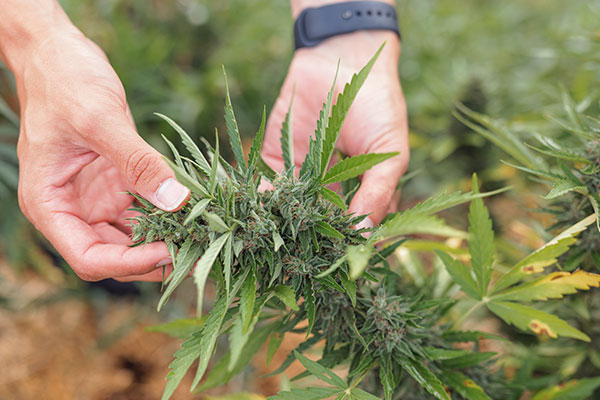
At this stage, growers define the plant’s biological potential. Trichome maturity, plant health, and harvest timing determine cannabinoid profile and terpene expression. However, this potential remains fragile and highly dependent on what happens next.
To preserve that potential, three things matter immediately after harvest: timing, environment, and handling:
- Plants should be processed or transferred into controlled conditions as quickly as possible. Delays between cutting and drying increase exposure to heat, light and oxygen, accelerating terpene loss.
- Environmental conditions must be stable from the start. Sudden changes in temperature or humidity can stress plant material and negatively affect drying behavior later.
- Handling should be minimized and standardized. Rough or inconsistent handling damages trichomes and introduces variability between batches before processing even begins.
Even high-quality plants can lose value quickly if these factors are not controlled. Conversely, a structured and repeatable harvest workflow helps stabilize outcomes and maintain consistency across production cycles.
It is also important to recognize that uniformity at harvest does not happen by accident. Consistent plant development plays a major role. Systems that reduce plant stress and eliminate variables – such as transplant shock – contribute to more predictable outcomes and a more stable starting point for post-harvest processing.
Drying: The First Critical Quality Filter
Drying is the first step where quality is actively preserved – or lost.
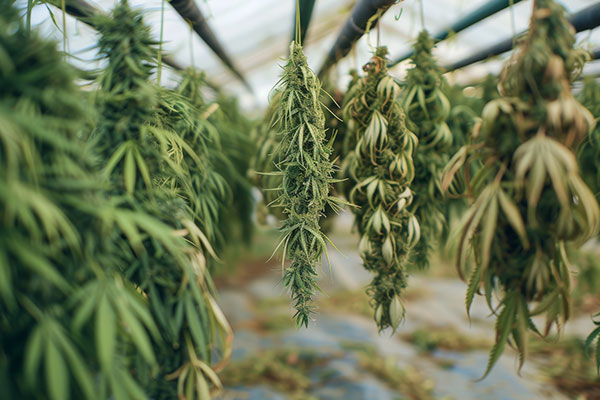
The goal is not simply to remove moisture, but to do so in a controlled way that protects volatile compounds and prevents biological risks. This makes drying a balance between speed and stability.
In practice, this means maintaining stable environmental conditions, typically with controlled temperature, humidity and airflow to ensure even and gradual moisture removal.
This phase directly affects:
- Moisture balance
- Terpene preservation
- Mold risk
If drying is too fast, terpenes evaporate and the product loses aromatic complexity, as terpene compounds are highly volatile and sensitive to environmental conditions. If it is too slow, excess moisture creates conditions for mold and microbial issues.
Another common issue is inconsistency. Uneven airflow or poor environmental control leads to variability within the same batch, which directly impacts product grading and market value.
For this reason, drying should be treated as a controlled process, not a passive waiting period. At this stage, quality can already move in either direction.
Curing: Where Quality Is Refined
If drying stabilizes the product, curing refines it. This is where the product truly develops its final character.
During curing, chemical and physical changes improve the overall sensory profile. Chlorophyll breaks down, harshness decreases, and terpene expression becomes more balanced and complex.
However, curing is highly sensitive to time and conditions. The key challenge is that curing does not scale easily. Faster turnaround reduces holding time but often compromises quality thorugh underdeveloped terpene profiles. Longer curing improves product characteristics but ties up inventory and space.
Inconsistent curing practices also introduce variability between batches, which is especially problematic in commercial operations.
For that reason, curing is not just a biological process – it is an operational decision point where quality, time and cost must be balanced.
Trimming: Where Perception Meets Reality
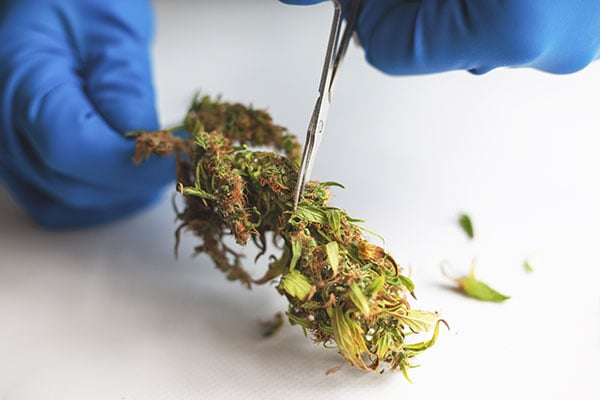
Trimming is where product quality becomes visible. At this stage, the product is shaped for the market. Structure, cleanliness, and trichome integrity all contribute to how the flower is perceived by the end customer.
A well-trimmed flower:
- presents clean, defined structure
- preserves trichomes
- maintains visual appeal
However, trimming introduces one of the most important operational trade-offs: speed versus control. This is especially evident when comparing different approaches to trimming, such as manual versus machine processing.
In practice, trimming speed itself plays a critical role. Higher speeds increase throughput but can also lead to mechanical damage, trichome loss and inconsistent results. Slower, more controlled trimming improves precision but reduces capacity.
Because of this, trimming is not just a manual task – it is a system-level decision involving equipment, settings and workflow design.
Advanced trimming solutions allow operators to fine-tune processing intensity, maintain consistency and adapt to different material conditions, including decisions such as wet versus dry trimming. At the same time, features such as kief collection can recover value that would otherwise be lost during processing.
Handling and Processing: Hidden Damage Points
Outside of defined steps like trimming, quality is often lost in transitions. Handling is one of the least visible but most impactful factors in post-harvest workflows. Every transfer, movement, or unnecessary touch increases the risk of:
- trichome loss
- physical damage
- batch inconsistency
These losses are usually incremental, which makes them difficult to detect – but significant over time.
In inefficient workflows, material may be moved multiple times between stages, increasing cumulative damage without adding value. This can quietly degrade quality even if individual steps are well executed.
For this reason, minimizing unnecessary handling is not just about labor efficiency. It is directly linked to preserving product integrity.
Cleaning and Maintenance: The Overlooked Factor
Cleaning is rarely seen as a quality driver. Nevertheless, it has a direct impact on both product quality and operational efficiency.
Residue buildup, contamination, and poorly maintained equipment can affect both hygiene and processing performance. Over time, this leads to variability in output and potential product quality issues.
Poor maintenance can result in:
- contamination between batches
- reduced trimming accuracy
- unexpected downtime
On the other hand, well-maintained equipment ensures stable performance and predictable results.
As a result, operators who prioritize maintenance often achieve more stable output and higher long-term performance. In high-throughput operations, cleaning is not just a maintenance task – it is part of the production system.
Storage and Packaging: The Final Quality Gate
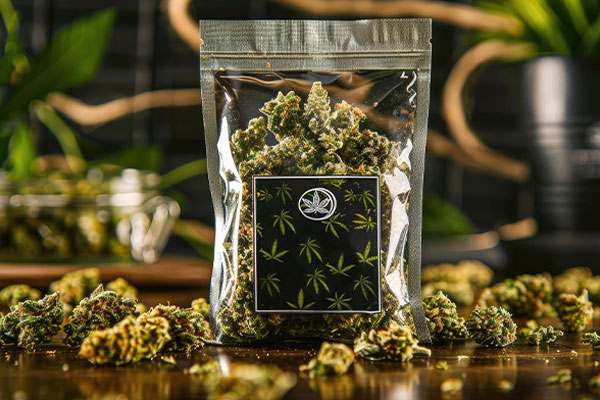
After processing, the product enters its final and often longest phase: storage. Storage conditions determine whether the product maintains its value over time. At this stage, quality is no longer developed – it is either preserved or degraded.
Key environmental factors include:
- light exposure
- oxygen levels
- humidity
Improper storage conditions can lead to terpene loss and cannabinoid degradation, reducing shelf appeal and aroma.
Packaging also plays a functional role. It must protect the product while maintaining stability over time.
In commercial settings, this phase directly impacts shelf life, customer experience, and brand consistency.
The System Effect: Quality Is Not One Step
A common misconception is that improving a single step will significantly improve overall quality. Understanding how processing affects cannabis quality requires looking at the entire system rather than individual steps.
Each stage builds on the previous one:
- a strong harvest can be compromised by poor drying
- proper drying can be undone by aggressive trimming
- well-processed product can degrade in storage
Because of this, the weakest point in the workflow defines the final outcome.
Operators who achieve consistent quality do not focus on isolated improvements. Instead, they design and optimize the entire process as a connected system.
Cannabis quality is not fixed at harvest – it is managed from that point forward.
Every stage, from drying to storage, contributes to the final product. Decisions made during processing directly affect consistency, efficiency, and market value.
For growers and operators, this means shifting focus from individual tasks to complete workflows.
Those who understand how processing affects cannabis quality – and build systems around that understanding – are the ones who achieve predictable, high-value results.
FAQ: How Processing Affects Cannabis Quality
Does harvest timing affect final cannabis quality?
Yes. Harvest timing defines the plant’s maximum potential by determining trichome maturity, cannabinoid profile, and terpene expression. However, this potential can still be lost if post-harvest conditions are not properly controlled.
What is the biggest risk to cannabis quality after harvest?
One of the biggest risks is uncontrolled drying conditions. Poor temperature, humidity or airflow can quickly degrade terpenes, create inconsistency or introduce mold, even if the plant was grown perfectly.
How does drying affect cannabis quality?
Drying controls how moisture is removed from the plant. If it happens too quickly, terpenes are lost. If it is too slow, the risk of mold increases. Controlled, even drying is critical for preserving aroma and consistency.
Why is curing important for cannabis quality?
Curing allows chemical processes that improve flavor, smoothness and aroma. Without proper curing, the product can remain harsh, unstable, and less appealing, even if drying was done correctly.
How does trimming impact cannabis quality and value?
Trimming directly affects visual quality, trichome preservation and product perception. Aggressive or inconsistent trimming can reduce both the physical quality of the flower and its market value.
Can processing reduce cannabis potency?
Yes. Excessive handling, high processing speeds or poor storage conditions can damage trichomes, which reduces perceived potency and overall product quality.
What role does handling play in cannabis quality?
Handling is a major but often overlooked factor. Every unnecessary movement increases the risk of trichome loss and physical damage. Efficient workflows help preserve product integrity.
What is the most important step in post-harvest processing?
There is no single most important step. Cannabis quality depends on the entire process working as a system, where each stage supports and preserves the previous one – from harvest, drying and curing to trimming, handling and final storage. A weakness in any one of these stages can reduce the overall quality, regardless of how well the other steps are executed.

 Ganatik
 Re-Plant
 Marketing Support
 Cannabis World
 Terms & Conditions