
 Products
 For Distributors
 For Grow Shops
 About Miabis
 Contact
Many growers using AutoPot systems have asked the same question: does RE-PLANT work with AutoPot systems and can it be used successfully inside AutoPot setups?
The short answer is yes.
RE-PLANT is compatible with AutoPot bottom-feeding systems and can work as a technically interesting alternative to traditional grow pots commonly used in automated irrigation environments. However, the more important question is not simply whether the container physically fits into an AutoPot tray, but how the RE-PLANT container can influence root development, substrate use and transplant-free growing inside a bottom-fed cultivation system.
What Is an AutoPot System?
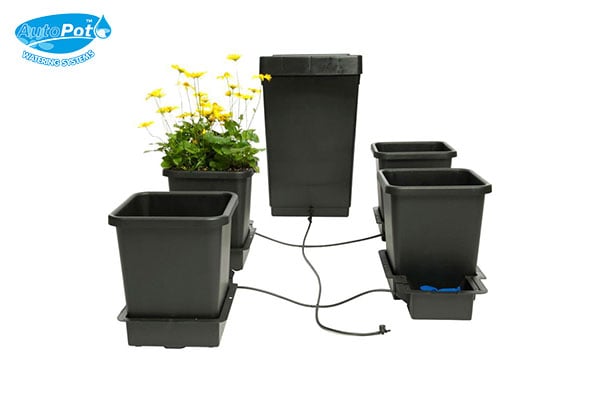
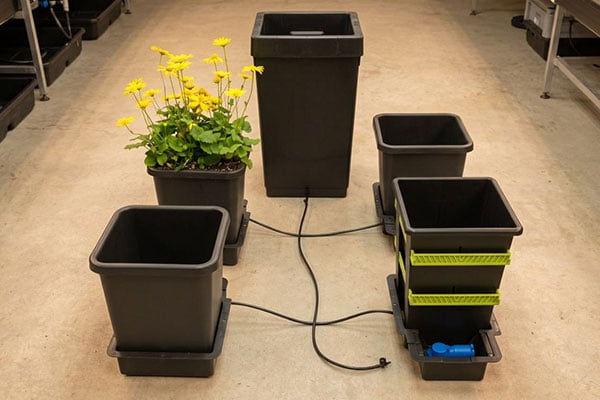
An AutoPot system is a gravity-fed automatic irrigation system designed to water plants from the bottom up and to automate watering without pumps or electricity. Using an AQUAvalve mechanism, the system delivers nutrient solution into a tray beneath the container whenever the water level drops.
When the tray dries to a certain level, the valve opens and allows fresh nutrient solution to flow back into the tray. This creates a repeating wet-dry cycle controlled by gravity and water pressure.
The system typically consists of:
- a water/nutrient reservoir,
- tubing,
- an AQUAvalve,
- a tray,
- and one or more plant containers.
Because watering happens from below, growers commonly use airy and well-draining substrates such as coco/perlite mixes, airy soil blends, hydroponic media, clay pebbles, or mixed media combinations. AutoPot systems are widely used in indoor cultivation and greenhouse growing because they reduce manual watering, stabilize moisture levels and simplify feeding routines.
However, while irrigation becomes automated, root-zone performance still depends heavily on the container itself. Plant container plays a major role in oxygen availability, root structure, substrate distribution, drainage dynamics, and root-zone development. This is exactly why container choice matters.
Are RE-PLANT and AutoPot Systems Compatible?
Yes, RE-PLANT can be used together with AutoPot irrigation systems. The bottom dimensions of the RE-PLANT container are compatible with AutoPot trays and the container can function effectively inside bottom-feeding setups.
More importantly, RE-PLANT introduces several cultivation characteristics that naturally complement AutoPot systems. Traditional containers used in automated irrigation environments are often designed primarily around basic drainage and substrate holding capacity. RE-PLANT approaches cultivation differently by focusing on staged root development, airflow and transplant-free growing.
Instead of transplanting into larger pots during vegetative growth, the grower increases available root volume by removing Root Control Trays inside the same container. The plant remains in one pot from start to finish, reducing root disturbance and eliminating transplant shock during the cycle.
For growers using automated irrigation systems, this creates a cleaner and more controlled cultivation workflow.
How RE-PLANT Works
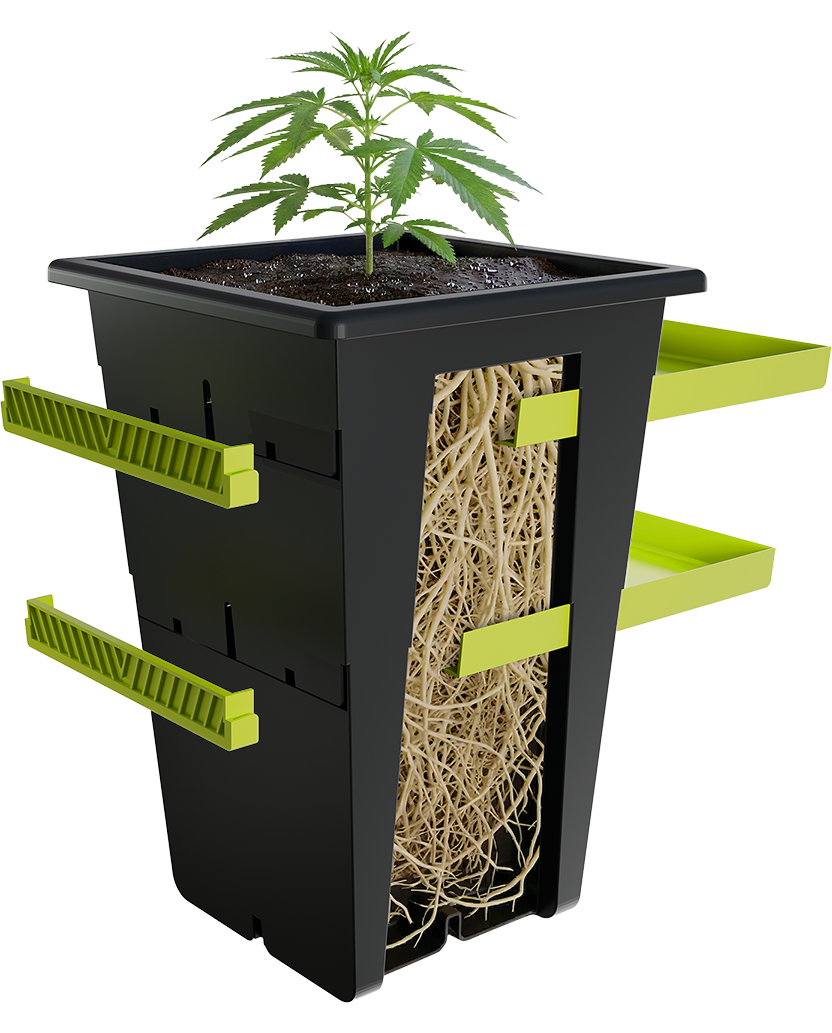
RE-PLANT is a patented cultivation container divided into three growth levels using two removable Root Control Trays.
The container works as follows:
Level 1 – Start Stage:
At the beginning, the plant starts in a smaller upper compartment designed for seeds, seedlings, clones, and early root establishment. Instead of immediately expanding into a large volume of substrate, the roots first fill the upper section that is easier to manage during early development.
Level 2 – Vegetative Expansion:
Once the roots reach the indicator area, growers can remove the upper Root Control Tray, allowing the root system to expand naturally into the second compartment. The process creates the effect of “repotting” without physically removing the plant from the container.
Level 3 – Bloom / Finish:
Later in the cycle, growers can also remove the second tray, giving the plant access to the full container volume for mature vegetative growth and flowering.
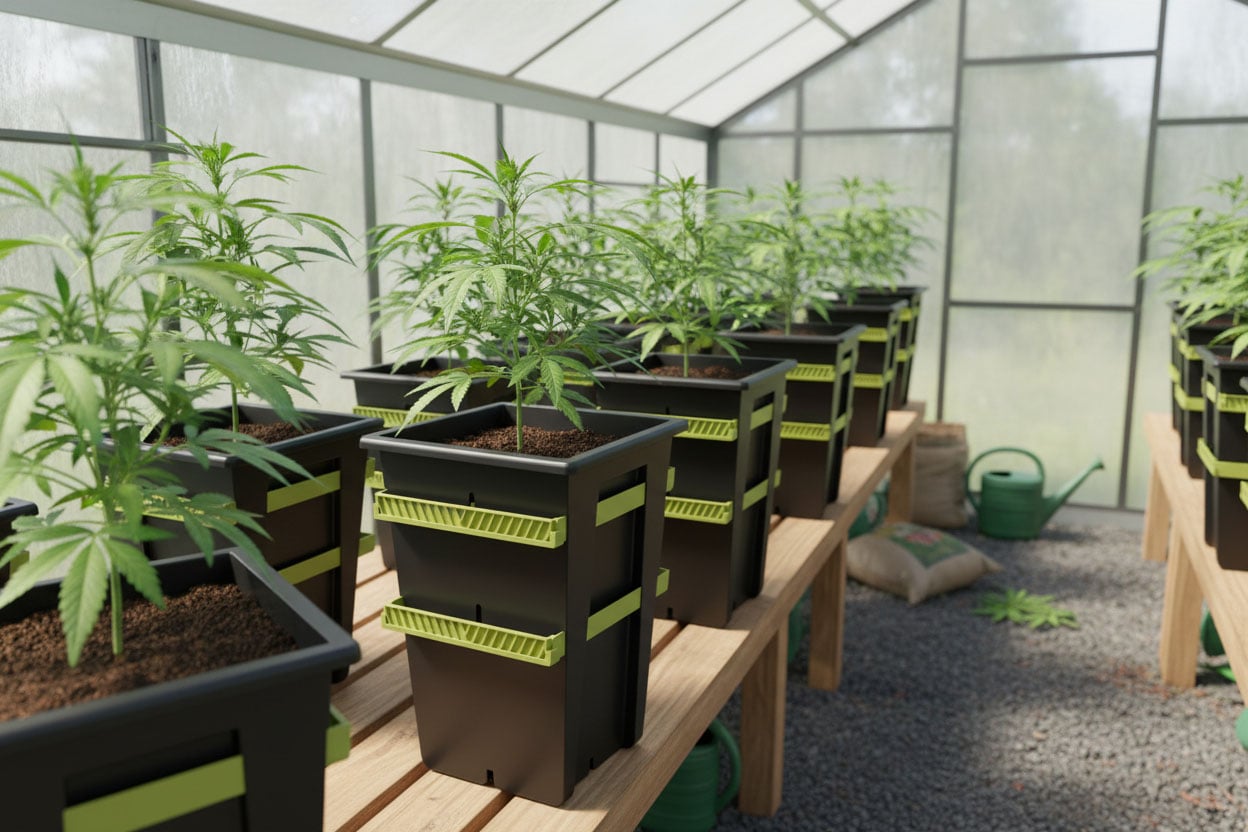
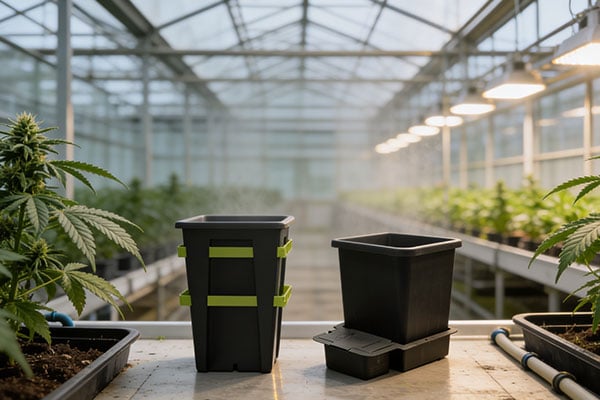
The trays themselves also perform several additional functions. Besides dividing the container into growth stages, they act as root blockers during early development, help retain excess water and later function as drip trays or saucers when the full container volume is in use.
RE-PLANT additionally includes side airflow slots and root-zone ventilation openings designed to improve oxygen availability around the substrate and root system. This helps support stronger fibrous root development and reduce one of the common problems associated with conventional containers: root spiraling.
How RE-PLANT and AutoPot Systems Work Together During Growth
One important thing growers should understand is that AutoPot systems are usually not activated immediately after planting. In most bottom-feeding setups, young plants are first watered manually until the root system develops deep enough to properly access the lower moisture zone inside the container. This is standard practice with many AutoPot systems and helps plants establish a stronger root structure before automated bottom-feeding begins.
This growth pattern fits naturally with the RE-PLANT concept.
Instead of placing a young plant directly into a large saturated root zone, RE-PLANT allows the root system to expand progressively through three separate growth levels. The plant begins in a smaller controlled zone and gradually gains access to additional substrate volume as the roots develop. This creates a smoother transition from early manual watering to fully established bottom-feeding.
Stage 1 – Early Root Development
At the beginning of the cycle, the seed, seedling or clone is planted in the upper compartment of RE-PLANT pot while both Root Control Trays remain inserted.
During this stage:
- the plant is watered manually from the top,
- the roots establish themselves inside the first controlled zone,
- and the substrate remains easier to manage for young plants.
Starting in a smaller compartment helps prevent excessive moisture around undeveloped roots and encourages stronger early root formation before expansion into deeper substrate zones.
Stage 2 – Expanding Into the Second Level
Once the roots have filled the first compartment and reach the indicator area, growers can remove the upper Root Control Tray. This opens the second growth level and allows the root system to continue expanding downward into additional substrate volume. During this phase, growers still continue manual watering while the roots develop deeper into the container and the plant becomes more established.
Stage 3 – Full Root Zone Expansion
Later in the cycle, removal of the second Root Control Tray gives the plant access to the full container volume. At this point, the root system can fully expand toward the lower moisture zone where bottom-feeding becomes most effective. Once the roots are sufficiently developed throughout the container, the AutoPot system can be activated and the plant can begin utilizing automated irrigation more efficiently.
This staged process creates a gradual transition from manual watering, to controlled root expansion, to fully established bottom-feeding inside the complete RE-PLANT container.
Why RE-PLANT Complements AutoPot Systems
AutoPot systems automate irrigation through bottom-feeding, while RE-PLANT focuses on staged root development and transplant-free cultivation. Because both systems influence how moisture, oxygen and root expansion behave inside the container, certain RE-PLANT characteristics can work particularly well inside AutoPot environments.
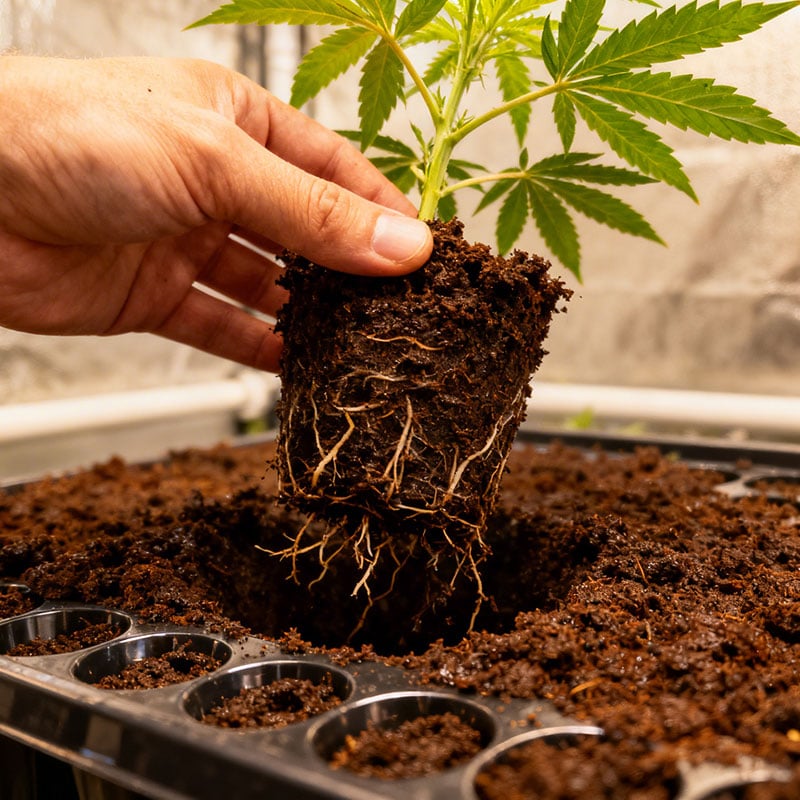
1. Reduced Transplant Stress
Traditional cultivation often involves moving plants through several container sizes during the cycle. Each transplant introduces additional labor, more mess inside the grow area, potential root disturbance and temporary plant stress. For some plants, especially autoflowers, transplant stress can significantly slow development.
Many growers using AutoPot systems prefer to minimize unnecessary handling once the irrigation setup is active. Moving plants between containers after the system has been established can disrupt root development and temporarily affect watering consistency inside the grow environment.
RE-PLANT removes the need for transplanting entirely. Instead of moving the plant into progressively larger containers, the available root volume expands internally through removable Root Control Trays while the plant remains inside the same container throughout the full cycle.
Inside an AutoPot system, this can help create a cleaner and more stable cultivation workflow with fewer interruptions during growth.
2. Better Root Expansion in Bottom-Feeding Systems
In bottom-fed systems, roots naturally push aggressively toward the lower moisture zone. In conventional containers this can sometimes lead to:
- dense root concentration near the bottom,
- root spiraling,
- uneven substrate colonization,
- and underused upper substrate areas.
RE-PLANT approaches root development differently. Because the root volume expands progressively through multiple stages, the root system fills each compartment more evenly before gaining access to additional space.
This can help:
- support stronger fibrous root structures,
- improve substrate utilization,
- and reduce excessive downward spiraling.
3. Improved Oxygen Availability
Oxygen availability is extremely important in automated irrigation systems. Even successful bottom-feeding setups can experience root-zone issues if substrate density, moisture retention or root congestion become excessive.
Because AutoPot systems continuously supply moisture from below, maintaining adequate airflow inside the root zone becomes especially important. In conventional containers, poor ventilation and overly dense substrate conditions can sometimes create overly saturated lower zones around the roots.
RE-PLANT was specifically designed with:
- side airflow slots,
- airflow gaps,
- and oxygen access zones around the root system.
This continuous airflow can support healthier root respiration, stronger fibrous root development and more balanced moisture conditions compared to completely closed plastic containers.
4. Better Substrate Control
In bottom-feeding systems, substrate structure directly affects how water moves upward through the container. Different substrate densities and moisture-retention properties can influence both oxygen availability and irrigation stability.
One of the more unique aspects of RE-PLANT is the ability to use either one substrate throughout the entire container or different substrates in different growth levels.
This can be particularly useful inside AutoPot systems because growers can fine-tune airflow, moisture retention and root-zone structure throughout the cultivation cycle.
Example Multi-Substrate Setup:
Top Level
- lighter propagation mix,
- airy starter substrate,
- increased oxygen availability for early root development.
Middle Level
- balanced coco/perlite mix,
- stable moisture retention during vegetative growth.
Bottom Level
- bloom-oriented substrate,
- slightly denser substrate structure,
- increased moisture stability near the lower root zone.
This type of staged substrate management is difficult to achieve inside conventional single-zone containers and allows growers to adapt the root environment more progressively throughout the cycle. Similarly, growers can also use different substrate combinations such as coco coir, clay pebbles and other inert media inside RE-PLANT for recirculating drip hydroponic systems.
5. Cleaner Indoor Cultivation Workflow
Many growers aren’t aware of how much space and organization matter in indoor cultivation.
Traditional transplanting often creates additional mess, extra pots, storage problems and unnecessary handling inside the grow area.
RE-PLANT simplifies this process considerably:
- one container,
- reusable trays,
- fewer accessories,
- less transplanting mess.
For growers using automated irrigation systems, this can help create a cleaner and more organized workflow.
Is RE-PLANT Good for Autoflowers in AutoPot Systems?
Yes – this may actually be one of the strongest use cases for the RE-PLANT container.
Autoflowering plants are known for reacting poorly to transplant stress because they operate on a fixed life cycle. If growth slows early, the plant often has limited time to recover before flowering begins.
For this reason, many autoflower growers prefer:
- direct sowing,
- final-pot planting,
- and low-stress cultivation techniques.
RE-PLANT aligns very well with that approach. The plant begins in a controlled upper root zone but never needs to be physically transplanted into another container. Instead, the root system expands naturally through the different growth stages as growers remove the trays.
Combined with stable bottom-feeding irrigation from an AutoPot system, this can create:
- more stable moisture conditions,
- uninterrupted root growth,
- and reduced handling stress throughout the cycle.
RE-PLANT vs Traditional Pots in AutoPot Systems
Before choosing a container for an AutoPot system, it is important to understand that not all grow pots are designed around the same cultivation principles. Some containers focus mainly on drainage and basic root support, while others focus on improving airflow, reducing root spiraling or optimizing root-zone management throughout the entire growth cycle.
The comparison below looks at some of the most common container types used in automated bottom-feeding systems and compares their approach to:
- transplanting,
- root expansion,
- airflow,
- substrate flexibility,
- and long-term root development.
While standard plastic pots, fabric pots and air-pruning containers can all be used in AutoPot setups, RE-PLANT introduces a different concept based on staged root expansion and full-cycle growing in one container.
| Feature | Standard Plastic Pot | Fabric Pot | Air-Pruning Pot | RE-PLANT |
|---|---|---|---|---|
| Works with AutoPot systems | Yes | Yes | Yes | Yes |
| Requires transplanting | Usually | Usually | Usually | No |
| Staged root expansion | No | No | No | Yes |
| Root control system | Minimal | Moderate | Strong | Strong |
| Continuous airflow | Limited | Good | Excellent | Excellent |
| Multi-substrate capability | Limited | Limited | Limited | Yes |
| Root spiraling reduction | Low | Moderate | High | High |
| One-pot full-cycle growing | Rare | Rare | Rare | Yes |
Recommended Tips for Using RE-PLANT With AutoPot Systems
Like most bottom-feeding cultivation setups, RE-PLANT and AutoPot systems perform best when root expansion, substrate conditions and irrigation timing are managed progressively throughout the growth cycle.
Use Airy and Well-Draining Substrates
Bottom-feeding systems generally perform best with substrates that allow both good moisture movement and sufficient oxygen availability around the roots. Coco/perlite mixes, airy soil blends and other well-draining media are typically more suitable than dense or heavily compacted substrates.
Overly compacted media can slow oxygen exchange, reduce airflow inside the lower root zone and create excessive moisture retention around the roots.
Do Not Remove the Trays Too Early
The staged root expansion is one of the main advantages of the RE-PLANT system. Before opening the next growth level, allow the roots to properly colonize the current compartment first. This helps the plant establish a stronger and more evenly distributed root structure before expanding deeper into the container.
Activate Bottom-Feeding at the Right Time
Use the indicator gaps to monitor root progress and evaluate when the plant is ready for the next growth level. In most setups, the AutoPot system should only be activated once the roots have expanded deep enough into the container to properly access the lower moisture zone. During the earlier stages, manual watering from the top is still recommended while the root system establishes itself.
Maintain Good Airflow Around the Containers
RE-PLANT has side airflow slots and ventilation openings that help improve oxygen availability around the root zone. To maximize their effectiveness, avoid placing containers too tightly together and maintain sufficient airflow around the grow area whenever possible.
This can help support healthier root respiration and more balanced moisture conditions throughout the container.
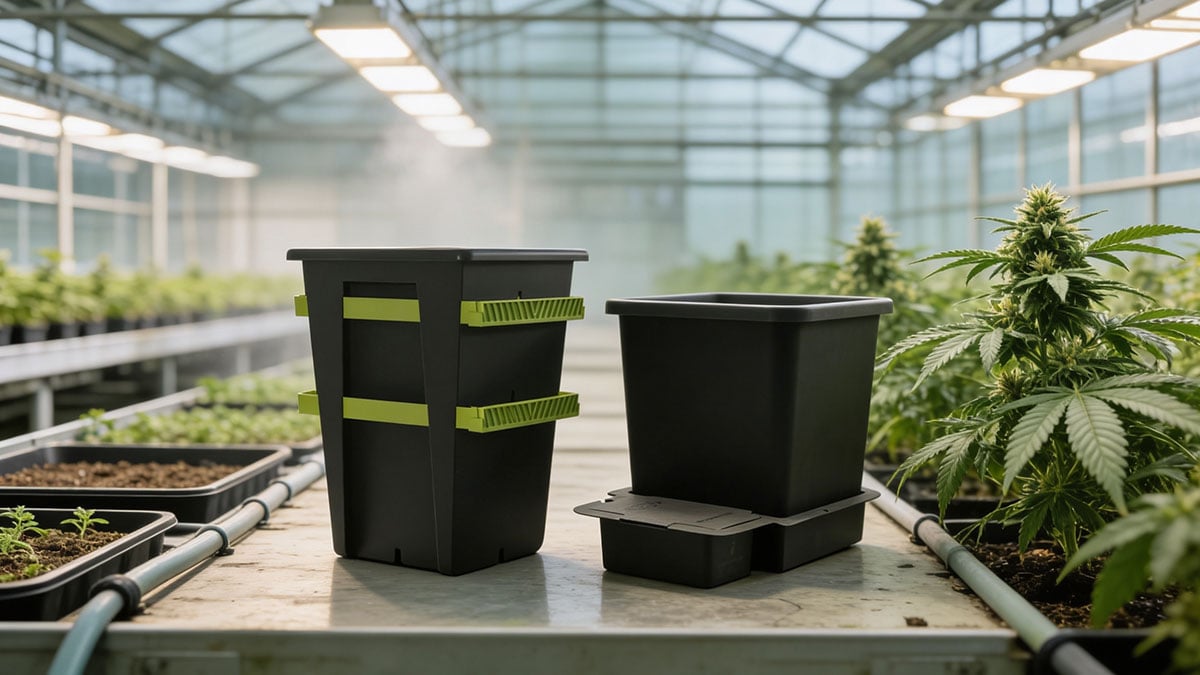
RE-PLANT Inside AutoPot Systems
So, are RE-PLANT and AutoPot systems compatible?
Yes.
However, the more interesting point is why the combination works so naturally.
AutoPot systems focus on irrigation automation, while RE-PLANT focuses on root development, transplant-free cultivation and staged root expansion. Together, they can support:
- cleaner workflows,
- more controlled root growth,
- reduced transplant stress,
- improved oxygen availability,
- and more efficient use of substrate volume.
Rather than functioning as just another traditional container inside a bottom-feeding setup, RE-PLANT introduces a different cultivation approach built around root-zone airflow, progressive root expansion and full-cycle growing in one container.
For growers looking to move beyond conventional pots in AutoPot-style systems, that makes RE-PLANT a particularly interesting alternative.
FAQ: RE-PLANT and AutoPot Systems
Does RE-PLANT work with AutoPot systems?
Yes. RE-PLANT is compatible with AutoPot bottom-feeding systems and can be used inside AutoPot setups similarly to conventional grow pots. The main difference is that RE-PLANT introduces staged root expansion and transplant-free growing through its removable Root Control Tray system.
Is RE-PLANT suitable for autoflowers in AutoPot systems?
Yes. RE-PLANT can be particularly useful for autoflowering plants because it removes the need for transplanting during the cycle. Since autoflowers have limited recovery time after stress, maintaining uninterrupted root development inside one container can help create a more stable cultivation process.
Can you start an AutoPot system immediately after planting?
In most cases, no. Young plants are usually watered manually during the early stages until the root system develops deep enough to properly access the lower moisture zone inside the container. This is standard practice in many AutoPot setups.
With RE-PLANT, the plant typically starts in the upper compartment and gradually expands through the lower growth levels before bottom-feeding becomes fully effective.
What substrates work best with RE-PLANT and AutoPot systems?
Airy and well-draining substrates generally work best in bottom-feeding systems. Many growers use coco/perlite blends, loose soil mixes or other substrates with good airflow and balanced moisture retention. RE-PLANT also allows growers to slightly adjust substrate composition between different growth levels if desired.

 Ganatik
 Re-Plant
 Marketing Support
 Cannabis World
 Terms & Conditions