
 Products
 For Distributors
 For Grow Shops
 About Miabis
 Contact
Indoor Cannabis Growing Conditions Explained:
How Light, Temperature, and Humidity Affect Plant Development
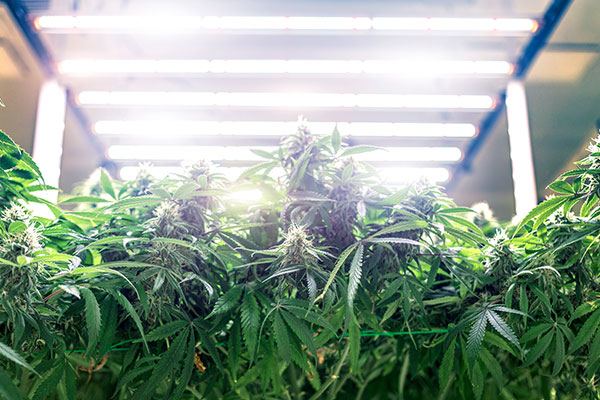
Indoor cannabis cultivation gives growers a key advantage: full control over the environment. Unlike outdoor growing, where plants must adapt to weather changes, indoor systems allow precise adjustments of light, temperature and humidity.
However, these variables do not act independently. Instead, they work together as a system that directly affects plant growth, structure and final yield. While many growers focus on nutrients or genetics, environmental conditions play an equally important role. In fact, they are part of the broader set of factors that affect cannabis plant growth.
By managing indoor cannabis growing conditions correctly, growers can reduce plant stress, improve consistency and achieve more predictable results.
Why Environmental Control Is Critical in Indoor Cannabis Cultivation
Indoor growing does not make cultivation easier – it makes it more precise. As a result, the grower becomes responsible for maintaining stable conditions at all times.
Even small changes can lead to noticeable problems. For example, plants may show reduced growth, poor nutrient uptake or increased sensitivity to disease – all of which are early signs of plant stress. Over time, these issues can significantly impact yield and quality.
At the same time, cannabis plants constantly react to their environment. Processes like transpiration, respiration and photosynthesis depend directly on temperature, humidity and light levels. Because of this, stability is just as important as optimization.
It is also important to look below the surface. Root conditions must remain stable to support healthy plant development. Sudden changes, such as transplanting, can disrupt water uptake and stress the plant.
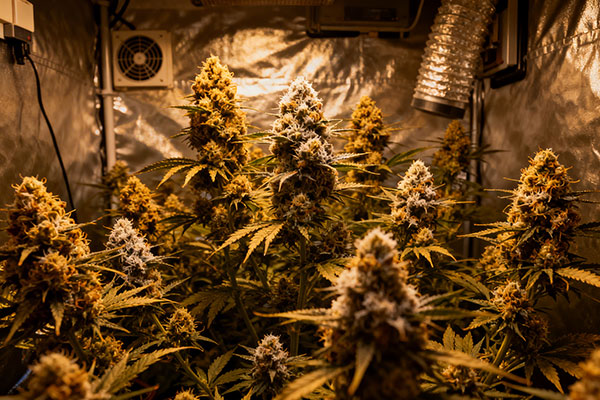
Light in Indoor Cannabis Growing
Light is the primary energy source for cannabis plants and directly drives photosynthesis. However, it is not a single variable. Instead, it consists of several components that influence plant growth in different ways.
To understand how light affects development, it is important to look at three key aspects: intensity, spectrum, and photoperiod.
Light Intensity (PPFD) and Plant Development
Light drives photosynthesis, making it one of the most important factors in indoor cultivation. In practice, growers measure light intensity using PPFD (Photosynthetic Photon Flux Density).
When intensity is too low, plants grow slowly and stretch toward the light. On the other hand, optimal intensity promotes compact growth and strong branching. However, excessive light can cause stress and damage leaves.
Because plants develop over time, light intensity should increase gradually as they move from vegetative growth to flowering.
Light Spectrum and Growth Phases
While intensity determines how much light plants receive, spectrum defines how they respond to it. Different wavelengths trigger different physiological processes, which makes spectrum especially important when transitioning between growth stages.
For example, blue light supports vegetative growth and keeps plants compact. In contrast, red light encourages flowering and bud formation. Therefore, adjusting the spectrum helps align light conditions with each growth stage.
Modern LED systems make this adjustment much easier and more precise.
Photoperiod and Plant Behavior
Beyond intensity and spectrum, the duration of light exposure also plays a critical role. Cannabis plants use changes in the light cycle as a signal to shift from vegetative growth to flowering.
Typically, growers use an 18-hour light cycle during the vegetative phase. Then, they switch to a 12-hour cycle to trigger flowering. If this transition is not handled correctly, plant development can slow down or become uneven.
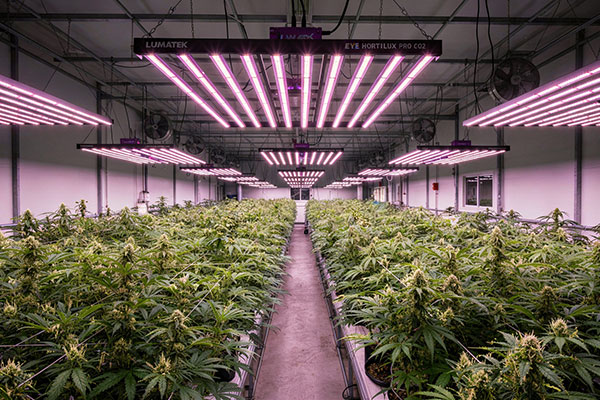
Temperature and Its Impact on Cannabis Growth
Temperature plays a central role in how efficiently cannabis plants grow and function. It directly affects metabolic processes, enzyme activity and overall plant development.
However, temperature does not act alone. Its impact depends on how it interacts with other environmental factors, especially light intensity and humidity. For this reason, it is important to understand both optimal ranges and how plants respond to temperature changes.
Ideal Temperature Ranges by Stage
Because plant needs change over time, temperature should be adjusted throughout the growth cycle. Each stage places different demands on the plant, which is why optimal ranges are not the same for vegetative growth and flowering.
During the vegetative phase, temperatures between 22–28°C support active growth. Later, in the flowering phase, slightly lower temperatures (20–26°C) help improve plant stability and bud quality.
Effects of High and Low Temperatures
When temperature moves outside the optimal range, plant performance quickly declines. Both high and low temperatures create stress, but they affect plant physiology in different ways.
When temperatures rise too high, plants lose water more quickly and may experience heat stress. In addition, valuable compounds like terpenes can degrade.
On the other hand, low temperatures slow down metabolism. As a result, nutrient uptake becomes less efficient and growth may stall.
Interaction With Light and Metabolism
Temperature becomes more meaningful when viewed together with light intensity. Since both factors influence photosynthesis and energy use, their relationship determines how efficiently plants can grow.
For instance, higher light intensity allows plants to tolerate higher temperatures more effectively.
However, when this balance is disrupted, plant performance declines. High temperatures combined with low light reduce photosynthetic efficiency and can weaken overall development.
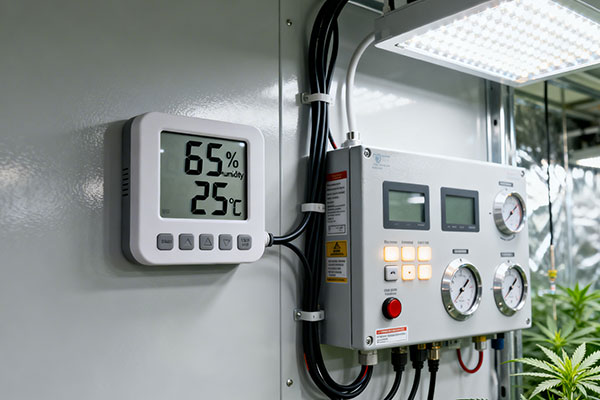
Humidity and Plant Physiology
Humidity controls how cannabis plants manage water, which in turn affects nutrient transport and overall growth. Unlike temperature or light, its effects are less visible but just as important.
At the same time, humidity is closely linked to plant processes such as transpiration. Because of this, even small changes can influence how efficiently plants absorb and distribute nutrients.
Relative Humidity by Growth Stage
As plants develop, their ability to regulate water changes. Therefore, humidity levels should be adjusted across different growth stages to support healthy development and reduce risk.
Recommended relative humidity (RH) levels by stage:
- Seedlings: 65–75% RH
- Vegetative phase: 50–70% RH
- Flowering phase: 40–50% RH
Lower humidity during flowering is especially important because it reduces the risk of mold and sets the foundation for maintaining quality in the drying phase.
Transpiration and Water Uptake
To understand why humidity matters, it is necessary to look at transpiration. This process drives the movement of water and nutrients through the plant and connects environmental conditions with internal plant function.
When humidity is high, transpiration slows down. As a result, nutrient transport becomes less efficient. In contrast, low humidity increases transpiration, which can lead to water stress if not managed carefully.
This process directly affects how plants absorb and distribute nutrients, which is why environmental conditions and feeding strategies must be aligned.
Risk Factors (Mold, Mildew, Stress)
If humidity is not properly controlled, it can quickly create favorable conditions for disease, including powdery mildew and bud rot. In addition, extreme levels can place stress on the plant and reduce overall resilience.
This becomes especially critical during late flowering, when dense buds can trap moisture and create ideal conditions for disease.
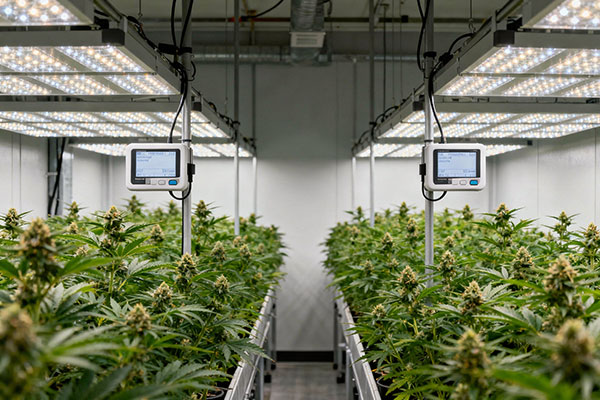
Understanding VPD (Vapor Pressure Deficit)
VPD, or vapor pressure deficit, is the difference between the amount of moisture the air can hold and the amount of moisture it currently contains. In simple terms, it describes how “dry” the air feels to the plant. This is important because VPD directly influences how easily plants can release water through transpiration.
Instead of looking at humidity alone, growers use VPD to better understand how temperature and humidity work together within an indoor cannabis climate control system.
- Low VPD means the air is too humid, so transpiration slows down
- High VPD means the air is too dry, so plants lose water too quickly
VPD is often a more reliable indicator of plant conditions than humidity alone.
As a result, maintaining a balanced VPD helps support stable growth, efficient nutrient uptake, and overall plant health.
How Light, Temperature and Humidity Work Together
In indoor cultivation, light, temperature, and humidity should never be treated as separate variables. Instead, they form a connected system that directly controls how plants grow, transpire and use energy.
Because these factors are interdependent, changing one condition will always influence the others.
For example, high light combined with low humidity can push plants into excessive transpiration and water stress. On the other hand, low temperatures paired with high humidity often slow down metabolic activity and increase the risk of disease.
For this reason, optimizing indoor cannabis climate control is not about maximizing individual variables, but about maintaining the right balance between them to improve overall cultivation efficiency.
Adjusting Indoor Cannabis Growing Conditions by Growth Stage
As cannabis plants move from vegetative growth to flowering, their environmental needs change significantly. Therefore, conditions should be adjusted throughout the lifecycle to match plant development and reduce stress.
Vegetative Phase
During this stage, plants benefit from higher humidity, stable temperatures, and strong but controlled light. These conditions support rapid growth, leaf development and the formation of a strong plant structure.
Flowering Phase
In the flowering phase, environmental conditions should shift. Lower humidity helps reduce the risk of mold, while slightly lower temperatures improve stability and preserve plant quality. At the same time, higher light intensity supports bud development and yield.
Common Environmental Mistakes in Indoor Grows
Even with full environmental control, indoor growers often struggle with consistency. In most cases, the issue is not a lack of equipment, but how environmental factors are managed in practice.
The most common mistakes include:
- Treating light, temperature and humidity as separate variables instead of a connected system
- Ignoring VPD, which gives a more accurate picture of plant conditions than humidity alone
- Making sudden or extreme adjustments that stress plants and disrupt growth
- Maintaining the same environmental conditions throughout all growth stages, which limits plant potential
These cannabis growing mistakes often lead to unstable growth, reduced efficiency and inconsistent results.
To avoid them, growers should focus on balance rather than extremes. Instead of maximizing individual parameters, it is more effective to make gradual adjustments and align conditions with each growth stage. Using VPD as a reference point can also help maintain more stable plant responses.
At the same time, environmental control should not stop above ground. Root conditions play a critical role in how plants respond to their environment. Healthy, well-aerated roots improve resilience and nutrient uptake. For this reason, systems that ensure continuous oxygen supply and eliminate transplant stress – such as Re-Plant pot – support more stable and predictable growth.
Control the Environment. Control the Outcome.
As indoor operations scale, consistency becomes the key driver of performance. Stable environmental conditions lead to more predictable growth, more uniform plants, and more reliable results across each cycle.
More importantly, consistent conditions allow plants to operate at their full biological potential. When light, temperature and humidity are properly balanced, processes like photosynthesis, transpiration and nutrient uptake work efficiently and without unnecessary stress.
Ultimately, optimizing indoor cannabis growing conditions is not about adjusting individual variables, but about managing the entire environment as a system. The more precisely growers control that system, the more scalable, efficient and consistent their production becomes.
FAQ: Indoor Cannabis Growing Conditions: Light, Temperature & Humidity
What are the most important indoor cannabis growing conditions?
The most important factors are light, temperature and humidity. Together, they control photosynthesis, transpiration and nutrient uptake. Because these processes are interconnected, all three variables must be managed as a balanced system rather than individually.
What temperature is best for indoor cannabis?
During the vegetative phase, temperatures between 22–28°C support active growth. In the flowering phase, slightly lower temperatures (20–26°C) help improve plant stability and preserve bud quality. Stable temperatures are just as important as the exact range, as frequent fluctuations can stress plants.
What humidity level should indoor cannabis have?
Humidity should decrease as plants develop:
- Seedlings: 65–75%
- Vegetative: 50–70%
- Flowering: 40–50%
Lower humidity during flowering is especially important to reduce the risk of mold and bud rot.
What is VPD in cannabis growing?
VPD (vapor pressure deficit) measures the difference between how much moisture the air can hold and how much it actually contains. It reflects how easily plants can release water through transpiration. Because it combines temperature and humidity, VPD is a more accurate indicator of plant conditions than humidity alone.
How does light affect cannabis growth indoors?
Light drives photosynthesis and directly affects plant growth, structure and yield. Its intensity controls how fast plants grow, the spectrum influences plant shape and development, and the photoperiod determines when plants transition from vegetative growth to flowering.
What are common mistakes in indoor cannabis climate control?
Common mistakes include managing variables separately, ignoring VPD, making sudden environmental changes and using the same conditions throughout all growth stages. To avoid these issues, growers should focus on gradual adjustments and maintaining balance between all environmental factors.

 Ganatik
 Re-Plant
 Marketing Support
 Cannabis World
 Terms & Conditions