
 Products
 For Distributors
 For Grow Shops
 About Miabis
 Contact
Why Root Development is the Foundation of Cannabis Growth
When growers look for ways to improve cannabis yields, the focus is often placed on visible factors like lighting, nutrients or genetics. These factors play an important role in plant performance and overall growth, but they only tell part of the story. The real driver of plant performance is hidden below the surface.
Roots are responsible for three critical functions:
- water uptake
- nutrient absorption
- oxygen exchange
However, their role goes beyond simple intake. The root system determines how efficiently a plant can access resources, how fast it can grow and how well it can respond to environmental conditions.
If the cannabis root system is underdeveloped, stressed or restricted, the plant cannot perform at its full potential, regardless of how optimized the rest of the setup is.
In simple terms:
What happens below the surface determines everything above it.
How Cannabis Roots Develop Over Time
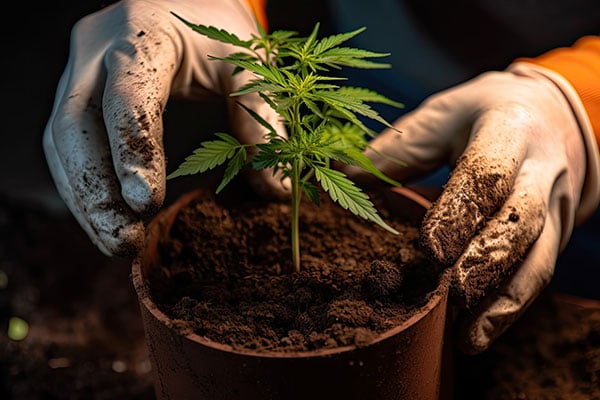
Cannabis root development follows a predictable biological pattern. Understanding this progression allows growers to better align their cultivation strategy with how the plant naturally grows.
1. Early Stage: Establishment
In the seedling phase, roots are fine, delicate and primarily focused on anchoring the plant. At this stage, root hairs begin to form, significantly increasing the surface area for nutrient and water uptake.
Although growth is not yet visually impressive above ground, this phase is critical. A weak start in the root zone often limits the plant’s potential later on.
2. Vegetative Stage: Expansion
During the vegetative phase, cannabis root development accelerates rapidly. Cannabis root growth becomes more aggressive as roots begin to branch out, actively searching for space, oxygen and nutrients.
This is the stage where container design and root space become especially important. A well-developed root system here directly determines how large, vigorous and resilient the plant will become.
3. Mature Stage: Full Colonization
As the plant matures, roots should ideally fill the available container volume evenly. At this point, efficiency becomes more important than expansion.
A well-structured root system ensures stable nutrient uptake and supports the plant through flowering, where demand for resources increases significantly.
→ Important concept:
Root space = growth ceiling.
If roots cannot expand, the plant cannot scale.
What Healthy Cannabis Roots Look Like
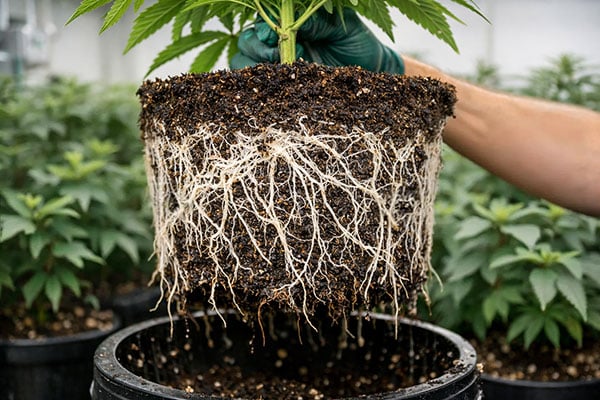
Healthy cannabis plants develop a fibrous root system, meaning a dense network of fine roots that spread evenly throughout the growing medium rather than circling along container walls. This structure increases the surface area for water and nutrient uptake and allows the plant to grow more efficiently.
A strong root system has clear visual and structural indicators:
- white to light cream color
- dense but not tangled
- even distribution throughout the container
- no circling or compacted zones
These characteristics indicate that the roots have access to sufficient oxygen, space and moisture balance.
Unhealthy roots, on the other hand, may appear brown, slimy, overly dense or restricted to certain areas. This typically signals oxygen deficiency, overwatering, structural limitations or early-stage stress – all of which directly impact plant performance.
The Most Important Factors Affecting Root Development
Root development is not determined by a single variable. Instead, it is shaped by a combination of environmental conditions, cultivation practices and physical constraints within the growing system.
Even when genetics and nutrients are optimized, root performance can still be limited by often overlooked factors – especially those related to oxygen availability, container structure and how the plant is handled during growth.
Understanding these variables is key to removing hidden bottlenecks and allowing the plant to reach its full potential. Even small limitations in the root zone can compound over time, ultimately affecting plant growth, health and final yield.
Oxygen Availability (Critical)
Roots require oxygen to perform cellular respiration – a process essential for energy production and nutrient uptake.
When oxygen levels drop, root activity slows down. As a result, nutrient absorption becomes less efficient, and overall plant growth begins to stall.
This is why poor aeration is one of the most common – and most overlooked – limiting factors in cannabis cultivation.
In dense substrates or poorly designed containers, oxygen exchange is restricted. Over time, this creates an environment where roots cannot function optimally, even if all other inputs are correct.
Container Size and Structure
Container design does not just hold the plant, but it actively shapes root behavior.
In traditional pots:
- roots hit the container wall and begin circling
- growth patterns become unnatural
- root zones develop unevenly
Instead of expanding outward, the root system becomes constrained within artificial boundaries. This leads to inefficient nutrient uptake, limited root expansion, and reduced overall plant potential. Over time, these structural limitations directly translate into reduced yield and less consistent results.
One approach to solving this issue is using containers that allow better airflow and support air pruning. This prevents roots from circling and encourages the development of a more fibrous, efficient root system.
Watering Practices
Watering affects both hydration and oxygen availability.
- overwatering → oxygen deprivation
- underwatering → root stress
Balanced watering is essential for maintaining an active and healthy root zone.
Transplanting and Root Disturbance
Transplanting is commonly used to increase root space gradually. While effective, it introduces a series of trade-offs.
Each transplant:
- disturbs the root system
- causes temporary growth slowdown
- introduces risk at critical stages
Even when done correctly, transplanting interrupts the plant’s natural development cycle. If done too early or too late, it can slow growth or create unnecessary stress.
For small-scale grows, this may be manageable. However, in larger operations, repeated transplanting becomes a significant operational burden.
Common Root Problems in Cannabis Cultivation
Several issues can limit root performance and reduce yield potential:
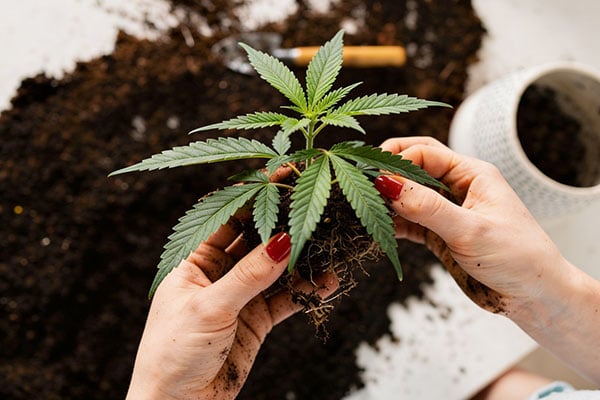
- Root Circling – Roots spiral along container walls instead of expanding outward, leading to inefficient structure.
- Root Binding – The root mass becomes too dense, restricting further growth and nutrient uptake.
- Transplant Shock – Root disturbance causes temporary stress, slowing plant development.
- Uneven Root Zones – Roots concentrate in certain areas due to poor container design or watering patterns.
All of these problems lead to the same outcome:
- slower growth
- lower yields
- less consistent results
How Root Development Directly Affects Yield
A well-developed root system is one of the strongest predictors of final plant performance.
Stronger roots enable:
- faster vegetative growth
- more efficient nutrient uptake
- better support for flower development
As the plant enters the flowering phase, demand for water and nutrients increases significantly. Only a well-established root system can support this level of output consistently.
In commercial environments, this also translates into:
- more predictable growth cycles
- higher batch consistency
- improved operational efficiency
Simply put:
Bigger, healthier roots lead to stronger, more productive plants.
How to Improve Cannabis Root Development
Improving root development does not require adding complexity. Instead, it requires creating conditions that support consistent, natural cannabis root growth.
Key principles include:
- ensuring consistent oxygen availability
- using containers that support natural root expansion
- avoiding unnecessary transplanting
- maintaining stable watering practices
When these conditions are met, the plant can develop a root system that is both structurally efficient and biologically active.
Most importantly, growers should think of the root system as an active, dynamic part of the plant, not just something hidden in the substrate.
Rethinking Root Development
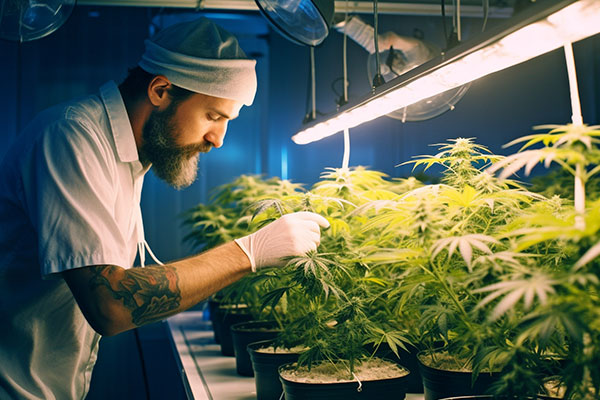
Traditional growing methods often rely on a sequence of:
- multiple container sizes
- repeated transplanting
- increased labor and handling
While functional, this approach does not align with how roots naturally grow. It introduces unnecessary stress points and operational inefficiencies.
Modern cultivation is shifting toward systems that:
- allow roots to expand continuously without disturbance
- provide consistent oxygen access
- prevent structural issues like root circling
One example of this approach can be seen in systems like Re-Plant. Instead of moving the plant into larger containers, the container adapts to the plant. This allows roots to expand in stages without interruption, reducing stress and improving overall efficiency.
Such systems are built around a simple but powerful principle:
If you control the roots, you control the plant.
Understanding cannabis root development is one of the most important steps toward becoming a better grower.
While roots are often overlooked, they are the foundation of:
- plant health
- growth speed
- final yield
By focusing on root conditions – oxygen, space, stability and minimal stress – growers can unlock significant improvements in performance without adding unnecessary complexity.
The most effective cultivation strategies don’t just optimize what’s visible. They optimize what matters most – below the surface.
FAQ: Cannabis Root Development
Why are roots so important for cannabis plants?
Roots are responsible for absorbing water, nutrients and oxygen. Without a healthy root system, the plant cannot grow efficiently or reach its full yield potential.
How do I know if my cannabis roots are healthy?
Healthy roots are white or cream-colored, evenly distributed and not tangled or circling. Dark, slimy or compacted roots are signs of problems.
Does transplanting affect cannabis growth?
Yes. Transplanting can cause temporary stress by disturbing the root system. While often necessary in traditional setups, it can slow growth if not done carefully.
What causes root circling in cannabis plants?
Root circling occurs when roots hit the container wall and continue growing along it instead of branching outward. This is common in traditional pots with closed sides.
How can I improve root development without transplanting?
Using systems that allow gradual root expansion within one container helps avoid transplant stress while maintaining continuous growth and better root structure.

 Ganatik
 Re-Plant
 Marketing Support
 Cannabis World
 Terms & Conditions