
 Products
 For Distributors
 For Grow Shops
 About Miabis
 Contact
Cannabis growth stages represent the complete life cycle of a cannabis plant, from germination and early root development to flowering and harvest. While every plant follows the same basic journey, each stage places different demands on growth, nutrition and environmental conditions.
Nutrient requirements change throughout the cycle, environmental conditions must be adjusted and the root system continuously expands to support new growth above ground.
Understanding these stages allows growers to make better decisions throughout the cultivation cycle. Whether you’re growing a single plant or managing a larger operation, knowing what the plant needs at each phase can improve consistency, plant health and final yield.
Cannabis Growth Stages at a Glance
The complete cannabis growth cycle typically takes between 3 and 6 months, although the exact timeline depends on genetics, cultivation method and environmental conditions. Fast-growing autoflower varieties may finish in as little as 8-12 weeks, while some photoperiod cultivars can require five months or more from seed to harvest.
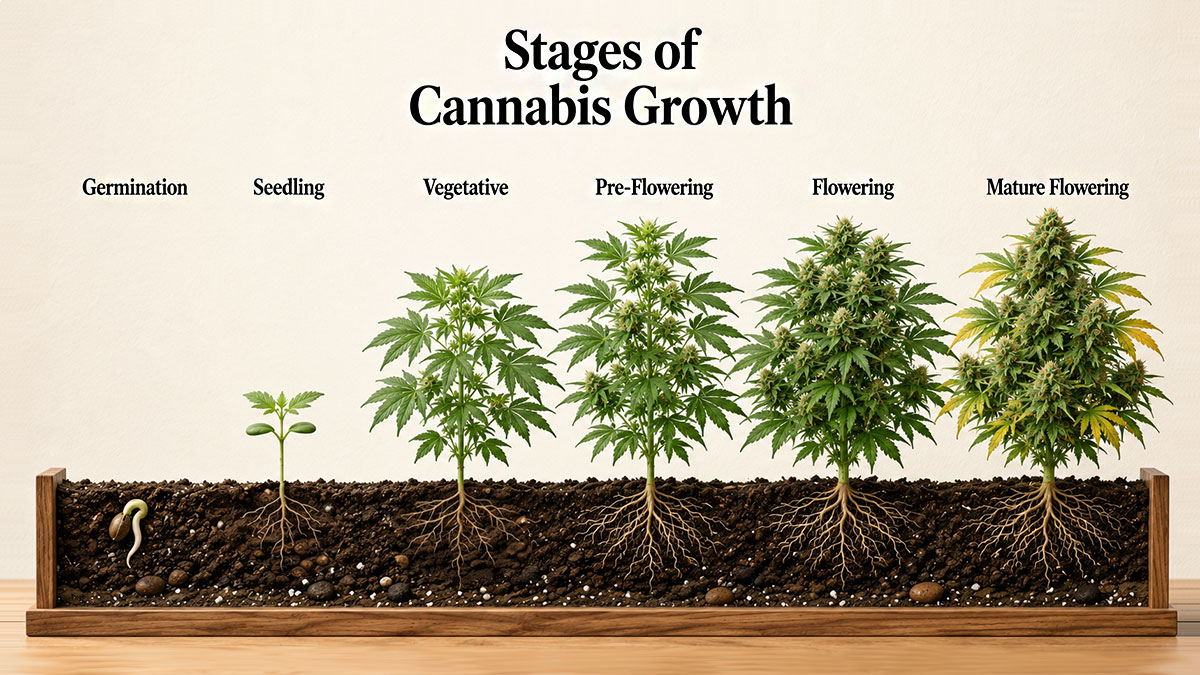
The table below provides a quick overview of the main cannabis growth stages, including their typical duration, key developments and primary cultivation priorities.
| Growth Stage | Typical Duration | What’s Happening | Main Grower Priorities |
|---|---|---|---|
| Germination | 3–10 days | The seed absorbs moisture, develops a taproot and emerges from the growing medium. | Maintain warmth, moisture and oxygen while avoiding overwatering. |
| Seedling | 2–3 weeks | The first true leaves appear and the root system begins establishing itself. | Provide gentle lighting, stable conditions and avoid excess nutrients. |
| Vegetative Growth | 3–8+ weeks | Rapid root expansion, stem growth, branching and canopy development. | Support strong root growth, sufficient light intensity and balanced nutrition. |
| Transition (Pre-Flower) | 1–3 weeks | The plant shifts from vegetative growth to flower production and begins stretching. | Manage plant height, maintain stability and prepare for flowering. |
| Flowering | 7–12+ weeks | Flowers develop, resin production increases and buds mature. | Control humidity, airflow and flowering nutrient requirements. |
| Ripening & Harvest | 1–2 weeks | Flowers reach maturity as cannabinoid and terpene production peaks. | Monitor trichomes and determine the optimal harvest window. |
While every cannabis plant follows the same general development pattern, the needs of the plant change significantly from one stage to the next. Understanding what happens during each phase can help growers provide the right conditions, avoid common mistakes and support healthy growth from seed to harvest.
Germination Stage
Typical duration: 3–10 days
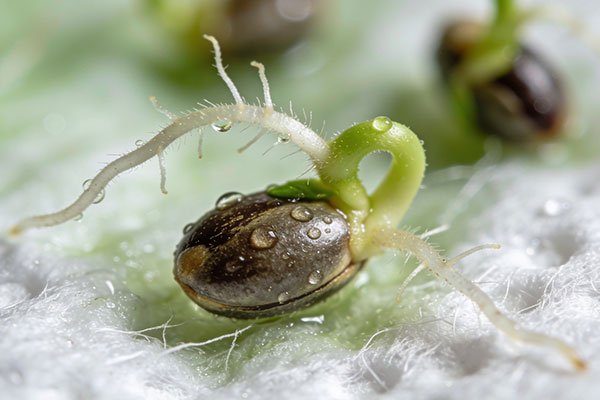
Germination marks the beginning of the cannabis life cycle. During this stage, the seed awakens from dormancy and begins developing its first root.
As moisture penetrates the seed shell, internal biological processes become active and the taproot emerges. This first root serves as the plant’s anchor and becomes the foundation of the entire root system.
Although little is visible above the surface at this point, important development is already taking place below ground.
Successful germination depends on a combination of warmth, moisture and oxygen. Temperatures between approximately 21–29°C (70–85°F) generally provide favorable conditions, while excessive water should be avoided because saturated media can limit oxygen availability around the developing root.
Once the seedling breaks through the surface and opens its cotyledons, or seed leaves, the plant enters the next stage of development.
One of the most common mistakes during germination is overwatering. Many growers assume more water promotes faster growth, but excessive moisture often creates the opposite effect by reducing oxygen in the root zone.
Seedling Stage
Typical duration: 2–3 weeks
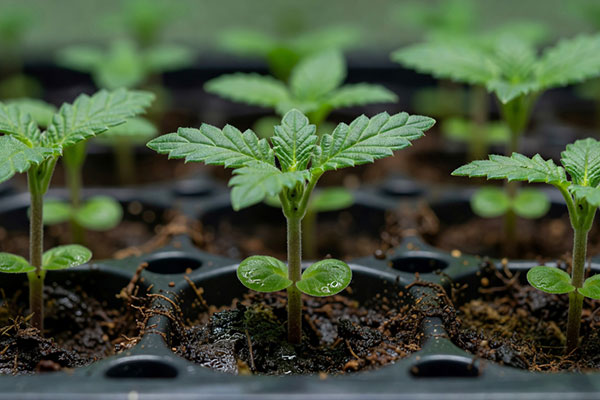
The seedling stage begins when the young plant emerges from the growing medium and starts producing its first true leaves.
At first, growth appears slow. Most of the plant’s energy is directed toward establishing a healthy root system capable of supporting future development.
During this stage, cannabis plants remain relatively fragile. Their nutrient requirements are low, and environmental stability is more important than rapid growth.
Temperatures in the range of 20–26°C (68–79°F) combined with moderate-to-high humidity generally create favorable conditions for seedlings. Indoor growers typically maintain an 18-hour light schedule, providing enough energy for development without overwhelming the young plant.
While the leaves above ground may still be small, root development is accelerating beneath the surface. The quality of this early root growth often influences plant performance later in the cultivation cycle.
Seedlings commonly struggle when growers introduce strong nutrients too early, expose them to excessive light intensity or keep the growing medium constantly saturated.
Healthy roots need both water and oxygen. Finding the right balance between the two is one of the most important tasks during this stage.
Nutrient requirements change throughout the cannabis life cycle, with young seedlings requiring very little supplemental nutrition and mature flowering plants demanding a different nutrient balance than actively growing vegetative plants.
Vegetative Stage
Typical duration: 3–8 weeks or longer
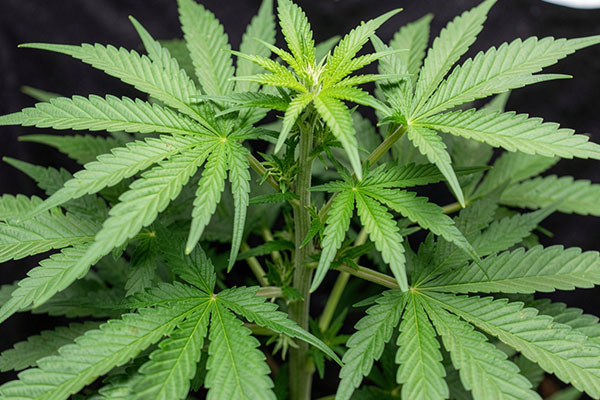
The vegetative stage is when cannabis plants experience their fastest and most visible growth.
Branches elongate, stems become thicker and new leaves develop rapidly. At the same time, the root system expands aggressively to support the increasing demands of the canopy.
Everything the plant builds during vegetation ultimately influences its flowering potential. A strong vegetative phase often results in a stronger harvest later.
Because growth accelerates significantly, plants require more light, more water and higher nutrient inputs than they did as seedlings. Nitrogen becomes particularly important because it supports the production of leaves and structural growth.
Indoor growers typically continue using an 18/6 lighting schedule throughout vegetation, while outdoor plants benefit from the long days of spring and early summer.
Environmental conditions should encourage vigorous growth while maintaining healthy airflow around the canopy. Temperatures between 20–28°C (68–82°F) and gradually decreasing humidity levels generally work well for most cultivars.
Root development becomes especially important during this phase.
As roots occupy more of the available container volume, plants gain access to more water and nutrients. However, root restriction, poor aeration or transplant stress can slow growth and reduce efficiency.
This is one reason many growers focus heavily on root-zone management during vegetation. Traditional cultivation methods often require transplanting into progressively larger containers as roots expand. However, every transplant introduces additional labor and creates the potential for root disturbance.
RE-PLANT was developed specifically to address this challenge. Instead of moving the plant into larger containers, growers can gradually expand the available root volume within a single container by removing internal trays as the root system develops. This allows continuous growth while avoiding transplant-related stress. The container’s airflow design also helps maintain oxygen availability around the roots throughout cultivation.
Common vegetative-stage mistakes include overfeeding, insufficient light intensity and allowing roots to become restricted within undersized containers.
Transition to Flowering (Pre-Flowering)
Typical duration: 1–3 weeks
Before full flowering begins, cannabis plants enter a transition period often referred to as the pre-flower stage.
For photoperiod cultivars, this phase starts when daylight hours decrease. Indoor growers typically trigger flowering by switching from an 18/6 schedule to 12 hours of light and 12 hours of darkness each day.
The plant responds quickly to this change.
Many cultivars experience a period of accelerated vertical growth known as the stretch. Depending on genetics, some plants may increase dramatically in height during the first weeks of transition.
At the same time, pre-flowers begin forming and the plant starts redirecting energy away from vegetative growth and toward flower production.
Environmental control becomes increasingly important at this stage. Humidity levels are often reduced compared to vegetation, helping prepare the crop for the denser flowers that will develop later.
Major environmental fluctuations or stress during transition can negatively affect flower formation, making consistency especially important.
Flowering Stage
Typical duration: 7–12 weeks or longer depending on genetics
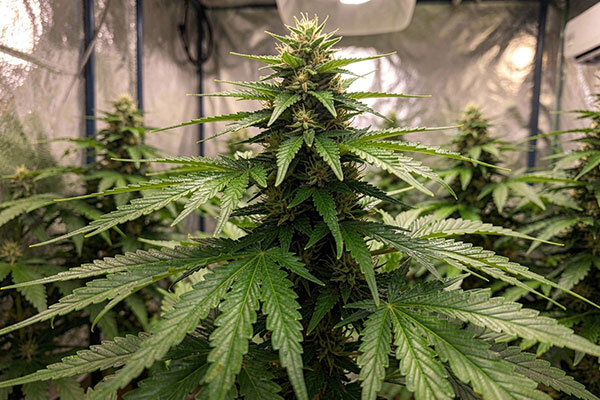
The flowering stage is where the cannabis plant focuses its resources on producing flowers.
As flowering progresses, small bud sites develop into larger, denser flowers. Resin production increases, aromatic compounds become more pronounced and cannabinoid concentrations begin to rise.
The plant’s nutritional needs also change during this phase.
While nitrogen remains necessary, the emphasis gradually shifts toward phosphorus and potassium, which play important roles in flower development and maturation.
Humidity management becomes one of the grower’s highest priorities. Dense flowers can trap moisture, creating favorable conditions for mold and other pathogens.
For this reason, many growers gradually lower relative humidity throughout flowering while maintaining strong air circulation around the canopy.
Temperatures are typically kept slightly lower than during vegetation, helping preserve flower quality and reduce environmental stress.
As harvest approaches, growers monitor flower development closely, paying particular attention to trichome production and overall maturity.
Common flowering-stage mistakes include excessive humidity, poor airflow, nutrient imbalances and harvesting too early.
Ripening and Harvest
Typical duration: 1–2 weeks
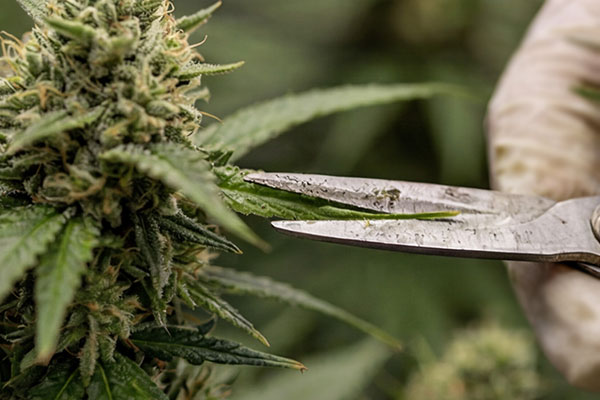
The final stage of the cannabis growth cycle is ripening.
During this period, flower development slows and the plant concentrates on completing the maturation process. Trichomes continue developing, pistils change color and cannabinoid production approaches its peak.
Determining the correct harvest window is one of the most important decisions a grower makes.
Harvesting too early may reduce potency, yield and terpene development. Waiting too long can alter the cannabinoid profile and affect the desired characteristics of the final product.
Many growers rely on trichome appearance as a maturity indicator, monitoring the transition from clear to cloudy and eventually amber trichomes.
Once plants are harvested, cultivation enters the post-harvest phase, including drying, trimming and curing.
Efficient trimming is particularly important for preserving flower quality while maintaining productivity. Professional trimming systems such as Ganatik are designed to support both wet and dry trimming workflows, helping growers process harvested flowers more efficiently while maintaining consistent results.
Cannabis Growth Stages for Autoflowers vs Photoperiod Plants
The cannabis growth stages are largely the same for both autoflower and photoperiod cultivars. All cannabis plants progress through germination, seedling development, vegetative growth, flowering and harvest.
The main difference lies in how and when flowering begins.
Autoflower cannabis plants initiate flowering automatically based on age rather than day length. As a result, they typically move from seed to harvest much faster, often completing their entire life cycle within 8-12 weeks.
Photoperiod cultivars, on the other hand, remain in the vegetative stage until they receive the environmental signal to begin flowering. Outdoors, this occurs naturally as daylight hours decrease toward the end of summer. Indoors, growers usually trigger flowering by changing the light schedule to 12 hours of light and 12 hours of darkness.
Because photoperiod plants can remain in vegetation for longer periods, growers have greater control over final plant size, canopy structure and potential yield. Autoflowers offer faster harvests and simpler cultivation schedules, but they provide less flexibility because flowering begins automatically after a relatively short vegetative period.
Regardless of cultivar type, healthy root development, proper environmental conditions and stage-appropriate nutrition remain essential throughout the entire growth cycle.
How Root Development Influences Every Growth Stage
Although cannabis growth is often evaluated by what happens above ground, roots drive much of the plant’s overall performance.
From germination through harvest, the root system supplies water, nutrients and oxygen that support every stage of development.
A healthy root zone can contribute to:
- Faster vegetative growth
- Improved nutrient uptake
- Better environmental resilience
- More vigorous flowering
- Greater yield potential
Conversely, root circling, poor aeration and transplant stress can limit performance even when all other cultivation conditions appear optimal.
For this reason, many modern cultivation practices focus not only on canopy management but also on creating conditions that promote continuous root expansion throughout the plant’s life cycle.
Environmental Conditions by Growth Stage
While every cultivar has slightly different preferences, cannabis plants generally perform best within certain temperature, humidity and lighting ranges during each stage of development. As plants mature, environmental requirements gradually shift from promoting rapid growth to supporting flower production and reducing disease risk.
The table below provides a general overview of commonly recommended environmental conditions throughout the cannabis growth cycle.
| Stage | Duration | Temperature | Relative Humidity | Indoor Light Cycle |
|---|---|---|---|---|
| Germination | 3–10 days | 21–29°C (70–85°F) | 65–70% | 18/6 after sprouting |
| Seedling | 2–3 weeks | 20–26°C (68–79°F) | 60–70% | 18/6 |
| Vegetative Growth | 3–8+ weeks | 20–28°C (68–82°F) | 50–70% | 18/6 |
| Transition (Pre-Flower) | 1–3 weeks | 20–27°C (68–81°F) | 45–60% | 12/12 |
| Flowering | 7–12+ weeks | 18–26°C (64–79°F) | 40–50% | 12/12 |
| Ripening & Harvest | 1–2 weeks | 18–24°C (64–75°F) | 40–45% | 12/12 |
These ranges should be viewed as general guidelines rather than strict rules. Genetics, cultivation method and local growing conditions can all influence the ideal environment for a particular crop.
The key principle is to adjust conditions as the plant develops. Young plants typically benefit from warmer temperatures and higher humidity, while flowering plants generally perform better under lower humidity levels and tighter environmental control.
The cannabis growth cycle consists of several distinct stages, each with its own challenges and requirements.
From the first taproot that emerges during germination to the mature flowers ready for harvest, the plant continuously adapts its needs for light, nutrients, water and environmental conditions.
Understanding these changes allows growers to provide the right support at the right time, resulting in healthier plants and more consistent harvests.
While every stage contributes to success, one factor remains important throughout the entire cycle: healthy root development. A strong root system provides the foundation for everything that happens above ground and plays a major role in determining the quality and productivity of the final harvest.
FAQ: Cannabis Growth Stages
What are the main cannabis growth stages?
Cannabis plants progress through six primary stages: germination, seedling, vegetative growth, pre-flowering, flowering and harvest. Each stage has different requirements for light, nutrients, water and environmental conditions, making proper stage-specific care essential for healthy growth and high yields.
How long does the entire cannabis growth cycle take?
Most photoperiod cannabis plants take between 3 and 6 months to complete their growth cycle from seed to harvest. Fast-growing autoflower varieties may finish in as little as 8-12 weeks, while some photoperiod cultivars can require five months or more depending on genetics and cultivation practices.
Which cannabis growth stage has the biggest impact on yield?
The vegetative and flowering stages have the greatest impact on final yield. During vegetation, the plant develops the structure and root system needed to support flower production, while the flowering stage determines bud size, density and overall harvest weight.
When should photoperiod cannabis plants be switched to flowering?
Photoperiod cannabis plants are usually switched to flowering when they have developed a strong root system, sufficient branching and the desired canopy size. Because many cultivars can double in height during the transition period, growers often initiate flowering before the plant reaches its final target size. Indoors, flowering is triggered by changing the light schedule from 18 hours of light to 12 hours of light and 12 hours of darkness.
What is the longest cannabis growth stage?
The vegetative stage is typically the longest and most flexible stage of cannabis growth. Depending on cultivation goals, growers may keep plants in vegetation for as little as three weeks or for several months before initiating flowering.
What is the difference between the vegetative and flowering stages?
During the vegetative stage, cannabis plants focus on developing roots, stems and leaves. During the flowering stage, plants redirect their energy toward producing flowers, cannabinoids and terpenes that determine the quality and characteristics of the final harvest.
How long does the flowering stage last?
The flowering stage typically lasts between 7 and 12 weeks, depending on the cultivar. Indica-dominant varieties often finish faster, while sativa-dominant cultivars may require several additional weeks to reach full maturity.

 Ganatik
 Re-Plant
 Marketing Support
 Cannabis World
 Terms & Conditions