
 Products
 For Distributors
 For Grow Shops
 About Miabis
 Contact
RE-PLANT is primarily known as a transplant-free cultivation container designed for progressive root expansion, better airflow and more efficient substrate use, but the modular tray system behind RE-PLANT also opens another interesting possibility: use in recirculating drip hydroponic systems for cannabis cultivation using coco coir, clay pebbles and other inert growing media.
The concept is simple: a nutrient solution is pumped from a reservoir to the top of the container through drip irrigation tubing, the solution flows through the substrate and excess runoff drains back into the reservoir where it can be reused again.
This type of setup is commonly known as a recirculating drip hydroponic system.
What Is a Recirculating Drip Hydroponic System?
A recirculating drip hydroponic system is a cultivation method where nutrient solution is continuously or periodically delivered to plants from above through drip emitters or irrigation tubing.
The nutrient solution:
- travels from a reservoir to the plant,
- moves through the substrate and root zone,
- drains back to a collection tray or reservoir,
- and recirculates through the system again.
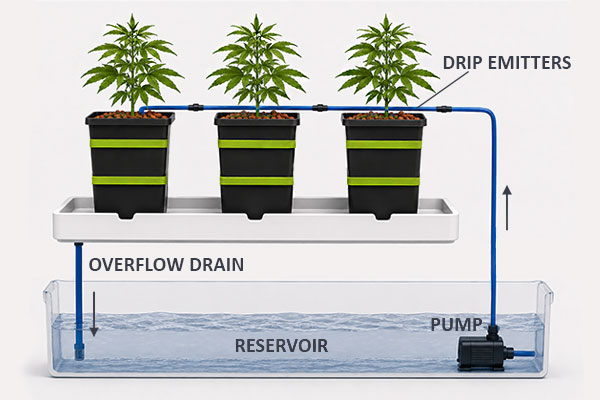
Unlike traditional soil growing, where excess runoff is often discarded, recirculating systems are designed to reuse both water and nutrients more efficiently. This allows growers to maintain more consistent moisture levels around the roots while also improving control over irrigation frequency, nutrient delivery and root-zone conditions.
These systems are commonly used with hydroponic substrates such as coco coir, rockwool, clay pebbles and other porous growing media. These substrates allow a balance between moisture retention, drainage and oxygen availability around the roots.
Recirculating drip systems are widely used in indoor cannabis cultivation because they allow growers to run smaller and more controlled irrigation cycles throughout the day. This can help create more stable feeding conditions, efficient nutrient use and faster root development.
How RE-PLANT Fits Into This Type of Setup
RE-PLANT cultivation container also works well for hydroponic growing in recirculating drip irrigation systems. In hydro-style setups, the pull-out tray remains fully inserted inside the container, but the removable front tray wall can be detached. This creates a controlled runoff exit point where excess nutrient solution can naturally drain out after moving through the substrate.
The runoff then:
- flows along the tray surface,
- drips back into a collection tray or reservoir,
- and recirculates back to the plant through the irrigation system.
This creates a simple gravity-assisted runoff return system while still benefiting from RE-PLANT’s staged root-zone structure and airflow design.
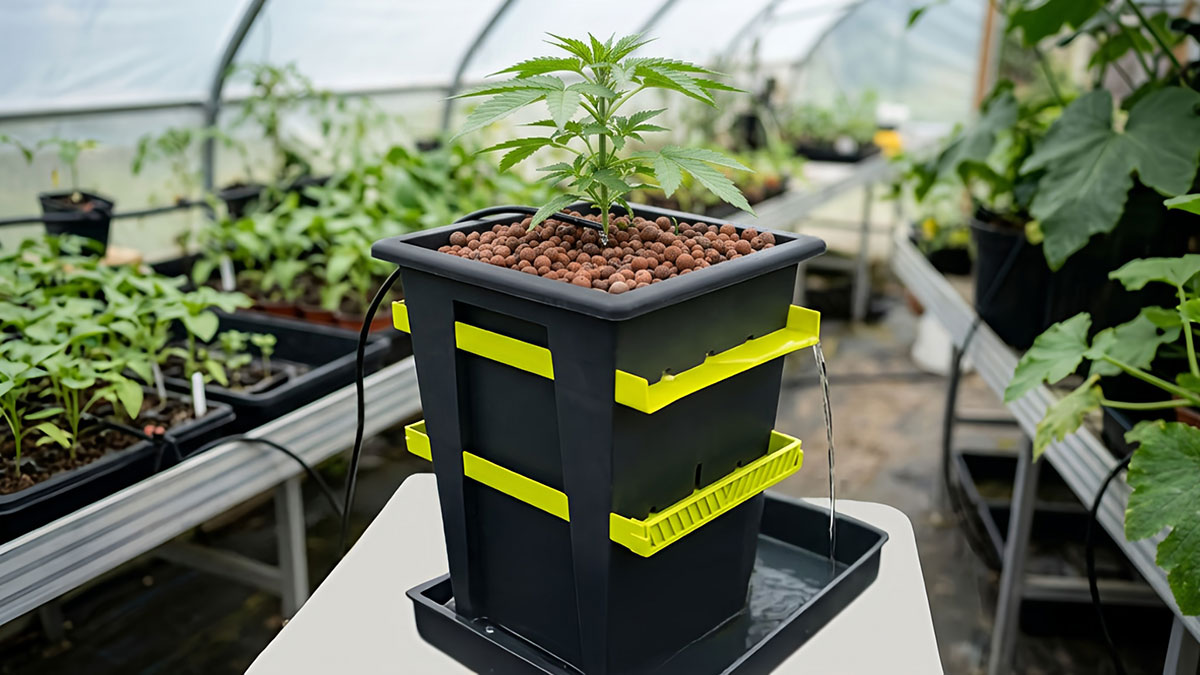
RE-PLANT also works with other hydro-style irrigation methods, including bottom-feeding systems such as AutoPot setups.
RE-PLANT’s Progressive Root-Zone Expansion
The Re-Plant’s progressive root expansion concept remains useful in recirculating drip hydroponic systems as well.
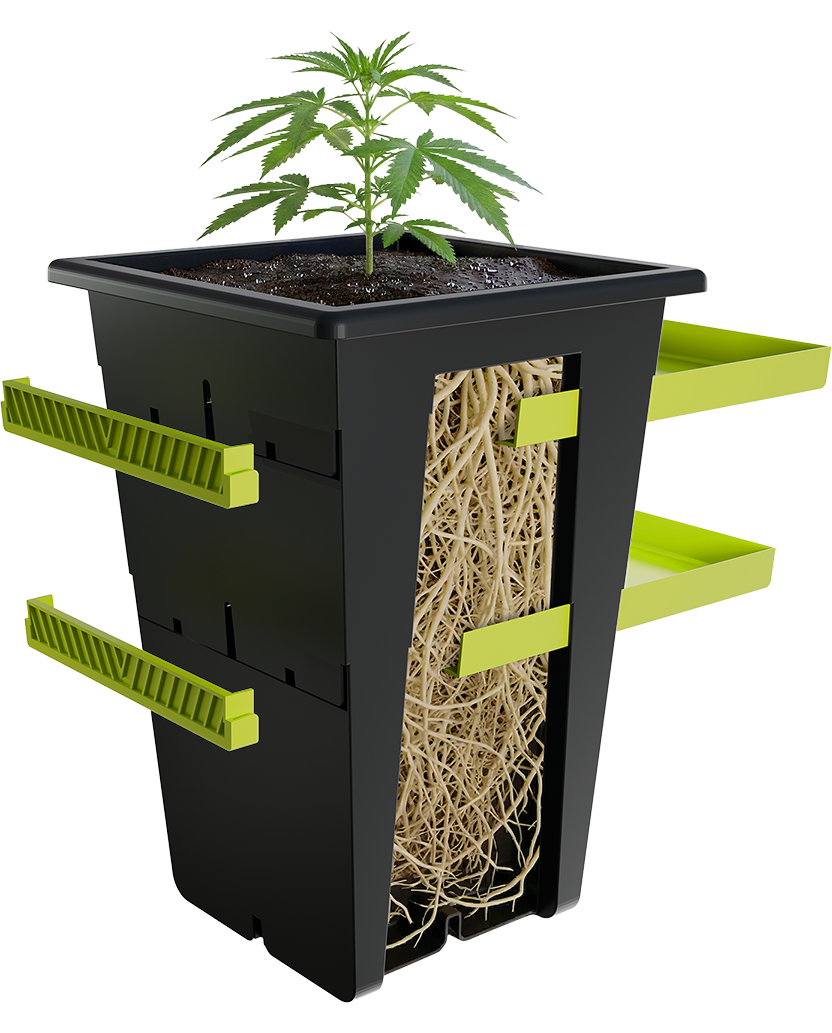
The two pull-out trays temporarily separate the container into three growing levels and allow the active root zone to expand progressively as the plant develops.
The roots first establish themselves in the upper compartment where the young plant develops inside a more controlled moisture and oxygen environment.
Once the root system becomes strong enough, the first tray can be removed, allowing the roots to expand into the second level of substrate. Later in the grow cycle, the second tray can also be removed, giving the roots access to the full container volume.
This gradual expansion helps prevent young plants from sitting too early inside an oversized wet root zone. That’s something that can slow root development and reduce oxygen availability.
By limiting early root expansion, moisture levels remain easier to control. Furthermore, the upper root zone can dry more evenly and oxygen availability around younger roots may remain more balanced before the plant expands deeper into the container.
As the root mass increases, the lower zones provide additional space for nutrient uptake, moisture buffering and further root development without transplanting into a larger pot.
Moisture, Drainage and Oxygen Balance
One of the most important goals in recirculating drip hydroponics is maintaining the right balance between moisture and oxygen around the roots.
In many conventional containers, heavily saturated substrate can reduce airflow inside the root zone and limit oxygen availability around the roots. RE-PLANT approaches this differently.
Research into continuous recirculating drip growing systems has also highlighted the importance of oxygen availability, drainage behavior and porous substrate structure inside the root environment during long-term cultivation.
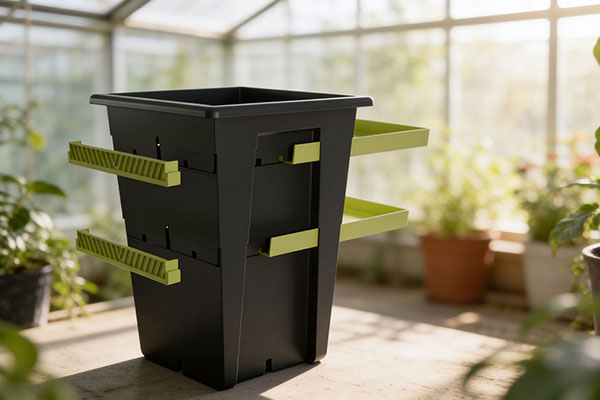
While the drip irrigation system delivers nutrient solution through the substrate in controlled irrigation cycles, the RE-PLANT’s dedicated side airflow openings and slotted structure can help fresh air move more easily into the root zone area.
Combined with controlled drainage and progressive root-zone expansion, this can help create a root environment where moisture retention and oxygen access remain more balanced throughout different stages of plant development.
This may help support:
- healthier root development,
- more active nutrient uptake,
- stronger root branching,
- and a more balanced root environment overall.
Compared to traditional closed-wall containers, RE-PLANT’s open airflow structure can also help reduce overly saturated areas inside the substrate and promote more consistent root-zone aeration during irrigation cycles.
Compatible With Multiple Hydroponic Media
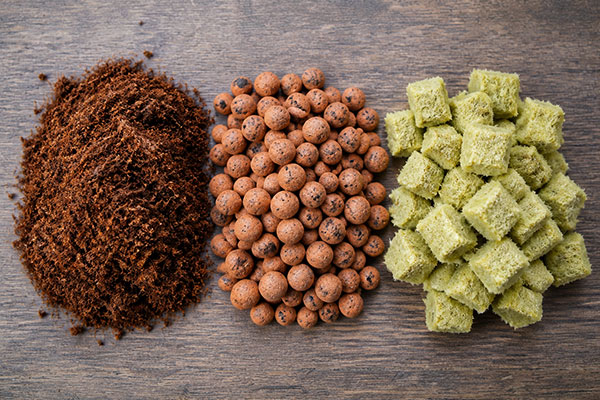
RE-PLANT supports different substrates across different grow levels. That flexibility also works well in hydro-style growing environments.
Depending on the grow style and irrigation strategy, growers may use:
- coco coir,
- clay pebbles,
- rockwool,
- mixed inert media combinations.
Because RE-PLANT separates the root zone into progressive growing levels, growers can also experiment with different substrate behaviors throughout the container.
For example:
- upper zones can prioritize moisture retention for younger roots,
- while lower zones can focus more on drainage, airflow and oxygen availability.
This creates additional flexibility when designing irrigation frequency, dry-back behavior and root-zone moisture balance.
Some substrate combinations work especially well in recirculating drip systems.
Coco Coir
Coco is one of the most suitable substrates for recirculating drip hydroponics. It provides excellent moisture retention, strong oxygen balance, stable irrigation behavior, and fast root development. Because coco retains moisture while still allowing airflow between irrigation cycles, it works particularly well in systems where nutrient solution is delivered multiple times throughout the day.
Coco + Clay Pebbles
Mixed substrate setups are another interesting option for growers looking to fine-tune moisture and drainage behavior inside the container. For example, upper sections can contain more coco for moisture retention and early root establishment. Meanwhile lower sections can contain more clay pebbles for drainage and airflow deeper inside the root zone.
This creates different moisture and oxygen behaviors throughout the container while still using one integrated growing system. Because RE-PLANT already separates the root zone into multiple levels, the container naturally supports this type of layered substrate approach.
Clay Pebbles
Clay pebbles can also work very well in more advanced high-frequency drip irrigation setups. They provide very fast drainage, strong oxygen availability, minimal water retention, and cleaner recirculation behavior. However, they usually require more frequent irrigation cycles compared to coco-based systems. For experienced hydro growers, this can offer a very responsive and highly controllable root-zone environment.
The ability to combine different hydroponic media inside one container gives growers additional flexibility. Growers can experiment with moisture retention, drainage behavior and root-zone oxygenation throughout different stages of plant development.
Important Considerations
Like any recirculating hydroponic system, this type of setup requires proper monitoring and maintenance.
Growers should pay attention to:
- reservoir cleanliness,
- nutrient concentration (EC),
- pH stability,
- irrigation frequency,
- pump maintenance,
- runoff management.
Because of continuous nutrient recirculation, maintaining a stable and clean system is important for long-term root health and plant performance.
It is also recommended to avoid stagnant water inside trays or reservoirs for extended periods.
One Container. Multiple Grow Styles.
RE-PLANT was created to simplify cultivation by eliminating transplant stress and improving root-zone management within a single container. But the design also opens the door to hydro-style applications beyond traditional soil growing. This gives growers additional flexibility when using RE-PLANT for hydroponic growing across different irrigation strategies and substrates.
From coco-based drip irrigation to recirculating hydroponic setups, RE-PLANT gives growers the flexibility to adapt the same container to different cultivation methods, substrates and irrigation strategies.
One pot. Multiple grow styles.
FAQ: RE-PLANT in Recirculating Drip Hydroponic Systems
Can RE-PLANT be used for cannabis hydroponics?
Yes, RE-PLANT cultivation container can be adapted for recirculating drip hydroponic systems using substrates such as coco coir, clay pebbles and other inert growing media.
How does RE-PLANT work in a hydro-style setup?
In recirculating drip hydroponic systems, nutrient solution is delivered to the substrate from above through irrigation tubing and allowed to drain back into a reservoir for reuse. RE-PLANT can be adapted for this type of setup by keeping the pull-out tray fully inserted while removing the removable front tray wall. This creates a controlled runoff exit point where excess nutrient solution can naturally drain out after moving through the substrate.
At the same time, the two pull-out trays continue to function as progressive root-zone separators. As the trays are removed during different growth stages, the roots gradually expand into lower sections of the container, helping maintain a more controlled moisture and oxygen environment around younger root systems.
Which substrates work best with RE-PLANT in recirculating drip systems?
Coco coir is one of the most suitable substrates because it provides a good balance between moisture retention and airflow. Growers can also use clay pebbles, rockwool or mixed hydroponic media combinations depending on the irrigation strategy and desired root-zone behavior.
Why is airflow important in recirculating drip hydroponics?
In recirculating drip systems, roots benefit from a balance between moisture, drainage and oxygen availability inside the substrate. RE-PLANT’s side airflow openings and slotted structure can help fresh air move more easily into the root-zone area during irrigation cycles, supporting a more balanced root environment.

 Ganatik
 Re-Plant
 Marketing Support
 Cannabis World
 Terms & Conditions