
 Products
 For Distributors
 For Grow Shops
 About Miabis
 Contact
Cannabis nutrients are often discussed as fixed formulas or feeding charts, but in reality, plant nutrition is dynamic and varies by growth stage. From the vegetative to the flowering stage, what a cannabis plant needs evolves throughout its lifecycle, depending on how it grows, what it builds, and how it allocates energy.
From early root development to dense flower production, each stage places different demands on the plant. Understanding these shifts allows growers to move beyond rigid feeding schedules and toward more precise, stage-based nutrient strategies.
Why Nutrient Needs Change During the Cannabis Lifecycle
Cannabis plants do not grow in a uniform way. Early stages focus on establishing roots and basic structure, while later stages shift toward biomass accumulation and ultimately flower production.
Each phase requires different physiological processes:
- Early growth prioritizes root establishment and stability
- Vegetative growth focuses on leaf and stem development
- Flowering shifts energy toward reproduction and density
When understanding cannabis nutrients by growth stage, it becomes clear that nutrient demand is not constant. Feeding strategies must adapt to match what the plant is trying to achieve at each stage. This is also closely tied to broader factors that affect cannabis plant growth, including light, environment and root conditions.
Environmental conditions also influence how nutrients are used, meaning that feeding strategies should always be considered alongside factors such as light, temperature and humidity.
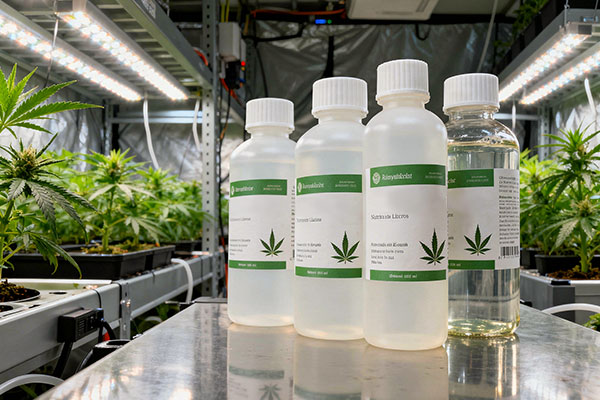
The Role of Macronutrients and Micronutrients
Cannabis plants rely on both macronutrients and micronutrients, but their importance is not just about quantity – it is about function.
Macronutrients
- Nitrogen (N): Drives leaf and stem growth, essential for chlorophyll production
- Phosphorus (P): Supports energy transfer (ATP) and root development
- Potassium (K): Regulates water movement, strengthens plant structure and improves resilience
Micronutrients
Elements like calcium, magnesium, iron and zinc support enzymatic processes, nutrient transport and overall metabolic function.
Rather than acting independently, these nutrients interact continuously. An imbalance in one can affect the availability or uptake of others, which is why understanding their role is more important than simply following ratios.
Early Stage (Seedling / Early Vegetative)
At this stage, cannabis plants have minimal nutrient demand. The priority is not rapid growth, but root establishment and stability.
Key characteristics:
- Low nutrient uptake capacity
- High sensitivity to overfeeding
- Rapid development of initial root structure
Overfeeding during this phase is one of the most common mistakes. Excess nutrients can damage young roots, slowing development before the plant has a chance to establish itself.
The root environment is just as important as nutrient supply. Oxygen availability, substrate structure and container design directly influence how effectively roots can begin functioning.
This is where cultivation systems that support early root development – without stress or restriction – can significantly improve long-term plant performance.
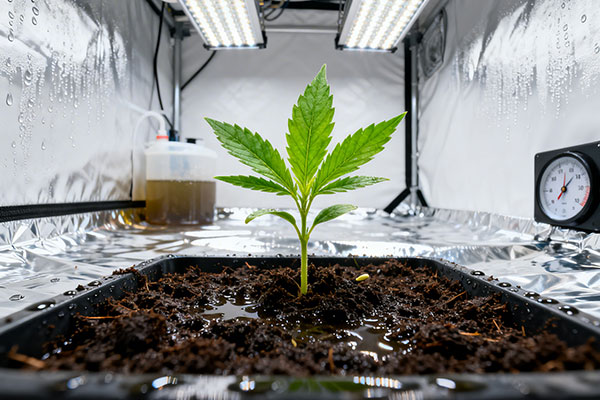
Vegetative Stage: Building Structure and Biomass
Once the root system is established, the plant enters a phase of rapid above-ground growth. The cannabis vegetative stage is characterized by:
- High nitrogen demand
- Accelerated leaf and stem production
- Increased nutrient and water uptake
Nitrogen becomes critical here because it fuels chlorophyll production and photosynthesis, directly supporting biomass accumulation.
However, cannabis vegetative stage nutrient availability alone is not enough. The plant must be able to absorb and transport nutrients efficiently, which depends heavily on root system development.
If roots are constrained, poorly oxygenated or unevenly distributed, nutrient uptake becomes inefficient – regardless of how well the feeding schedule is designed.

Transition Phase (Pre-Flowering)
As cannabis plants transition from vegetative growth to flowering, their internal priorities begin to shift.
This stage involves:
- Gradual reduction in nitrogen demand
- Increased need for phosphorus and potassium
- Hormonal and metabolic changes
The plant is no longer focused purely on expansion. Instead, it begins preparing for reproductive growth, which requires a different nutrient balance.
Mistiming this transition – either by maintaining high nitrogen levels for too long or shifting too early – can negatively affect plant structure and final yield.
Flowering Stage: Energy Allocation and Yield Formation
During flowering, the plant reallocates energy toward bud development, density, and overall yield quality.
Cannabis flowering stage nutrient roles become more specialized:
- Phosphorus: Supports energy transfer and flower formation
- Potassium: Regulates water balance, improves density and strengthens plant tissue
- Micronutrients: Enable metabolic processes that support terpene and cannabinoid development
At this stage, consistency is critical. Sudden nutrient imbalances or environmental stress can directly impact yield quality.
However, even in flowering, nutrient effectiveness still depends on the root system’s ability to deliver them where needed.
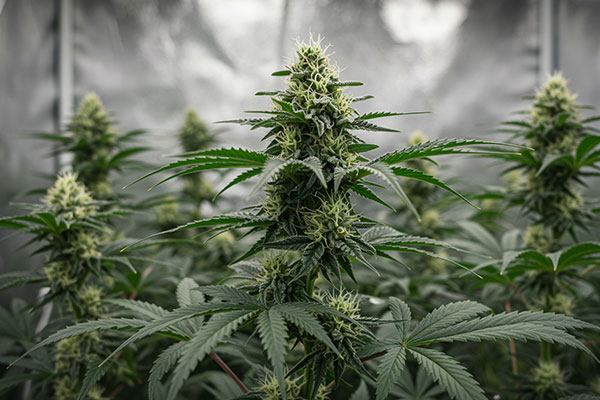
What Happens When Nutrients Are Out of Balance
Nutrient issues are often misunderstood because symptoms appear above ground, while the causes are frequently below the surface.
Common problems include:
- Deficiencies: Insufficient nutrient availability or uptake
- Toxicities: Excess nutrients causing stress or damage
- Nutrient lockout: Nutrients present but unavailable due to pH or imbalance
Nutrient lockout occurs when nutrients are present in the growing medium but cannot be absorbed by the plant, often due to incorrect pH levels, salt buildup or poor root conditions. In many cases, what appears as a deficiency is actually a lockout issue, where nutrients are available but inaccessible.
Similarly, common symptoms of nutrient deficiencies include yellowing leaves, discoloration, slowed growth and leaf deformation. However, these symptoms should not be viewed in isolation, as they are often linked to underlying issues such as poor root health or environmental imbalances rather than a simple lack of nutrients.
Growers often respond by adjusting nutrient levels when the real issue lies in root health, oxygen availability or substrate conditions, which can all contribute to plant stress.
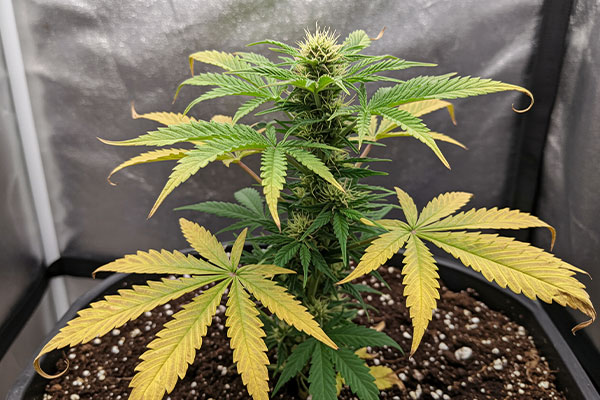
Nutrients Are Only as Effective as the Root System
No matter how precise a feeding strategy is, it can only work if the root system is capable of absorbing and distributing nutrients efficiently.
This depends on:
- Root structure and density
- Oxygen availability
- Container design and volume utilization
Traditional containers often limit root expansion, leading to uneven growth and reduced nutrient uptake efficiency.
Systems designed to support continuous root development – without transplant stress and with consistent oxygen supply – allow plants to fully utilize available nutrients. For example, staged container systems that expand with plant growth help maintain stable root conditions and improve nutrient absorption across all growth phases.
Another critical factor is pH level, which directly affects nutrient availability. Even when nutrients are present in the growing medium, incorrect pH can prevent roots from absorbing them efficiently, leading to deficiencies or lockout.
When the root system performs optimally, nutrient strategies become significantly more effective.
From Fixed Feeding Charts to Adaptive Feeding Strategies
Many growers rely on fixed feeding charts, but these rarely account for real-world variability.
A more effective approach is to treat feeding as a dynamic process, based on:
- Growth stage
- Plant response
- Environmental conditions
- Root system performance
Instead of asking “What nutrients should I add?”, the better question is:
“What is the plant trying to achieve right now?”
Aligning nutrient supply with plant function leads to more consistent growth, better structure and improved yields.
Cannabis nutrition is not a static formula – it is a process that evolves throughout the plant’s lifecycle.
Each growth stage places different demands on the plant, requiring adjustments in nutrient type, ratio and delivery. But nutrients alone do not determine success. Their effectiveness depends on the root system, the environment and the grower’s ability to adapt.
By understanding cannabis nutrients by growth stage – and how nutrient requirements change in relation to root development and plant function – growers can move beyond rigid feeding schedules and toward more efficient, high-performance cultivation strategies.
FAQ: Cannabis Nutrients by Growth Stage
What nutrients do cannabis plants need most?
Cannabis plants primarily require nitrogen, phosphorus and potassium as macronutrients. Nitrogen supports vegetative growth, while phosphorus and potassium become more important during flowering. Micronutrients such as calcium, magnesium and iron are also essential for metabolic processes and overall plant health.
How do nutrient needs change during cannabis growth?
Nutrient requirements shift throughout the lifecycle. Seedlings need very low nutrient levels and focus on root development. During the vegetative stage, nitrogen demand increases to support leaf and stem growth. In flowering, the plant requires more phosphorus and potassium to support bud formation and energy transfer.
Can you use the same feeding schedule throughout the entire grow cycle?
No. Cannabis plants have different nutritional needs at each growth stage. Using a fixed feeding schedule can lead to overfeeding in early stages or deficiencies later in the cycle. Feeding should be adjusted based on plant development and environmental conditions.
When should you change nutrients during the cannabis grow cycle?
Nutrient adjustments should follow the plant’s development stages. The transition from vegetative growth to flowering is the most important moment, as nutrient ratios need to shift from nitrogen-heavy to phosphorus- and potassium-focused feeding.
What are the signs of nutrient deficiency in cannabis plants?
Common signs include yellowing leaves, discoloration, slowed growth and leaf deformation. Different deficiencies produce different symptoms, but many issues are linked to poor nutrient uptake rather than a lack of nutrients in the medium.
Can overfeeding cannabis plants reduce yield?
Yes. Overfeeding can damage roots, cause nutrient burn and lead to imbalances that reduce plant performance. In many cases, excessive nutrients are more harmful than slight deficiencies.
What causes nutrient lockout in cannabis plants?
Nutrient lockout occurs when nutrients are present in the growing medium but cannot be absorbed by the plant. This is often caused by incorrect pH levels, salt buildup, poor root health or imbalanced nutrient ratios.
How important is the root system for nutrient uptake?
The root system is essential for nutrient absorption. Even if nutrients are available, plants cannot use them effectively if roots are underdeveloped, lack oxygen or are restricted by the container. Healthy root structure directly improves nutrient efficiency.

 Ganatik
 Re-Plant
 Marketing Support
 Cannabis World
 Terms & Conditions